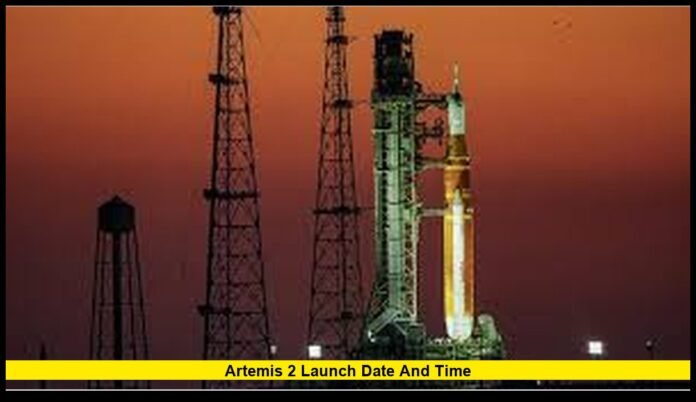

The artemis 2 launch date and time are now officially set for early April 2026, with NASA targeting liftoff on April 1 at 6:24 p.m. Eastern Time, signaling a major step forward in America’s return to the Moon.
Latest Confirmed Artemis 2 Launch Date and Time
NASA has scheduled Artemis II to launch no earlier than April 1, 2026, from Kennedy Space Center in Florida. The mission’s primary launch window opens at 6:24 p.m. ET and runs for approximately two hours.
If the launch cannot proceed on that day, NASA has built in backup opportunities:
- April 2 through April 6, 2026
- Additional windows later in April if required
These flexible dates ensure teams can respond to weather conditions and final technical checks without rushing the launch.
Why Timing Is Critical for Artemis II
The chosen launch window is not random. NASA carefully selected it based on precise scientific and operational requirements.
Key factors include:
- The Moon’s position relative to Earth
- Lighting conditions for navigation and safety
- The spacecraft’s free-return trajectory path
- Weather patterns at the Florida launch site
Even a short delay can shift the mission timeline, which is why NASA plans multiple backup dates.
What Will Happen During the Mission
After liftoff, Artemis II will follow a structured flight plan lasting about 10 days. The mission will test systems essential for future lunar landings.
Mission timeline highlights:
- Launch and Orbit: Orion enters Earth orbit for initial checks
- Translunar Injection: A critical burn sends the spacecraft toward the Moon
- Lunar Flyby: The crew travels around the Moon without landing
- Return Journey: Orion heads back to Earth for splashdown
This mission focuses on safety, performance, and readiness for future exploration.
Astronauts Leading the Mission
Four astronauts will travel aboard the Orion spacecraft:
- Reid Wiseman – Commander
- Victor Glover – Pilot
- Christina Koch – Mission Specialist
- Jeremy Hansen – Mission Specialist
This diverse crew represents a historic moment in spaceflight:
- First woman assigned to a lunar mission
- First Black astronaut on a Moon mission
- First Canadian astronaut traveling beyond Earth orbit
Launch Preparations Enter Final Stage
NASA is currently in the final phase before launch. The crew is already at Kennedy Space Center and following strict pre-launch protocols.
Important preparations include:
- Final checks of the Space Launch System (SLS) rocket
- Orion spacecraft system verification
- Weather tracking and safety reviews
- Flight Readiness Review before liftoff
Engineers have addressed earlier technical challenges, ensuring the mission stays on track.
Why Artemis II Matters for the United States
Artemis II is more than just another space mission. It is a critical test that will shape the future of U.S. space exploration.
The mission will:
- Confirm astronaut safety in deep space
- Validate navigation and communication systems
- Test Orion’s life-support capabilities
- Prepare NASA for a future Moon landing
This flight builds the foundation for sustained human presence beyond Earth.
Artemis II Compared to Apollo Missions
Here’s a quick comparison between Artemis II and earlier Apollo missions:
| Feature | Artemis II | Apollo Missions |
|---|---|---|
| Crew Size | 4 astronauts | 3 astronauts |
| Mission Type | Lunar flyby | Lunar orbit/landing |
| Duration | ~10 days | 8–12 days |
| Spacecraft | Orion | Apollo Command Module |
| Objective | System validation | Lunar landing |
While Apollo focused on landing humans on the Moon, Artemis II focuses on testing modern systems for future missions.
Possible Causes of Launch Delays
Even with a confirmed artemis 2 launch date and time, delays can still occur. NASA closely monitors several risk factors:
- Weather conditions near the launch site
- Technical system checks
- Fueling operations
- Safety concerns during countdown
Any issue will result in a delay to ensure astronaut safety remains the top priority.
What Comes Next After Artemis II
Artemis II is only one part of a larger plan. If the mission succeeds, NASA will move forward with:
- Artemis III: Planned mission to land astronauts on the Moon
- Future missions aimed at long-term lunar exploration
- Preparation for eventual human missions to Mars
Each step builds toward a sustained human presence beyond Earth.
How Americans Can Watch the Launch
NASA will broadcast the launch live across multiple platforms. Viewers in the United States can follow:
- Live countdown coverage hours before launch
- Real-time mission updates
- Expert commentary and astronaut insights
Depending on conditions, the rocket may be visible from parts of the southeastern U.S.
Final Thoughts on Artemis 2 Launch Date and Time
The confirmed artemis 2 launch date and time marks a historic moment for space exploration. With a targeted launch on April 1, 2026, at 6:24 p.m. ET, NASA is preparing to send humans around the Moon for the first time in generations.
What are your thoughts on this mission—will you be watching this historic launch unfold live? 🚀