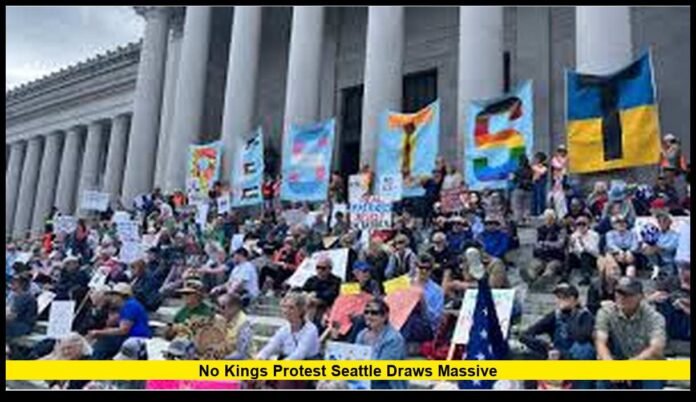

The no kings protest seattle demonstrations transformed the city into a center of large-scale civic action on March 28, 2026, as thousands of people gathered across multiple neighborhoods to take part in coordinated marches, rallies, and community events. What began as a nationally organized day of action quickly evolved into a powerful local expression of political engagement, with Seattle emerging as one of the most active hubs in the country.
From the waterfront to Capitol Hill and into surrounding suburbs, crowds showed up throughout the day, carrying signs, chanting, and participating in peaceful demonstrations that reflected a wide range of concerns. The energy remained steady from morning through late afternoon, with organizers carefully coordinating routes, speeches, and safety measures to keep events moving smoothly.
If you’re tracking how this movement is unfolding in real time, this is one of the most significant public gatherings Seattle has seen in recent years—keep reading for a full breakdown of what’s happening and why it matters.
Downtown Seattle Becomes the Heart of the Action
The day’s largest gathering began near Colman Dock, where participants assembled before setting off on a march toward Capitol Hill. The route quickly filled with people, creating a continuous flow of demonstrators moving through downtown streets.
By midday, Cal Anderson Park had become the focal point for the main rally. Organizers hosted a series of speeches and community-led discussions that addressed a variety of social and political issues. The park filled with attendees, many of whom stayed for hours to listen, connect, and participate in the program.
Unlike smaller, single-location protests, Seattle’s approach created a layered experience. The march served as a visible demonstration through the city, while the park gathering provided space for deeper engagement and dialogue.
Neighborhoods and Suburbs Join In
While downtown Seattle drew the largest crowds, the movement extended far beyond the city center.
Communities across King County hosted their own events, making participation more accessible to residents who preferred to stay closer to home. Cities like Bellevue, Renton, Kirkland, and Kent saw steady turnout, with smaller but highly engaged gatherings taking place in parks, plazas, and public streets.
West Seattle also became a notable hotspot, with local organizers hosting rallies that mirrored the energy seen downtown. Families, students, and longtime activists gathered in these areas, demonstrating how widely the movement has spread.
This decentralized structure allowed the protests to reach a broader audience and reduced the need for everyone to converge in one place. It also helped maintain momentum throughout the day, as events continued simultaneously across multiple locations.
A Coordinated Nationwide Effort
The events in Seattle are part of a much larger national effort unfolding across the United States on the same day.
More than 3,000 demonstrations have been organized nationwide, covering all 50 states. Large cities have drawn major crowds, but smaller communities have also played a key role in expanding the movement’s reach.
The scale of participation marks a significant increase compared to similar actions in previous years. Organizers have focused on building networks at both local and national levels, allowing for a high degree of coordination while still giving communities the flexibility to shape their own events.
This balance between structure and independence has helped the movement grow rapidly, with Seattle serving as a clear example of how local engagement can amplify a national message.
Core Issues Driving the Movement
Participants in Seattle and across the country are united by shared concerns, even though individual motivations vary.
Many demonstrators are focusing on:
- The balance of power within the federal government
- Economic challenges facing working households
- Immigration and border-related policies
- Military and foreign policy decisions
- Civil liberties and constitutional protections
The central message of the movement is rooted in the idea that leadership should remain accountable to the public. The name itself reflects a rejection of concentrated authority and a call for stronger democratic participation.
Signs, speeches, and chants throughout Seattle emphasized these themes, creating a consistent message across different locations and events.
Peaceful Organization and Safety Measures
One of the defining features of the day has been the strong emphasis on peaceful participation.
Organizers worked in advance to provide clear guidelines for attendees, encouraging respectful conduct and cooperation. Volunteer marshals helped guide crowds along march routes, while event coordinators ensured that gatherings remained orderly.
Local authorities also prepared for the influx of participants, managing traffic and maintaining public safety without disrupting the flow of demonstrations. Public transportation options were widely used, helping reduce congestion in key areas.
This level of preparation contributed to a smooth experience for both participants and residents, allowing the focus to remain on the message of the protests.
A Diverse and Growing Crowd
The crowds seen across Seattle reflect a wide cross-section of the community.
Students, professionals, families, and retirees all took part, with many attendees saying it was their first time joining a large-scale protest. The inclusive nature of the movement has made it accessible to people with different backgrounds and perspectives.
Local organizations, advocacy groups, and grassroots networks played a major role in mobilizing turnout. Their outreach efforts helped connect national messaging with issues that resonate at the community level.
This diversity has become one of the movement’s strengths, contributing to its rapid expansion and sustained momentum.
How Seattle’s Role Stands Out
Seattle’s strong participation highlights its long-standing reputation as a city engaged in civic and political activity.
However, today’s events show a new level of coordination and scale. The number of simultaneous gatherings, combined with the size of the central march, demonstrates how much the movement has grown.
The city’s ability to host multiple events without losing cohesion is particularly notable. Each location contributed to the overall impact, creating a network of demonstrations that reinforced one another throughout the day.
This model may influence how future protests are organized, both in Seattle and in other parts of the country.
Comparing to Previous Waves of Protests
Earlier demonstrations tied to the same movement drew large crowds, but the March 2026 events represent a clear step forward.
Participation has increased, organization has improved, and the geographic spread has widened significantly. Suburban and regional involvement, in particular, marks a shift from earlier protests that were more concentrated in major cities.
Seattle’s expanded footprint reflects this broader trend, showing how the movement is reaching new communities and adapting to different local contexts.
This evolution suggests that the movement is continuing to build rather than fading after initial bursts of activity.
The Road Ahead for Organizers and Participants
While March 28 is a major milestone, organizers have indicated that it is not the endpoint.
Future actions are already being discussed, including additional rallies, community meetings, and voter engagement efforts. The goal is to maintain the energy generated by today’s events and channel it into ongoing participation.
In Seattle, local groups are expected to continue organizing at the neighborhood level, keeping communities connected and involved in the movement’s next phase.
The long-term impact will likely depend on how effectively this momentum is sustained in the weeks and months ahead.
Why This Moment Matters Nationwide
The scale of today’s demonstrations highlights a broader shift in public engagement across the United States.
With millions of participants and thousands of events taking place on the same day, the movement represents a significant moment in contemporary civic life. It shows how quickly ideas can spread and mobilize people when supported by strong networks and shared concerns.
The no kings protest seattle turnout underscores how local participation plays a crucial role in shaping national conversations. When cities like Seattle show up in large numbers, it amplifies the visibility and impact of the movement as a whole.
A Day That Reflects Growing Civic Energy
March 28, 2026, stands out as a day of widespread participation and visible public engagement.
In Seattle, the combination of large central gatherings and smaller neighborhood events created a dynamic and inclusive environment. The city became a living example of how coordinated action can bring people together around shared ideas.
As the day comes to a close, the conversations sparked by these demonstrations are likely to continue, both locally and nationwide.
What did you witness or experience during today’s protests? Join the conversation and stay connected as more developments unfold.