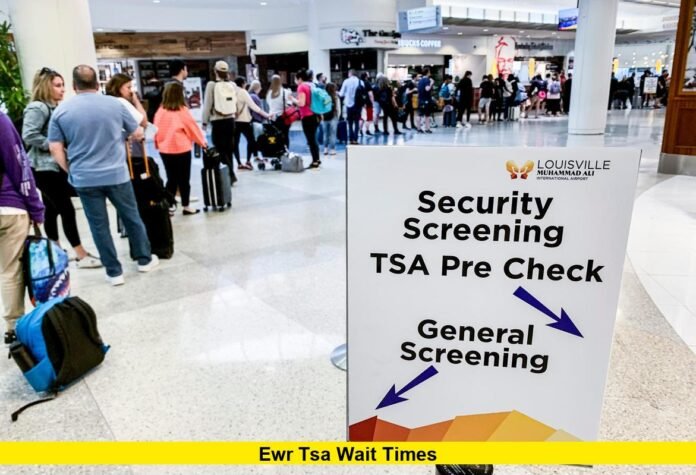

If you have a flight coming up and are heading through Newark Liberty International Airport, understanding current EWR TSA wait times could be the difference between catching your flight and watching it pull away from the gate without you. With spring break travel hitting full stride and a partial government shutdown stretching well past its first month, passengers at Newark are dealing with longer, less predictable security lines — and conditions are not expected to stabilize anytime soon.
Here is everything you need to know before you leave for the airport, from what checkpoints look like right now to the programs and tools that can save you serious time.
Plan your trip to Newark before you walk out the door — check live wait times using the tools below and give yourself every advantage before you even arrive.
What Is Happening at Newark Right Now
Newark Liberty International Airport, commonly known by its code EWR, serves as one of the three major aviation hubs for the greater New York and New Jersey region. Under normal conditions, it is one of the busiest airports on the East Coast. Right now, it is operating under anything but normal conditions.
Two forces are colliding at once. Spring break has kicked off a surge in passenger volume that brings tens of millions of Americans to airports over a two-to-three week window. At the same time, a partial government shutdown has left TSA officers working without pay for over a month. That financial pressure has caused a growing number of agents to call out, and the absences are being felt directly at security checkpoints across the country — Newark included.
Travelers who have moved through EWR in recent days report wait times that range from manageable to frustrating depending on the time of day, the terminal, and how lucky they get. A 30-minute wait at Terminal C during early morning hours has been relatively common. But as the day heats up and passenger volume builds, those numbers can climb quickly and without much warning.
The unpredictability is perhaps the biggest challenge right now. Travelers who would normally plan a two-hour pre-departure arrival are being strongly advised to add at least another 30 to 45 minutes on top of that — and to verify conditions before they leave home.
How Early Should You Get to EWR?
Under ordinary circumstances, domestic travelers are advised to arrive at Newark at least two hours before their scheduled departure. International passengers should allow at least three hours. Those baselines have not changed — but what has changed is the margin for error.
With checkpoint staffing reduced and passenger numbers high, the standard recommendation has effectively become a minimum rather than a comfortable target. Travel professionals and airport officials are encouraging everyone to treat those arrival windows as a floor, not a ceiling.
If your flight departs during a peak window — typically early morning between 6 a.m. and 10 a.m., or late afternoon and evening between 3 p.m. and 8 p.m. — build in additional time. Friday afternoons and Sunday evenings are consistently the most congested periods of the week. If your schedule allows any flexibility at all, a midweek, mid-morning departure tends to move through security faster than flights during those rush windows.
Which Terminals Have the Shortest Lines at Newark?
Not all terminals at EWR are created equal when it comes to security wait times. Terminal A historically posts some of the shorter wait times at the airport, in part because it handles a more contained volume of domestic traffic. Travelers flying domestically who have flexibility in how they book may find it worth factoring in terminal assignment when comparing flight options.
Terminal B and Terminal C handle a mix of domestic and international traffic and tend to see heavier volume. That said, the difference between terminals can shrink quickly during peak periods when every checkpoint at the airport is under pressure simultaneously.
The smartest move regardless of terminal is to check live estimates directly from the Newark airport website before you leave home. The site posts real-time wait times broken down by terminal and by lane type — standard screening versus TSA PreCheck. Those numbers update continuously and give you an accurate picture of what you will actually face when you arrive.
Three Tools to Check EWR TSA Wait Times Before You Leave
You should never have to guess about what is happening at the checkpoint. Multiple free tools exist to give you current, accurate information so you can adjust your departure time if needed.
The Newark Airport Website
The official Newark Liberty International Airport website provides live security wait time estimates for each terminal. It distinguishes between standard lanes and TSA PreCheck lanes, and some sections of the site also show estimated walking time from the checkpoint to your gate. This is the most specific and reliable source for EWR-specific conditions and should be your first stop before every trip.
The MyTSA App
The Transportation Security Administration offers a free mobile app called MyTSA, available for both iPhone and Android. The app shows current and historical wait time information at airports across the country, including Newark. It also includes delay updates, packing tips, and information on what items are and are not allowed through security. Downloading it before a trip takes two minutes and can save you considerably more than that at the checkpoint.
Third-Party Airport Tracking Platforms
Several independent websites track security wait times at airports nationwide by pulling data from official sources and passenger reports. These platforms let you search by airport and view current estimates by terminal. They work well as a cross-reference alongside the official Newark site, especially on high-volume travel days when conditions are shifting rapidly.
Programs That Cut Your Wait Time at EWR
Smart enrollment decisions made before you ever reach the airport can dramatically reduce the time you spend in the security line — regardless of how busy things are on any given day.
TSA PreCheck
TSA PreCheck is the single most effective tool for frequent travelers looking to move through airport security faster. Members use dedicated lanes that are almost always shorter than general boarding lines. PreCheck passengers also skip several of the most time-consuming steps in the screening process — shoes stay on, laptops stay in bags, and light jackets do not need to come off. Newark has dedicated PreCheck lanes across its terminals, available during standard airport operating hours.
CLEAR
CLEAR is a biometric identity verification service that lets members bypass the ID check portion of the security process entirely. Instead of showing a physical ID or boarding pass to a TSA agent, CLEAR members verify their identity using fingerprints or iris scans at a dedicated kiosk and are then escorted directly to the front of the TSA screening belt. CLEAR works alongside TSA PreCheck — members enrolled in both programs consistently experience the shortest security waits of any travelers at Newark.
Newark Reserve
Newark Reserve is a free program that is unique to Newark Liberty and deserves more attention than it gets. It allows passengers to book a specific time slot for security screening up to 72 hours before their flight. By reserving a spot, travelers bypass the general queue and enter the checkpoint during their designated window, which dramatically reduces unpredictable wait times — particularly at Terminal B. There is no cost to use it, and it takes only a few minutes to book online in advance.
Global Entry and Mobile Passport Control
For travelers returning to the United States from international destinations, Global Entry allows approved members to skip the standard customs and immigration line entirely and instead use an automated kiosk. Processing takes a matter of minutes compared to waits that can stretch far longer in the general line. U.S. citizens and eligible travelers who have not yet enrolled in Global Entry can also use the Mobile Passport Control app, which lets you submit your customs declaration digitally before arriving at the checkpoint. Newark’s international arrival checkpoints are located in Terminals B and C.
What Travelers Are Experiencing on the Ground
Passengers who have moved through Newark this week describe an airport that is busier than usual and clearly operating under stress — but one that is still functional. Most travelers who came prepared and arrived early made their flights without serious problems. Those who cut timing close or showed up without checking conditions in advance faced a much more stressful experience.
The pattern that is emerging across spring break travel nationally is consistent: airports are not in crisis, but the margin for error has effectively disappeared. A delay that would have been a minor inconvenience a year ago — a slow-moving line, a checkpoint reopened under reduced staffing — can now mean missing a flight if you have not built in enough cushion.
Travelers at Newark are adapting. More people are arriving earlier than they otherwise would, many are checking real-time wait times before they leave home, and those enrolled in PreCheck and CLEAR are moving through with noticeably less stress than passengers in standard lanes.
Will EWR Wait Times Improve?
The core issue driving extended wait times is not a shortage of TSA officers — it is that a significant portion of those officers are working without pay and choosing to call out rather than continue doing so. Until the government funding dispute is resolved and paychecks are restored, staffing levels will remain below normal at Newark and airports nationwide.
The good news is that once funding is restored, TSA staffing is expected to normalize relatively quickly. Officers who have been calling out are not leaving the workforce permanently — they are responding to an immediate financial pressure. When that pressure is lifted, the expectation is that absences will drop and checkpoint capacity will return to standard levels.
In the meantime, Newark remains open, security is operational, and flights are departing. The situation requires more preparation and patience than usual, but it is entirely manageable for travelers who take it seriously.
Flying during the current period remains safe. Safety standards at TSA have not changed. Air traffic control continues to operate under the same safety protocols as always. The disruption is about wait times and inconvenience — not about compromised screening or reduced safety standards at the checkpoint.
Practical Tips to Move Through Newark Security Faster Today
A few simple habits, combined with the programs and tools above, can meaningfully reduce your time in line — even on a busy spring break day.
Travel carry-on only whenever possible. Checked baggage adds time to your overall airport experience and, in rare cases, can trigger additional screening that keeps you at the checkpoint longer. Packing light and keeping everything in a carry-on keeps you moving.
Dress for the checkpoint. If you are not enrolled in PreCheck, wear easy-to-remove shoes, keep your belt accessible, and avoid heavy layers you will need to peel off at the belt. Small time savings per passenger add up across a busy line.
Pull up your boarding pass before you reach the checkpoint. Having your phone screen ready or your printed pass in hand the moment you approach the ID check lane keeps the line moving for you and everyone behind you.
Check live wait times no more than 60 to 90 minutes before you plan to leave for the airport. Conditions can shift quickly. A checkpoint that was manageable an hour ago may have changed significantly by the time you arrive — and vice versa.
The Bottom Line for Newark Flyers This Spring
Newark Liberty International Airport is one of the busiest and most important aviation gateways on the East Coast, and right now it is navigating a set of circumstances that demand more preparation from travelers than usual. EWR TSA wait times are longer and more variable than they would be under normal staffing conditions, and with spring break travel adding millions of additional passengers to an already strained system, the gap between a smooth trip and a stressful one comes down to how well you prepare.
Use the real-time tools available to check your terminal’s wait times before you leave home. Arrive earlier than you think you need to. Enroll in TSA PreCheck if you fly more than twice a year — it is the single most effective investment a frequent traveler can make. If you are flying through Terminal B, take five minutes to book a Newark Reserve slot. These are not complicated steps, and every one of them pays off directly at the checkpoint.
Spring break travel does not have to be chaotic. With the right preparation, you can move through Newark efficiently — even during one of the most challenging stretches the airport has seen in recent memory.
Have you been through Newark lately? Drop your experience in the comments — your real-world tips could help another traveler make their flight this spring.