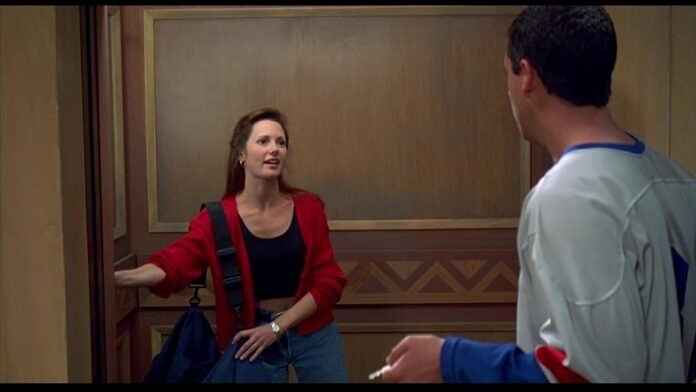

The entertainment world lost a beloved talent on February 26, 2026. Carrie Anne Fleming — a Canadian actress who quietly built one of the most consistent careers in genre television — passed away at 51 in Sidney, British Columbia, following a private battle with breast cancer. For anyone who grew up watching Supernatural or binge-watching iZombie, the name Carrie Anne Fleming might not have topped every marquee, but her face, her presence, and her performances were impossible to forget. Her journey, which began with an early uncredited appearance in the beloved Adam Sandler comedy Happy Gilmore, stretched across more than three decades and more than 40 screen credits.
She was not just an actress. She was a fixture of a whole era of genre television — one of those performers who showed up and made everything better simply by being there.
Get updates on tributes and remembrances for Carrie Anne Fleming by bookmarking this page.
From Nova Scotia to the Screen
Carrie Anne Fleming was born on August 16, 1974, in Digby, Nova Scotia, Canada. She grew up with a deep love for the performing arts and pursued that passion with real commitment from a young age. After her family settled in Victoria, British Columbia, she attended Mount Douglas Senior Secondary and threw herself into training. She studied drama at the Kaleidoscope Theatre and sharpened her movement skills through the Kidco Theatre Dance Company — two institutions that gave her a disciplined foundation few actors her age could match.
After graduating, Fleming didn’t immediately land in Hollywood. She spent time modeling to support her family, a practical choice that reflected her grounded character. But the pull toward acting never went away, and before long she made her screen debut and began the slow, steady climb that would define her professional life.
The Happy Gilmore Years and Early Hustle
Fleming’s earliest film credit came with an appearance in the 1996 Adam Sandler comedy Happy Gilmore — one of the most quotable and beloved sports comedies in American pop culture history. The role was uncredited and ultimately didn’t make it into the final cut of the film, but the experience placed her on a set with industry professionals and gave her early exposure to the pace of feature film production.
Around the same time, she landed a recurring role in the action television series Viper, which helped her build the kind of consistent on-screen experience that agents and casting directors look for. These were not glamorous breakthrough moments, but they were exactly the kind of steady, professional credits that kept the phone ringing.
She pressed forward. Season after season, audition after audition, Fleming kept putting in the work.
The Role That Changed Everything
The genuine turning point in Fleming’s career came in 2005 when legendary Italian horror director Dario Argento cast her in his entry for the anthology series Masters of Horror. The episode was titled “Jenifer,” and Fleming played the title role — a woman with a severe facial deformity whose appearance concealed something deeply, disturbingly dangerous. The role required hours in the prosthetics chair, physical endurance, and a level of emotional commitment that most actors would have found overwhelming.
Fleming delivered one of the most talked-about performances of that entire series. Genre fans were stunned by her range and her fearlessness. Casting directors took notice. The Masters of Horror episode became one of the most discussed in the show’s run and remains a touchstone for horror enthusiasts to this day. It proved, beyond any reasonable doubt, that Carrie Anne Fleming was the real thing.
Karen Singer and the Supernatural Brotherhood
Few television shows have cultivated a fan base as passionate and loyal as Supernatural. The CW drama ran for 15 seasons and attracted millions of devoted viewers who treated the show’s characters like family. When Carrie Anne Fleming joined that world, she became part of something truly special.
She appeared in three episodes of Supernatural between 2006 and 2011, playing Karen Singer — the wife of Bobby Singer, one of the show’s most beloved supporting characters. Bobby, played by Jim Beaver, served as a surrogate father figure to protagonists Sam and Dean Winchester. He was gruff, brilliant, fiercely loyal, and deeply wounded by loss. Karen Singer was the heart of that wound.
Fleming brought warmth and authenticity to Karen in a way that resonated powerfully with fans. The character appeared in flashbacks and in supernatural circumstances that gave the writers a chance to explore Bobby’s emotional history, and Fleming made every single scene count. Her chemistry with Jim Beaver felt completely natural, and the emotion she brought to those moments gave Supernatural some of its most affecting sequences.
Beaver, upon learning of Fleming’s passing, took to social media to pay tribute to her, describing her as a powerhouse of energy and goodwill — someone with a personality that never seemed to switch off and a laugh that could fill an entire room. It was a tribute that rang completely true to everyone who had ever worked with her or watched her perform.
Five Seasons of iZombie
If Supernatural showcased Fleming’s emotional depth, iZombie showcased her range. The CW supernatural comedy-drama, which ran from 2015 to 2019, starred Rose McIver as a medical examiner who happens to be a zombie — and who absorbs the personalities and memories of the brains she eats to help solve crimes. The show was funny, clever, stylish, and completely unlike anything else on television.
Fleming joined the series as Candy Baker and appeared across all five seasons of the show’s run. Playing a recurring character in a comedy-drama requires a very different skill set than dramatic horror work, and Fleming navigated that transition effortlessly. She was funny when the writing called for it, grounded when the story needed weight, and always completely believable in whatever moment the scene demanded. Her longevity on iZombie was no accident — it reflected the trust the show’s producers placed in her abilities.
Today, both Supernatural and iZombie stream on multiple platforms, continuing to find new audiences. Every time a new viewer discovers either series, they encounter Carrie Anne Fleming’s work — and her performances hold up completely.
A Filmography That Kept Growing
Beyond her most recognized television roles, Fleming accumulated an impressive list of film credits throughout her career. She appeared in Good Luck Chuck, Married Life, That Burning Feeling, Rememory, In the Name of the King: A Dungeon Siege Tale, Good Luck Chuck, Like Sunday, Like Rain, Along Came a Nanny, and Heart of Clay, among others.
She also appeared in The Unauthorized Full House Story, a 2015 television movie that dramatized the behind-the-scenes making of the iconic sitcom. In it, Fleming played the mother of DJ Tanner — the character originally portrayed by Candace Cameron Bure — adding yet another layer to a filmography already rich with variety.
On stage, she remained active throughout her career in British Columbia theater productions, appearing in Steel Magnolias, Romeo and Juliet, Noises Off, and Fame. The stage work kept her sharp and connected to the craft in ways that purely screen-based careers often can’t provide.
Her final screen credit was a role in Into the Unseen, a 2025 film that has not yet been released.
The Private Battle and the Life She Lived
Fleming fought her breast cancer diagnosis largely away from the public eye. She did not make her illness a headline or seek sympathy from her fan base. She lived her life, did her work, and kept her private matters private — which, in an era of oversharing and constant social media disclosure, felt like an act of quiet dignity.
She is survived by her daughter, Madalyn Rose, whom she shared with her former husband. At the time of her death, she was in a relationship with a video game industry professional based in British Columbia. She was 51 years old.
An Industry in Mourning
When news of Fleming’s passing spread across social media, the response was immediate and genuinely heartfelt. Fans of Supernatural and iZombie flooded tribute threads with memories of specific scenes, specific lines, and specific moments that her performances had given them. Genre television fans tend to form deep emotional bonds with the shows they love, and the performers who populate those shows become genuinely meaningful figures in their lives.
Fleming was one of those figures. She may not have been a household name in the traditional sense, but she was known — deeply known — by the communities that mattered most to her.
Colleagues described her as a consummate professional, someone who came to set prepared, brought genuine warmth to every interaction, and elevated the work simply by being present. That reputation, built over 30 years, means more than any award or headline.
What She Left Behind
Carrie Anne Fleming began her career with a small role in a beloved comedy and spent the next three decades proving that talent, persistence, and professionalism can build something lasting — even without the spotlight that other performers chase.
She gave Supernatural one of its most emotionally resonant supporting characters. She gave iZombie five seasons of reliable, skillful work. She gave horror fans one of the most striking and unforgettable performances in the entire Masters of Horror catalog. And she gave her daughter a life shaped by the example of a woman who showed up, worked hard, and never stopped caring about the craft.
That is a legacy worth honoring.
If Carrie Anne Fleming’s work ever moved you — whether in Supernatural, iZombie, or anywhere else — share a memory in the comments and help keep her story alive.