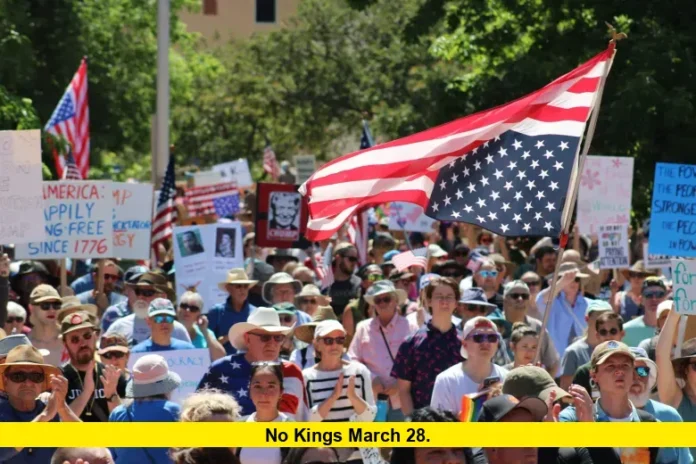

The phrase no kings march 28 is gaining traction across the United States as organizers prepare for one of the largest coordinated protest movements in recent years. Demonstrations are scheduled to take place in cities and towns nationwide on March 28, drawing attention to political tensions, immigration policies, and broader concerns about democratic governance.
Organizers describe the day as a nationwide mobilization centered on peaceful protest, with events planned in thousands of locations across the country.
If you want clear, up-to-date breakdowns of major national events like this, stay connected for continuing coverage and local updates.
What Is the ‘No Kings’ Movement?
The “No Kings” movement began in 2025 and has rapidly grown into a large-scale national protest effort. It centers on opposition to what participants describe as authoritarian-style leadership and policies.
The movement’s name reflects a core message: the United States is not governed by monarchy, and power should remain with the people. Organizers emphasize civic engagement, constitutional rights, and nonviolent action.
Previous demonstrations in 2025 drew millions of participants nationwide, helping the movement expand into a coordinated, recurring effort. The March 28 mobilization is being described as its third major nationwide action.
Why March 28 Is Drawing National Attention
The March 28 protests are expected to be among the largest yet, with thousands of individual events planned across the country. Major cities including New York, Philadelphia, Houston, and Minneapolis are preparing for significant turnout.
Reports indicate that more than 3,000 events could take place nationwide, with large gatherings expected in downtown areas and public spaces. Some cities are planning marches, while others are hosting rallies, speeches, and community events.
Recent developments tied to federal immigration enforcement actions and public concern over civil liberties have fueled momentum behind the demonstrations. These issues have contributed to growing participation and increased visibility for the movement.
Where Protests Are Happening
Events are not limited to major metropolitan areas. Organizers have scheduled demonstrations in suburbs, smaller cities, and rural communities, reflecting a broad geographic reach.
In places like Houston, multiple protests are planned across the metro area. In the Philadelphia region, marches are expected to impact traffic and draw large crowds in central locations. New York City is also preparing for a major gathering in Manhattan.
This decentralized approach allows communities to organize locally while remaining part of a coordinated national effort.
Focus on Nonviolent Demonstration
A central principle of the movement is its commitment to nonviolent protest. Organizers have consistently emphasized de-escalation, lawful participation, and community safety.
Training sessions, volunteer coordination, and public guidance have been part of the preparation process in many cities. These efforts aim to ensure that events remain peaceful while allowing participants to express their views.
Expected Impact on Cities and Daily Life
With large crowds anticipated, city officials in several regions are preparing for disruptions. Road closures, increased security presence, and public transit adjustments are expected in areas hosting major events.
Local authorities have also advised residents to plan ahead for travel delays, particularly in downtown corridors where marches are scheduled.
Businesses and public institutions in some cities may adjust operations depending on the scale of turnout.
How This Movement Has Grown
Since its launch, the “No Kings” movement has evolved from a single-day protest into an ongoing national campaign. Earlier demonstrations brought millions into the streets, and organizers expect even higher participation this time.
The movement includes a coalition of advocacy groups, labor organizations, and grassroots networks. This broad base has helped expand its reach and maintain momentum between major protest dates.
The March 28 mobilization reflects that continued growth, with organizers aiming to sustain engagement beyond a single day of action.
What Participants Are Calling For
While specific messages may vary by location, common themes include:
- Protection of democratic institutions
- Concerns about federal enforcement policies
- Support for civil liberties and constitutional rights
- Greater accountability from government leadership
Speeches, signage, and community programming at events are expected to reflect these shared priorities.
Looking Ahead After March 28
Organizers have indicated that the movement will continue beyond this weekend’s events. Future actions, local organizing efforts, and continued advocacy are expected in the months ahead.
The outcome of the March 28 demonstrations may shape the direction and visibility of the movement moving forward.
As no kings march 28 unfolds, attention will remain on turnout levels, public response, and any policy discussions that follow.
Stay informed as this story develops and watch how events in your area unfold throughout the day.
What are your thoughts on these nationwide protests? Share your perspective or follow along for live updates as events unfold.