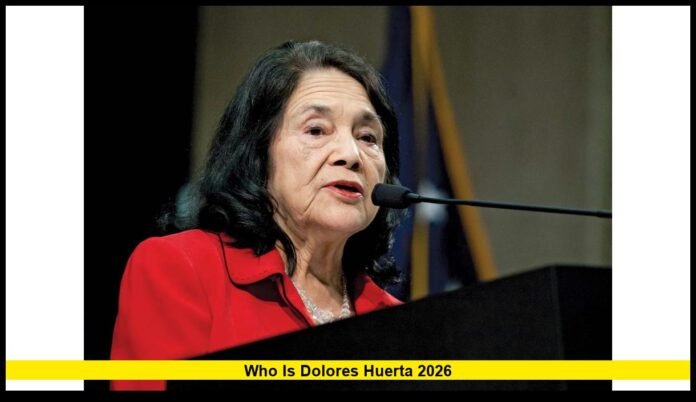

The question who is dolores huerta continues to trend in March 2026 as the civil rights leader remains active, speaking nationwide and advancing worker rights through her foundation and public advocacy.
A Defining Figure in American Labor History
Dolores Huerta stands among the most influential labor organizers in U.S. history. At 95 years old in 2026, she continues to play a visible role in social justice efforts.
Her name is closely tied to the fight for farmworker rights, but her impact extends far beyond agriculture. She has spent decades working on issues that affect working families, women, and underserved communities.
Huerta’s leadership helped reshape how Americans think about labor, equality, and civic participation.
Early Life and Influences
Dolores Huerta was born on April 10, 1930, in Dawson, New Mexico. After her parents divorced, she moved to Stockton, California, where she was raised by her mother.
Her mother, Alicia Chavez, operated a business and often supported neighbors in need. This environment influenced Huerta’s understanding of community responsibility.
She attended college and became a teacher. While teaching, she noticed that many students came to school hungry or lacked basic resources.
That experience led her to shift from education to activism. She wanted to address the root causes of inequality rather than only its effects.
Entry Into Organizing and Community Work
Huerta began her organizing career in the 1950s. She worked with groups focused on improving conditions for Latino communities and farmworkers.
Her early work included:
- Registering voters
- Advocating for better schools
- Addressing economic inequality
These efforts built the foundation for her later work in the labor movement.
Her ability to connect with people and mobilize communities quickly became evident.
Co-Founding the United Farm Workers
In 1962, Dolores Huerta partnered with Cesar Chavez to create the United Farm Workers (UFW). The organization aimed to improve wages and working conditions for agricultural laborers.
Farmworkers at the time faced:
- Extremely low wages
- Limited legal protections
- Exposure to dangerous chemicals
Huerta played a central role in organizing workers and building the union’s structure.
The UFW became one of the most important labor organizations in the country.
Leadership During the Delano Grape Strike
The Delano grape strike, which began in 1965, marked a turning point in the labor movement. Huerta helped lead the effort, which combined strikes with a nationwide consumer boycott.
Her role included:
- Negotiating with growers
- Coordinating organizing efforts
- Building alliances with supporters across the U.S.
The campaign lasted several years and resulted in contracts that improved conditions for farmworkers.
It also brought national attention to their struggles.
Negotiation Skills and Legislative Work
Dolores Huerta was known for her skill as a negotiator. She worked directly with growers to secure agreements that addressed worker concerns.
Her contributions extended into policy advocacy. She helped push for laws that improved labor standards and worker protections.
Her efforts influenced:
- Workplace safety regulations
- Fair labor practices
- Greater political representation for farmworkers
This combination of organizing and policy work strengthened the movement’s impact.
The Meaning Behind “Sí, Se Puede”
Huerta coined the slogan “Sí, se puede,” which translates to “Yes, it can be done.” The phrase became a powerful message during labor campaigns.
Over time, it spread beyond the farmworker movement. It has been used in various social and political efforts.
The slogan reflects Huerta’s belief in collective action and perseverance.
Facing Challenges and Personal Sacrifices
Huerta’s work came with significant challenges. Labor organizing often involved long hours, financial uncertainty, and public opposition.
She also raised a large family while maintaining her activism. Balancing these responsibilities required resilience and dedication.
In 1988, she was seriously injured during a protest in San Francisco. The incident highlighted the risks activists sometimes face.
Despite setbacks, she continued her work without stepping away from the movement.
National Recognition and Awards
Dolores Huerta has received widespread recognition for her contributions.
Her honors include:
- Presidential Medal of Freedom in 2012
- Numerous civil rights awards
- Recognition from universities and organizations
Schools, streets, and community centers across the country bear her name.
These honors reflect the lasting impact of her work.
The Dolores Huerta Foundation
In 2002, Huerta founded the Dolores Huerta Foundation. The organization focuses on empowering communities through education and organizing.
Its work includes:
- Leadership training programs
- Voter engagement initiatives
- Advocacy for social and economic justice
The foundation continues to operate actively in 2026, reflecting Huerta’s ongoing commitment.
Her Role in 2026
Dolores Huerta remains active in public life. She frequently participates in events, discussions, and campaigns.
Her current efforts focus on:
- Encouraging civic participation
- Supporting workers’ rights
- Promoting equality and inclusion
She continues to inspire new generations of activists.
Her presence at public events often draws attention to ongoing social issues.
Impact on Modern Labor and Social Movements
Huerta’s influence extends into today’s labor and social justice movements. Many organizations follow her model of grassroots organizing.
Her legacy can be seen in efforts that address:
- Wage equality
- Workplace safety
- Community empowerment
Activists continue to draw inspiration from her approach to leadership.
Key Milestones in Her Life
- 1930: Born in Dawson, New Mexico
- 1962: Co-founds United Farm Workers
- 1965: Helps lead Delano grape strike
- 1988: Injured during protest but continues activism
- 2002: Establishes Dolores Huerta Foundation
- 2012: Receives Presidential Medal of Freedom
- 2026: Remains active in advocacy
These milestones highlight a lifetime of dedication.
Why Her Story Still Matters
Dolores Huerta’s work remains relevant because many of the challenges she addressed continue to exist.
Workers across industries still seek fair treatment and better conditions.
Her story demonstrates how individuals can create change through persistence and organization.
It also shows the importance of community-driven action.
Lessons From Her Leadership Style
Huerta’s leadership offers valuable insights for today’s world.
- Strong communities create lasting change
- Advocacy requires both strategy and persistence
- Collaboration strengthens movements
These lessons continue to guide leaders and activists.
Education and Cultural Recognition
Her contributions are widely taught in schools and universities. Educational programs highlight her role in shaping labor history.
Cultural recognition includes:
- Documentaries about her life
- Public celebrations of her work
- Inclusion in history curricula
These efforts ensure her legacy remains widely understood.
Conclusion
Dolores Huerta’s life represents decades of dedication to justice and equality. Her influence continues to shape the labor movement and inspire action across the United States.
What part of Dolores Huerta’s legacy do you find most impactful today? Share your thoughts and join the conversation.