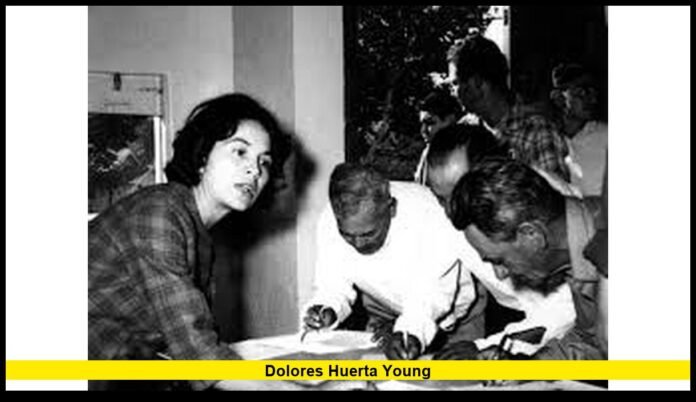

Dolores Huerta young years are gaining renewed attention in 2026 as Americans revisit the roots of one of the nation’s most influential labor leaders. Her early experiences continue to shape conversations around workers’ rights, education, and social justice today.
Huerta remains active through her foundation and public advocacy, making her early life more relevant than ever. Understanding her youth reveals how a determined young woman became a driving force behind major labor reforms in the United States.
Growing Up in New Mexico and California
Dolores Huerta was born on April 10, 1930, in Dawson, New Mexico. Her childhood changed early when her parents separated.
She moved to Stockton, California, with her mother, Alicia Chávez, who played a major role in shaping her values. Chávez was a successful businesswoman who owned a restaurant and hotel. She often helped farmworkers and their families, offering support during difficult times.
This environment gave Huerta early exposure to:
- Economic hardship among working families
- The importance of compassion and service
- Strong female leadership
Her father, Juan Fernández, worked as a miner and later became involved in politics. His public service added another layer of influence during her formative years.
School Years and Early Challenges
Huerta attended school in Stockton, where she quickly stood out as a capable student. Still, she faced discrimination that left a lasting impression.
In one well-known incident, a teacher accused her of cheating because her work exceeded expectations. That moment highlighted the bias faced by Latino students at the time.
Despite these challenges, she stayed focused and completed her education. She later attended Stockton College and trained as a teacher through the University of the Pacific.
Her education gave her tools, but her real lessons came from what she witnessed outside the classroom.
A Life-Changing Realization
Huerta began her career as an elementary school teacher. While teaching, she noticed many students came to class hungry or without basic necessities.
Their parents worked long hours in agriculture but still struggled to survive. This reality deeply affected her.
She soon reached a turning point. Teaching alone could not fix the systemic issues hurting her students’ families. That realization pushed her toward activism.
First Steps Into Activism
During her young adult years, Huerta took action in her community. She co-founded the Stockton chapter of the Community Service Organization.
Her early activism focused on practical change. She worked to improve daily life for Latino families.
Her efforts included:
- Registering voters in underserved communities
- Fighting for better public services
- Building local organizing networks
This work helped her develop strong leadership and organizing skills.
Meeting César Chávez and Expanding Her Mission
Huerta’s path crossed with César Chávez during her organizing efforts. The two quickly recognized their shared vision.
They both believed farmworkers deserved fair wages, safe working conditions, and dignity. Their partnership became one of the most important alliances in labor history.
In 1962, they helped launch what would become the United Farm Workers union.
From Young Organizer to National Leader
Huerta’s transition from a young activist to a national figure happened quickly.
She played a major role in:
- Negotiating labor contracts
- Organizing strikes and boycotts
- Advocating for legislative change
One of her most notable contributions came during the Delano grape strike. Her negotiation skills helped secure important gains for farmworkers.
She also created the phrase “Sí, se puede,” which became a powerful symbol of hope and action.
Barriers She Faced as a Young Woman
Huerta’s rise did not come without challenges. As a Latina woman, she faced both gender and racial barriers.
She often encountered:
- Doubts about her leadership ability
- Limited recognition compared to male counterparts
- Pressure from balancing activism and family life
Even so, she remained committed to her mission. Her persistence helped open doors for future generations of women leaders.
Leadership Style Shaped by Early Experiences
Dolores Huerta young experiences directly influenced her leadership approach.
She became known for:
- Strategic thinking and negotiation
- Grassroots organizing
- Commitment to nonviolent protest
Rather than seeking attention, she focused on results. Her work behind the scenes proved essential to many labor victories.
Recognition of Her Early Impact
Over time, Huerta’s contributions have gained broader recognition across the United States.
Her honors include:
- The Presidential Medal of Freedom in 2012
- Schools, streets, and public spaces named in her honor
- Inclusion in educational programs focused on civil rights
In 2026, her story continues to appear in classrooms, documentaries, and public discussions about equality.
Why Her Youth Still Matters Today
Huerta’s early life offers important lessons for today’s generation.
Her journey shows:
- How early exposure to injustice can inspire change
- The power of education combined with action
- The importance of community-based leadership
Many young activists now look to her story as a guide. Her decision to leave teaching and address root problems remains especially powerful.
Ongoing Influence in 2026
Even in her 90s, Huerta continues to advocate for key issues.
Her work today focuses on:
- Voting rights and civic engagement
- Education equity
- Gender equality
Her foundation trains new leaders and supports grassroots movements. The same passion she showed in her youth still drives her work.
Timeline of Her Early Life
| Year | Milestone |
|---|---|
| 1930 | Born in Dawson, New Mexico |
| 1930s–40s | Raised in Stockton, California |
| 1950s | Became a teacher |
| Late 1950s | Began community organizing |
| 1962 | Co-founded United Farm Workers |
A Legacy Built From Early Determination
Dolores Huerta’s story proves that early experiences can shape lasting impact. Her youth laid the foundation for decades of activism that changed lives across the United States.
Her journey continues to inspire new generations to speak up, organize, and fight for fairness.
How do you see Dolores Huerta’s early life influencing today’s activism? Share your thoughts and join the conversation.