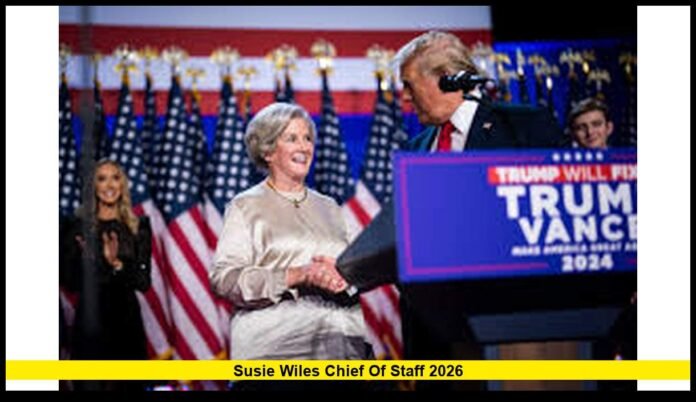

Susie Wiles chief of staff has become a widely discussed topic in American political coverage as the veteran strategist assumed one of the most powerful advisory roles in the U.S. federal government. Known for decades of experience in political campaigns and strategic leadership, Susie Wiles built a reputation as a disciplined organizer who has helped shape major political operations in the United States.
Her appointment to the chief of staff role placed her at the center of national political decision-making. The position carries enormous responsibility, overseeing administrative coordination, political strategy, and communication across multiple government departments.
Understanding Wiles’ influence requires examining her long political career, campaign leadership experience, and the responsibilities associated with serving as chief of staff.
Early Life and Background
Susie Wiles was born in the United States and grew up in a family connected to sports and public life. Her father, Pat Summerall, gained national recognition as a professional football player and later as a prominent sports broadcaster.
Summerall played in the National Football League before transitioning into a long broadcasting career covering major sporting events. Growing up in this environment exposed Wiles to public visibility and high-profile professional settings from an early age.
Her upbringing also emphasized discipline and preparation—qualities that later became hallmarks of her political career.
While her father built a reputation in sports media, Wiles pursued a different path in politics and government operations.
Beginning of Her Political Career
Susie Wiles began working in political campaigns during the late twentieth century. Early roles often involved communications, campaign coordination, and public relations work.
Political campaigns require extensive organization. Staff members must coordinate fundraising, media messaging, volunteer operations, and voter outreach efforts.
Wiles gained experience managing these responsibilities while working with campaign teams and political organizations.
These early positions helped her build relationships with political leaders and develop the skills required to manage complex political operations.
Over time, she became known for maintaining a focused and disciplined approach to campaign management.
Work in Republican Political Strategy
Throughout her career, Wiles worked primarily within Republican political organizations and campaigns.
Political strategists often operate behind the scenes. They help candidates communicate policy ideas, coordinate campaign logistics, and respond to political challenges.
Successful strategists must understand voter behavior, media dynamics, and election strategy.
Core responsibilities of political strategists often include:
- Crafting campaign messaging
- Organizing grassroots voter outreach
- Managing campaign staff and volunteers
- Coordinating advertising and media communication
- Analyzing polling and election trends
Wiles built a reputation for handling these responsibilities with precision and careful planning.
Influence in Florida Politics
A large portion of Wiles’ career involved political work in Florida.
Florida holds a critical place in U.S. elections due to its large population and diverse electorate. Presidential candidates frequently devote significant campaign resources to the state.
Campaign strategists working in Florida must understand regional political dynamics and voter demographics.
Wiles played important roles in several major political campaigns within the state.
Her strategic work helped shape campaign operations and strengthen her reputation as an effective organizer.
The experience she gained in Florida campaigns later contributed to her national political influence.
Campaign Management and Leadership
Political campaigns involve complex organizational structures. Teams must manage thousands of volunteers, coordinate advertising campaigns, and plan events across multiple locations.
Campaign managers and strategists play a central role in ensuring operations run smoothly.
Wiles became known for her leadership style, which emphasizes discipline and efficiency.
Key elements of campaign leadership include:
- Establishing clear communication channels
- Coordinating staff responsibilities
- Managing campaign schedules and travel
- Responding quickly to political developments
- Maintaining consistent messaging
These skills helped Wiles oversee large campaign teams during demanding election cycles.
Role in National Political Campaigns
Over time, Wiles expanded her influence beyond state-level politics and into national campaigns.
National campaigns require coordination across the entire country. Staff members manage communications, fundraising, voter outreach, and digital strategy.
Campaigns often involve thousands of employees and volunteers working simultaneously.
Political strategists like Wiles help unify these efforts under a clear strategic plan.
Their responsibilities include overseeing staff operations, managing political messaging, and advising candidates during key decisions.
The complexity of national campaigns requires experienced leadership capable of maintaining organization during intense public scrutiny.
Understanding the Chief of Staff Role
The position of chief of staff holds significant influence within government operations.
Chiefs of staff serve as senior advisors who coordinate administrative activities and manage communication between departments.
They often act as the primary gatekeeper for senior leaders.
The role typically involves responsibilities such as:
| Responsibility | Description |
|---|---|
| Staff Coordination | Managing teams across government departments |
| Policy Oversight | Monitoring the progress of policy initiatives |
| Communication | Facilitating communication between advisors and leadership |
| Scheduling | Organizing meetings and daily operations |
| Strategic Planning | Assisting leadership in setting priorities |
The chief of staff role requires strong organizational skills and the ability to handle complex decision-making environments.
Leadership and Administrative Management
Serving as chief of staff involves overseeing large teams of advisors and administrators.
Government operations require coordination across many agencies, departments, and policy groups.
The chief of staff helps ensure these operations remain organized and aligned with leadership priorities.
Responsibilities often include:
- Supervising staff meetings
- Coordinating policy discussions
- Managing communication between departments
- Advising leadership on strategic decisions
Because of these duties, the chief of staff is often considered one of the most influential positions within government leadership.
Political Strategy in Government
Political strategy does not end after an election. Government leaders continue developing policy priorities and legislative goals.
Advisors help coordinate communication with lawmakers, policy experts, and public stakeholders.
Strategists like Wiles bring experience from campaign operations into government administration.
This experience helps leaders maintain consistent messaging and effective organizational structures.
Government operations often require balancing political priorities with administrative responsibilities.
Experienced strategists help manage these challenges.
Managing Complex Political Environments
Modern political leadership involves navigating complex political environments.
Government advisors must monitor media coverage, public opinion, and legislative negotiations.
Chiefs of staff frequently coordinate communication between multiple groups.
These groups can include:
- Cabinet officials
- Congressional leaders
- Policy advisors
- Communications teams
Maintaining clear communication among these groups helps ensure policies move forward effectively.
Leadership roles in government therefore require strong organizational and negotiation skills.
Public Attention and Media Coverage
High-level political roles often attract national media attention.
Political strategists typically operate behind the scenes, but senior advisors sometimes become widely recognized figures.
Public interest often increases during election cycles or major policy debates.
Media coverage may focus on leadership decisions, administrative priorities, and government strategy.
This attention reflects the importance of advisory roles within political systems.
Advisors influence how policies are implemented and communicated to the public.
Why the Chief of Staff Role Matters
The chief of staff position plays a central role in shaping how government operations function.
Leaders rely on trusted advisors to manage daily administrative responsibilities.
Without strong coordination, government agencies may struggle to implement policies effectively.
The chief of staff helps maintain structure and communication across the administration.
This role allows leaders to focus on broader policy goals while ensuring internal operations remain organized.
Political Strategy in the Modern Era
Political campaigns and government operations have changed significantly in recent decades.
Digital communication, data analysis, and social media now play major roles in political strategy.
Campaign teams use advanced technology to analyze voter behavior and communicate with supporters.
Strategists must adapt to these changes while maintaining traditional campaign methods.
These methods include community outreach, public events, and policy discussions.
Experienced strategists often combine modern technology with traditional campaign approaches.
Why Public Interest Continues
Interest in susie wiles chief of staff continues as political observers examine leadership roles within American government.
Political strategists influence how campaigns operate and how government policies are organized.
Because of their strategic responsibilities, advisors often play a crucial role in shaping political outcomes.
The careers of experienced strategists offer insight into how modern political systems function.
Observers often follow these careers to understand how leadership decisions affect government operations.
The Importance of Experience in Political Leadership
Leadership roles in politics often require decades of experience.
Campaign strategy, public communication, and policy coordination involve complex decision-making.
Individuals who reach senior advisory positions usually possess extensive knowledge of political processes.
Experience helps leaders manage challenges during elections and government administration.
Wiles’ career demonstrates how long-term involvement in political operations can lead to influential leadership roles.
Looking Ahead
Susie Wiles’ career reflects the significant role that political strategists play in shaping modern government operations.
Her experience in campaign leadership and political organization prepared her for one of the most influential advisory positions in the United States.
The chief of staff role requires coordination, strategic planning, and careful management of administrative responsibilities.
As political discussions continue across the country, leadership positions within government will remain an important part of the national conversation.
Experienced strategists often play a central role in helping leaders navigate the challenges of governing and policy implementation.
What do you think about the influence of political strategists like Susie Wiles in shaping government leadership? Share your thoughts and join the conversation