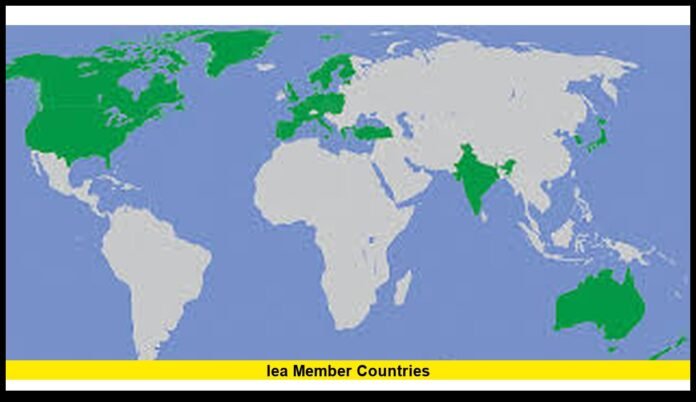

IEA member countries continue to shape global energy policy in 2026 as governments coordinate efforts to maintain energy security and stabilize international markets. The International Energy Agency remains a central organization where advanced economies collaborate on oil supply stability, energy transition policies, and long-term energy planning.
Headquartered in Paris, the agency plays a major role in monitoring global energy markets and guiding coordinated action among its member states. Recent developments, including the invitation for Colombia to join the organization, highlight the agency’s growing influence in international energy governance.
What the International Energy Agency Does
The International Energy Agency (IEA) was established in 1974 in response to the global oil crisis. Its founding goal was to help major energy-consuming nations work together during supply disruptions.
Over time, the agency’s mission expanded beyond oil security. Today it focuses on broader energy challenges, including clean energy transitions and global market stability.
Key responsibilities of the IEA include:
- Monitoring global oil, gas, electricity, and renewable energy markets
- Coordinating emergency responses during energy supply disruptions
- Supporting research and development of new energy technologies
- Promoting policies that improve energy efficiency
- Providing global energy statistics and analysis
One of the agency’s most important requirements is that member nations maintain strategic oil reserves equal to at least 90 days of net oil imports. This rule ensures that members can respond quickly if global supply is interrupted.
Total Number of IEA Member Countries in 2026
As of 2026, the International Energy Agency includes 32 full member nations, with Colombia invited to become the 33rd member once the accession process is finalized.
The membership primarily consists of developed economies that share similar energy security goals and economic cooperation frameworks.
These countries represent a significant share of global energy consumption, making the agency one of the most influential organizations in international energy policy.
Full List of IEA Member Countries
The current IEA member countries are listed below by region.
North America
- United States
- Canada
Europe
- Austria
- Belgium
- Czech Republic
- Denmark
- Estonia
- Finland
- France
- Germany
- Greece
- Hungary
- Ireland
- Italy
- Latvia
- Lithuania
- Luxembourg
- Netherlands
- Norway
- Poland
- Portugal
- Slovak Republic
- Spain
- Sweden
- Switzerland
- United Kingdom
Asia-Pacific
- Australia
- Japan
- South Korea
- New Zealand
Eurasia
- Türkiye
These nations cooperate closely on energy security, market monitoring, and long-term energy strategies.
Association Countries Working With the IEA
In addition to its full members, the agency partners with several association countries that participate in policy discussions and research programs.
Important association partners include:
- India
- China
- Brazil
- South Africa
- Indonesia
- Thailand
- Egypt
- Argentina
- Singapore
- Morocco
- Ukraine
Although these countries are not full members, they contribute significantly to global energy discussions within the IEA framework.
Through both members and partners, the broader IEA network represents around 75% of global energy demand.
Recent Developments Involving IEA Member Countries
Energy security remains a top priority for IEA governments in 2026. Rapid changes in global energy demand, geopolitical tensions, and supply chain disruptions continue to affect energy markets.
Recent cooperation among member nations has focused on:
- Strengthening strategic petroleum reserves
- Stabilizing oil markets during supply disruptions
- Accelerating investments in renewable energy projects
- Expanding energy efficiency programs
- Supporting innovation in clean energy technologies
These initiatives demonstrate how the agency serves as a platform for coordinated international energy policy.
Why Membership in the IEA Matters
Participation in the International Energy Agency offers several key advantages for member countries.
Energy Security
The coordinated emergency oil stock system allows countries to respond quickly during global supply crises.
Policy Cooperation
Members collaborate on policies that promote energy efficiency, innovation, and sustainable development.
Market Transparency
The agency produces detailed reports on global energy trends, helping governments and businesses make informed decisions.
Technology Development
Members work together to advance technologies such as renewable energy, hydrogen, carbon capture, and electric vehicles.
Future Growth of the Organization
The International Energy Agency continues expanding its global reach. Inviting new members and strengthening partnerships with emerging economies are key parts of this strategy.
Colombia’s invitation to join reflects the agency’s goal of including more regions in international energy cooperation. Increased collaboration with major developing economies also helps the organization address global energy challenges more effectively.
As global energy demand grows and countries work toward lower-carbon energy systems, broader cooperation will become even more important.
The United States and Its Role in the IEA
The United States remains one of the most influential participants in the organization. As a founding member, the country helped shape the agency’s structure and policies.
U.S. energy policies, strategic petroleum reserves, and technological innovations often influence discussions within the agency. The country also plays a leading role in research initiatives related to clean energy and energy efficiency.
The Global Impact of IEA Member Countries
The policies and decisions made by IEA member countries affect energy markets around the world. Because these nations represent a large portion of global energy demand, their coordinated actions can stabilize markets and guide future energy investments.
The agency’s work also helps governments balance energy security with environmental goals, especially as countries transition toward cleaner energy systems.
Energy markets continue to evolve rapidly, and the actions taken by IEA member countries will remain essential for global energy stability. Share your perspective in the comments and stay updated as new developments emerge.