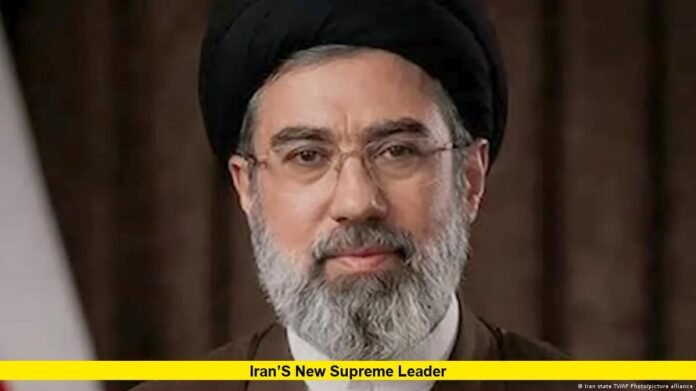

In the span of just over a week, Iran’s political landscape was irrevocably transformed. The assassination of Ayatollah Ali Khamenei on February 28, 2026, during sweeping joint U.S.-Israeli airstrikes, ended a 35-year reign over the Islamic Republic and thrust the country into its deepest existential crisis since the 1979 revolution. Amid the chaos of war, grief, and international pressure, one name emerged from the smoke: Mojtaba Khamenei — the second son of the slain Supreme Leader, a hardline cleric, and a figure who had spent decades operating from the shadows of his father’s extraordinary power.
On March 8, 2026, Iran’s 88-member Assembly of Experts formally announced Mojtaba Khamenei as the third Supreme Leader of the Islamic Republic. At 56 years old, he inherits a nation under bombardment, a regime shaken to its foundations, and a legacy that is equal parts burden and blueprint.
A Life Shaped by Revolution and War
Mojtaba Hosseini Khamenei was born on September 8, 1969, in Mashhad — a city of deep religious significance in northeastern Iran. He was nine years old when the Islamic Revolution swept away the Pahlavi monarchy and elevated his father, then a mid-ranking cleric, into the revolutionary vanguard. Growing up in the household of Ali Khamenei meant growing up inside the revolution itself — absorbing its ideology, its theology, and its zero-sum view of the world.
His early education took him through Sardasht and Mahabad before he graduated high school in Tehran. In 1987, as a teenager of around seventeen, he joined the Islamic Revolutionary Guard Corps (IRGC) and was deployed to the front lines of the Iran-Iraq War — a conflict that had already consumed hundreds of thousands of lives. His time at the front was relatively brief, but analysts have consistently noted the formative weight of that experience. The Iran-Iraq War is not merely history in the Islamic Republic; it is the defining myth of the regime’s founding generation, a source of legitimacy and prestige that echoes through the IRGC to this day. Mojtaba’s wartime service planted the seeds of the deep personal loyalties he would later cultivate within Iran’s security apparatus.
In 1999, after years working in his father’s orbit, Mojtaba moved to the holy city of Qom to pursue formal clerical studies. There, he studied under some of the most ideologically extreme figures in Iran’s religious establishment, including Ayatollah Mohammad-Taqi Mesbah Yazdi — a cleric who notoriously advocated for the suppression of those deemed to be promoting “Western immorality.” This theological education shaped what analysts would later describe as Mojtaba’s fundamentalist and Mahdist worldview, one that sees political struggle through the lens of absolute religious obligation.
After completing his studies, Mojtaba returned to Tehran and joined the Office of the Supreme Leader — not as a figurehead, but as a true insider. Over the following years, he effectively became his father’s gatekeeper, overseeing access to the supreme leader’s office and managing political and security affairs with a discretion that kept him almost entirely out of the public eye.
The Man in the Shadows: Power Without Profile
What is most striking about Mojtaba Khamenei is not what is known about him, but what is not. For a man who wielded extraordinary influence within the Islamic Republic for two decades, he was astonishingly invisible to the Iranian public. He never gave public lectures. He never delivered Friday sermons. He never ran for office or submitted himself to a public vote. By the time his father was killed, many ordinary Iranians had genuinely never heard his voice — yet his fingerprints were on some of the most consequential decisions in the country’s recent history.
Among the most damaging allegations against him is his reported role in the violent suppression of Iranian protesters. In the controversial 2009 election — where incumbent President Mahmoud Ahmadinejad was declared the winner amid widespread accusations of fraud — Mojtaba was said to have personally supervised how the IRGC crushed the massive street demonstrations that followed. He had also allegedly engineered Ahmadinejad’s initial rise to power in the 2005 election, cementing an alliance between the hardline presidency and the security establishment that his father would later come to regret.
In 2019, the United States Treasury Department sanctioned Mojtaba, citing his role in advancing what it described as his father’s “destabilizing regional ambitions and oppressive domestic objectives.” The sanctions exposed, for an international audience, just how central he had been to the machinery of repression within the Islamic Republic.
Western media reports have also described Mojtaba as having amassed a vast personal financial empire — luxury properties in European cities including London and Vienna, investments routed through networks of associates, and a wealth some have estimated in the billions of dollars. Inside Iran, however, analysts tend to frame his economic influence not as private business success but as an extension of his political position and his ties to IRGC-linked economic foundations.
The Succession Question: Controversy and Pressure
For years, the question of who would succeed Ali Khamenei had been one of the most sensitive in Iranian politics. The supreme leader himself had reportedly been deeply resistant to the idea of appointing his own son — aware that doing so would draw uncomfortable comparisons to the dynastic monarchy that the 1979 revolution had overthrown. According to accounts from Assembly of Experts members, Ali Khamenei never allowed the issue to be raised officially during his lifetime, and had reportedly floated the names of senior clerics with stronger theological credentials as preferred successors.
Yet when the crisis came — sudden, violent, and existential — the informal power that Mojtaba had accumulated over decades asserted itself with force. Within days of his father’s assassination, IRGC commanders were making in-person visits and phone calls to Assembly of Experts members, pressuring them to vote for Mojtaba. The assembly’s initial session on March 3 was reportedly stormy, with strong opposition from members who cited his limited formal religious credentials, the ideological contradiction of hereditary rule, and the risks of appointing a new leader while the country was still under active bombardment.
Eight members announced they would boycott a second online electoral session planned for March 5. The international dimension was equally fraught: U.S. President Donald Trump publicly dismissed Mojtaba as a “lightweight” and declared that any new leader who did not secure American approval “is not going to last long.” The Israeli military posted a stark warning on social media, stating that it would not hesitate to target the assembly members themselves, and vowed to pursue any successor.
Despite all of this, the assembly convened, deliberated, and voted. On March 8, 2026, the announcement came: Mojtaba Khamenei had been elected Supreme Leader in what was described as a “decisive vote.” Iran’s President Masoud Pezeshkian called the appointment a “new era of dignity and strength.” The IRGC pledged full allegiance. And the world held its breath.
A Legacy Inherited Under Fire
Mojtaba Khamenei assumes power at the most dangerous moment in the Islamic Republic’s history. The strikes that killed his father also killed his mother, his wife Zahra Haddad Adel, and one of his sons. The country’s top security adviser, IRGC commanders, and senior military officials have been killed or scattered. Oil facilities are burning, producing toxic smoke over Tehran. U.S. and Israeli strikes are ongoing, with explosions reported in Qom and the capital.
Yet the weight of the Khamenei legacy is not only immediate — it is historical, ideological, and profoundly personal. His father’s 35-year tenure defined modern Iran. Ali Khamenei navigated the post-Khomeini era, survived wars and sanctions, presided over the crushing of multiple protest movements, and steered the Islamic Republic through decades of international isolation while maintaining its ideological core. He was, by any measure, an extraordinary political survivor.
Mojtaba’s inheritance is that ideology — amplified, if analysts are correct, to a harder edge. He is widely described as more hardline than his father, more aligned with the IRGC’s maximalist vision, and more open to the possibility of developing a nuclear weapons program. Analysts at the Atlantic Council have noted his close association with fundamentalist clerics who hold Mahdist views — a theology that interprets contemporary political conflict through an apocalyptic religious lens.
His appointment, as Rami Khouri of the American University of Beirut observed, signals continuity. It is, he said, “an act of defiance.” The Islamic Republic is telling the world: you wanted to destroy our system, and instead, we have reproduced it. The name of Khamenei continues. The revolution continues.
International Reactions: Defiance and Doubt
The international reaction to Mojtaba’s appointment has been as divided as the geopolitical landscape that surrounds Iran. Russia’s President Vladimir Putin pledged “unwavering” support for the new Supreme Leader, while China stated its opposition to any targeting of him. Among Iran’s allies and neighbors, there was a degree of relief that a successor had been named quickly, preventing a dangerous power vacuum.
In Washington and Tel Aviv, the response was openly hostile. U.S. Senator Lindsey Graham predicted that Mojtaba would “meet the same fate” as his father. Trump reiterated that the new leader’s legitimacy would require American approval — a statement that, however bombastic, reflects the stark reality of Iran’s military and economic vulnerability in the current moment.
For the Iranian opposition, both domestic and diaspora, the appointment has been met with a mix of despair and outrage. Critics argue that Mojtaba Khamenei represents not change but intensification — a more aggressive, less diplomatically flexible version of the system that has repressed the Iranian people for nearly five decades. His alleged role in the 2009 crackdowns remains a wound that has never healed.
What Comes Next?
The questions surrounding Mojtaba Khamenei’s leadership are as vast as they are urgent. Will he seek a negotiated end to the current war, or will he pursue an escalatory path? Will his reported openness to nuclear weapons development bring Iran closer to the bomb — or closer to destruction? Can he consolidate authority over a state whose top security infrastructure has been decimated? And can he do any of this while remaining a personal target of the most powerful military alliance on earth?
Analysts are divided. Some believe his IRGC ties will actually provide stability — that the revolutionary guards, having backed him so forcefully, will close ranks around him and provide the muscle to keep the regime intact. Others warn that his lack of theological stature will undermine his religious legitimacy, fracturing the clerical establishment in ways that could prove fatal to the system itself.
What is not in doubt is this: Mojtaba Khamenei’s ascension marks the opening of a new and deeply uncertain chapter in Iranian history. He is not a politician who has been tested in public. He is not a theologian whose views have been openly debated. He is, in many ways, still a question mark — a man who spent his life constructing power in secret, now called to exercise it in the most public and perilous of arenas.
The Islamic Republic has survived revolution, war, sanctions, and decades of external pressure. Whether it can survive this — whether he can survive this — is the question that now defines the fate of 90 million Iranians, and much of the Middle East beyond.
Mojtaba Khamenei is 56 years old. His father ruled Iran for 35 years. The world will be watching to see how long, and how, the son intends to follow.
Sources: Al Jazeera, ABC News, Axios, Euronews, Wikipedia, The Jerusalem Post, The Washington Times