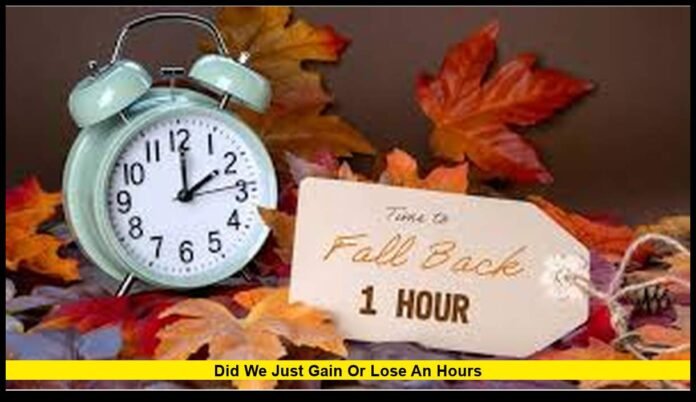

Did we just gain or lose an hour is a question many Americans ask every time the nation adjusts its clocks. In 2026, the United States lost one hour when Daylight Saving Time began on Sunday, March 8, 2026, at 2:00 a.m. local time. At that moment, clocks moved forward to 3:00 a.m., shortening the night by one hour and starting several months of extended evening daylight.
The spring change happens every year on the second Sunday in March across most of the United States. While the adjustment lasts only a moment, it affects daily schedules, sleep routines, and work patterns for millions of people.
For many Americans, the time shift signals the arrival of longer evenings, warmer weather, and the gradual transition toward spring and summer.
What Happens When Clocks Move Forward
Daylight Saving Time begins with a simple but noticeable change.
At 2:00 a.m., clocks jump directly ahead to 3:00 a.m. That one-hour jump removes sixty minutes from the night.
Here is how the change looks on the clock:
| Time Before Change | Time After Change |
|---|---|
| 1:59 a.m. | 3:00 a.m. |
Because the clock skips an hour, people lose one hour of sleep that night.
Although the shift may feel minor, many people notice the change in their sleep schedule and daily routine.
Why the United States Uses Daylight Saving Time
Daylight Saving Time exists to better align waking hours with natural daylight.
When clocks move forward in spring, sunset occurs later in the evening. The extended daylight gives people more sunlight during active hours.
Supporters say the system offers several benefits:
- longer daylight hours after work and school
- more opportunities for outdoor recreation
- potential energy savings from reduced evening lighting
- increased activity in retail and tourism industries
The idea centers on adjusting the clock rather than the sun.
By shifting time forward, the country makes greater use of daylight during the evening hours.
When Daylight Saving Time Ends in 2026
After the spring shift, Daylight Saving Time remains in place for most of the year.
In 2026, it will end on Sunday, November 1, 2026.
During that transition, clocks move backward one hour at 2:00 a.m.
This change restores the hour lost in March.
2026 U.S. Time Change Calendar
| Event | Date | Result |
|---|---|---|
| Start of Daylight Saving Time | March 8, 2026 | Lose one hour |
| End of Daylight Saving Time | November 1, 2026 | Gain one hour |
The fall shift is commonly called “fall back” because clocks move backward.
Which Parts of the United States Do Not Change Their Clocks
Most states observe Daylight Saving Time, but two regions do not follow the clock change.
These locations remain on standard time throughout the year.
Areas That Do Not Observe Daylight Saving Time
- Hawaii
- Most of Arizona
These regions avoid the time adjustment largely because of their geographic location.
Hawaii lies close to the equator, where daylight hours remain fairly consistent year-round.
Arizona already experiences extremely hot summers. Keeping standard time helps maintain earlier sunsets during the hottest months.
How the Time Change Affects Daily Life
When people ask whether they gained or lost an hour, they usually feel the difference right away.
The spring transition often causes temporary sleep disruption.
Common experiences after the time change include:
- feeling tired the next morning
- difficulty falling asleep at the usual time
- adjusting meal schedules
- shifts in commuting routines
Many people need several days to fully adapt to the new schedule.
However, the reward arrives quickly through longer evenings.
Sunset times move later, giving people more daylight after work or school.
Sunrise and Sunset Changes After the Time Shift
Daylight Saving Time changes the relationship between sunrise and sunset.
When clocks move forward, sunrise occurs later in the morning while sunset occurs later in the evening.
For many cities, the change means evening daylight can extend past 7:00 p.m. or even 8:00 p.m. during the summer months.
Later sunsets encourage outdoor activities such as:
- evening walks
- sports practices
- backyard gatherings
- community events
These longer daylight hours contribute to the popularity of the time change among many Americans.
The History of Daylight Saving Time in the United States
Daylight Saving Time has a long and complex history.
The United States first adopted the practice during World War I.
The goal was to conserve fuel by reducing the need for artificial lighting in the evening.
After the war ended, many states abandoned the system.
During World War II, the federal government reintroduced a nationwide time shift called “War Time.”
Following the war, the country returned to a patchwork of local time rules.
Different states and cities observed different schedules, creating confusion for transportation and broadcasting.
To solve the problem, Congress passed the Uniform Time Act of 1966.
This law standardized when Daylight Saving Time begins and ends in states that choose to observe it.
The Modern Daylight Saving Time Schedule
The current schedule began in 2007.
A federal law extended the Daylight Saving period by several weeks.
Under today’s system:
- Daylight Saving Time begins on the second Sunday in March
- Daylight Saving Time ends on the first Sunday in November
The change created a longer stretch of daylight-adjusted time.
Americans now experience about eight months of Daylight Saving Time each year.
Technology and Automatic Clock Adjustments
Modern technology has made time changes easier to manage.
Many devices now update automatically when the time shift occurs.
Devices that adjust automatically include:
- smartphones
- tablets
- computers
- smart watches
- internet-connected home devices
Despite this automation, some clocks still require manual adjustment.
Households often reset:
- microwave clocks
- oven displays
- car dashboards
- traditional alarm clocks
Many families also use the time change as a reminder to check smoke detectors or replace batteries.
Health Effects of Losing an Hour
Some experts say the spring time shift can affect sleep patterns.
When the clock moves forward, the body loses one hour of rest.
This disruption can briefly affect energy levels.
People may notice:
- reduced alertness the next morning
- changes in sleep cycles
- temporary fatigue
Most individuals adjust within a few days.
Establishing a consistent bedtime can help reduce the effects of the change.
Debate About Ending the Time Change
Daylight Saving Time continues to spark debate in the United States.
Some lawmakers have proposed eliminating the twice-yearly clock adjustment.
Supporters of permanent Daylight Saving Time believe a single time system would simplify schedules.
Potential advantages include:
- fewer disruptions to sleep patterns
- consistent work and school schedules
- fewer clock adjustments
Opponents argue that permanent Daylight Saving Time could create very dark winter mornings in some regions.
As of March 2026, the United States still follows the traditional schedule.
How Businesses and Industries Adapt
Many industries rely on accurate timekeeping, so the time shift affects more than household clocks.
Airlines, financial markets, and broadcast networks all coordinate schedules based on official time changes.
Transportation systems update departure times automatically.
Stock exchanges and trading platforms also adjust schedules to maintain consistent operating hours.
Because of these changes, the transition requires careful coordination across multiple sectors.
Why the Time Change Remains a Major Topic
The question of whether Americans gained or lost an hour appears twice every year.
Millions of people search for the answer when the clocks change.
The time shift influences sleep, work schedules, and daily routines.
At the same time, it signals the arrival of longer daylight evenings.
For many Americans, that change marks the unofficial beginning of spring.
The transition also reminds people how closely daily life connects to the rhythms of daylight.
The next time someone asks did we just gain or lose an hour, the answer depends on the season.
In March 2026, the United States lost one hour as Daylight Saving Time began, while the November change will return that hour.
Do you prefer the longer summer evenings of Daylight Saving Time or keeping the same time all year? Share your thoughts and join the conversation.