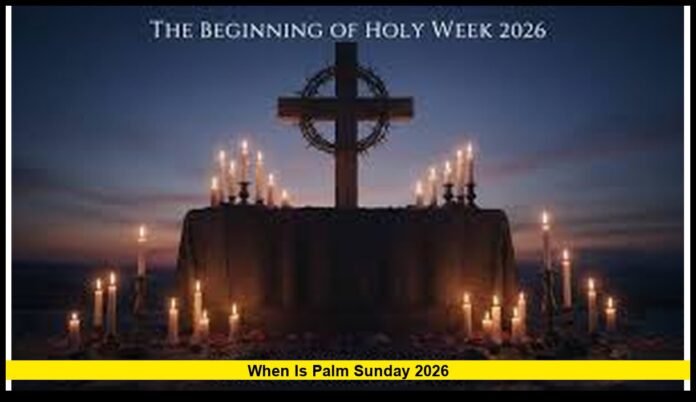

“When is Palm Sunday 2026?” is a common question among Americans preparing for the Easter season. Palm Sunday in 2026 falls on March 29, 2026, marking the beginning of Holy Week in the Christian calendar and leading into the celebration of Easter on April 5, 2026.
Across the United States, churches will hold special services on this day that include palm branches, processions, and readings from the Bible. These traditions reflect the significance of Palm Sunday, which commemorates the biblical account of Jesus Christ entering Jerusalem shortly before his crucifixion. For millions of Christians, this day marks the start of the most sacred and reflective week of the year.
The observance of Palm Sunday has been part of Christian worship for centuries and continues to hold deep meaning today. It remains an important moment of reflection, remembrance, and celebration in Christian communities around the world, connecting modern believers with a tradition that has endured through generations.
Current Information
Palm Sunday Mass
During the Palm Sunday Mass, a deeply symbolic moment marking the beginning of Holy Week, Pope Leo XIV delivered a powerful message rejecting claims that God can be used to justify war. Addressing thousands of worshippers, he emphasized that faith should be a source of peace, compassion, and unity rather than conflict. The Mass, which commemorates Jesus Christ’s entry into Jerusalem, served as a reminder of humility and sacrifice, while the Pope’s words resonated globally, urging believers to reflect on the true teachings of Christianity in a world often divided by violence and misunderstanding.
What Palm Sunday Represents in Christianity
Palm Sunday commemorates the entry of Jesus into Jerusalem, a significant event described in the New Testament of the Bible. It marks the beginning of Holy Week, the final period leading up to Easter, and holds deep spiritual meaning for Christians around the world.
The event is recorded in all four Gospel accounts—Matthew, Mark, Luke, and John—emphasizing its importance within Christian teachings. According to these accounts, Jesus travels to Jerusalem during the Jewish festival of Passover, a time when the city is filled with people gathered for worship and celebration.
As Jesus enters the city, crowds greet him with great enthusiasm and reverence. They spread palm branches and garments along the road, creating a path of honor. The people praise him and shout words of celebration, recognizing him as a figure of hope and salvation.
Palm branches carried strong symbolic meaning in ancient cultures, representing victory, honor, and triumph. Their presence in this event reflects the excitement and expectation surrounding Jesus’ arrival, as many believed he would bring renewal and deliverance.
Today, Christians continue to remember Palm Sunday through worship services and symbolic traditions. These often include the distribution or waving of palm branches, scripture readings about the event, and reflections on its meaning. The day serves as both a joyful celebration and a moment of preparation, reminding believers of the events that follow in Holy Week.
Palm Sunday 2026 and the Holy Week Calendar
Palm Sunday always occurs exactly one week before Easter Sunday, making it the official beginning of Holy Week, the most sacred period in the Christian calendar. Because the date of Easter changes each year—based on the lunar calendar—Palm Sunday also shifts to a different date annually.
In 2026, the Holy Week timeline unfolds as follows:
- Palm Sunday – March 29, 2026
- Holy Thursday (Maundy Thursday) – April 2, 2026
- Good Friday – April 3, 2026
- Holy Saturday – April 4, 2026
- Easter Sunday – April 5, 2026
These days are deeply connected and together form the core story of Christianity, often referred to as the Passion of Jesus Christ.
Palm Sunday marks Jesus’ triumphal entry into Jerusalem, where he was welcomed by crowds with palm branches and praise. This moment sets the stage for the events that follow.
Holy Thursday, also known as Maundy Thursday, commemorates the Last Supper, when Jesus shared a final meal with his disciples and introduced the practice of communion. It is also associated with acts of humility, such as the washing of feet.
Good Friday is a solemn day of remembrance, observing the crucifixion and death of Jesus. It is one of the most reflective days in Holy Week, focusing on sacrifice, suffering, and redemption.
Holy Saturday represents a time of waiting and reflection, marking the period between Jesus’ death and resurrection. Many churches hold quiet services or vigils during this time.
Finally, Easter Sunday celebrates the resurrection of Jesus Christ, symbolizing victory over death and the promise of new life. It is the most joyful and significant day in the Christian faith.
Together, this sequence of days forms a powerful spiritual journey. Each day highlights a key moment from the final days of Jesus’ life, guiding believers through themes of hope, sacrifice, faith, and renewal.
How Churches Celebrate Palm Sunday
Churches throughout the United States mark Palm Sunday with special worship services that reflect both joy and spiritual reflection, as the day opens the most important week in the Christian calendar.
Many congregations begin the service by distributing palm branches to members of the congregation. These palms serve as a symbolic reminder of the crowd that welcomed Jesus into Jerusalem, allowing worshippers to take part in the tradition in a tangible way.
In many churches, the service includes a procession, where participants walk together—sometimes outside the church or through the aisles—holding palm branches. This act symbolizes the original journey into Jerusalem and helps recreate the atmosphere of celebration described in the Bible.
Typical elements of Palm Sunday worship include:
- Reading the Gospel account of Jesus entering Jerusalem, often shared aloud to connect the congregation with the biblical story
- Blessing of palm leaves, which may later be kept, displayed, or used in future religious observances
- Singing hymns and worship songs, many of which focus on praise, kingship, and themes of welcome
- Prayer and quiet reflection, encouraging individuals to prepare spiritually for the events of Holy Week
Some churches also place special emphasis on community involvement by including children in the procession. Children may walk at the front carrying palm branches, adding a sense of joy and participation that reflects the celebratory nature of the day.
Altogether, these practices help bring the biblical account to life in a meaningful and engaging way. They allow worshippers not only to remember the event, but to experience its significance, connecting tradition, faith, and community in a powerful start to Holy Week.
Why Palm Branches Are Important
Palm branches play a central role in Palm Sunday observances, carrying both historical and spiritual meaning within Christian tradition.
In ancient Middle Eastern cultures, palm leaves were widely recognized as symbols of triumph, peace, and honor. They were often used to celebrate victories or to welcome respected leaders, making them a powerful symbol of recognition and respect.
When the crowd greeted Jesus in Jerusalem, they used palm branches to honor and celebrate him, expressing hope and reverence. This act reflected their belief that his arrival was significant and worthy of praise.
Modern churches continue this tradition by distributing palm leaves during Palm Sunday services, allowing worshippers to participate in the same symbolic gesture. This connection between past and present helps bring deeper meaning to the observance.
In many congregations, the palm leaves are woven into small crosses. These crosses serve as lasting symbols of faith and remembrance. Members often take them home and keep them throughout the year as a reminder of the message of Holy Week—faith, sacrifice, and renewal.
Through this simple yet meaningful tradition, palm branches continue to connect believers to the original event while reinforcing the spiritual significance of Palm Sunday.
Palm Sunday and the End of Lent
Palm Sunday occurs near the end of the Lenten season, a period of spiritual preparation that lasts about 40 days. This season is observed by many Christians as a time to slow down, reflect, and grow in their faith ahead of Easter.
Lent begins with Ash Wednesday and encourages believers to focus on prayer, reflection, and personal growth. During this time, many Christians take on spiritual disciplines such as fasting, giving up certain habits, or dedicating more time to worship and service. These practices are meant to create a deeper sense of awareness, humility, and renewal.
As Palm Sunday arrives, it signals that Lent is nearing its conclusion. The tone begins to shift from quiet reflection toward the more intense and meaningful events of Holy Week. It serves as a bridge between the personal spiritual journey of Lent and the collective remembrance of Jesus’ final days.
The final days of Lent lead directly into the observances of Holy Week, where each day carries its own significance—from the celebration of Jesus’ entry into Jerusalem to the remembrance of his crucifixion and, ultimately, the joy of his resurrection on Easter.
This connection highlights a powerful spiritual journey—from reflection to celebration, from preparation to fulfillment—making Palm Sunday a meaningful turning point in the Christian calendar.
Key Events of Holy Week
Holy Week represents the most important period in the Christian calendar, marking the final days of Jesus’ life and forming the foundation of Christian belief. Each day during this week commemorates a specific and meaningful moment, guiding believers through a journey of reflection, remembrance, and ultimately celebration.
Holy Thursday (Maundy Thursday)
Holy Thursday, also known as Maundy Thursday, remembers the Last Supper shared by Jesus and his disciples. This moment is significant because it reflects themes of humility, service, and love.
Church services on this day often include scripture readings that focus on these values. In some congregations, a ceremonial foot washing takes place, symbolizing compassion, humility, and the call to serve others—mirroring Jesus’ actions toward his disciples.
Good Friday
Good Friday commemorates the crucifixion of Jesus Christ, making it one of the most solemn days of the year for Christians.
Services are typically quiet and reflective, centered around prayer, scripture readings, and moments of silence. Many churches hold evening services that focus on remembering the suffering and sacrifice of Jesus, encouraging deep contemplation and reverence.
Holy Saturday
Holy Saturday is a day of waiting and preparation before the celebration of Easter. It represents the time between Jesus’ death and resurrection.
Some churches observe this day with night services or vigils, creating a transition from sorrow to hope. These gatherings often build anticipation for the joy that comes with Easter.
Easter Sunday
Easter Sunday celebrates the resurrection of Jesus Christ and stands as the most significant and joyful event in the Christian faith.
It represents victory over death, hope, and new life, and is marked by celebratory services, music, and gatherings within Christian communities.
Palm Sunday begins this sacred sequence, setting in motion the events that lead to Easter. Together, these days form a powerful narrative of faith, sacrifice, and renewal that continues to be central to Christian belief and practice.
Palm Sunday Observances Across Christian Denominations
Different Christian denominations observe Palm Sunday with unique traditions and styles of worship, yet the central message of the day remains the same—remembering Jesus’ entry into Jerusalem with both celebration and reflection.
Roman Catholic Churches
In Roman Catholic parishes, Palm Sunday typically begins with the blessing of palm branches. Worshippers often gather outside or in a designated area where the palms are blessed before the service begins.
A procession may follow, symbolizing the journey into Jerusalem. After this, the Mass continues with readings, including the Passion narrative, which reflects on the events leading to Jesus’ crucifixion. This combination of joyful procession and solemn readings highlights the dual nature of the day.
Protestant Churches
Many Protestant congregations also observe Palm Sunday by distributing palm leaves and focusing on the Gospel accounts during worship services.
A common feature in Protestant churches is the involvement of the congregation, especially children participating in processions. They may walk through the church holding palm branches, adding a sense of community and celebration. Services often include hymns, prayers, and messages centered on praise and reflection.
Orthodox Christian Churches
Orthodox Christian churches celebrate Palm Sunday according to their distinct liturgical traditions, which may differ in structure and timing from Western practices.
In regions where palm trees are not available, worshippers may use branches from other trees, such as willow or olive branches, maintaining the symbolic meaning even without traditional palms. The services are often rich in ritual, music, and symbolism.
A Shared Meaning
Despite these differences in practice, Palm Sunday across all denominations continues to emphasize a shared message of honor, hope, and spiritual reflection. It unites Christians around the world in remembering a key moment in their faith while preparing for the events of Holy Week.
Historical Development of Palm Sunday Traditions
Palm Sunday observances began many centuries ago, rooted in the earliest Christian efforts to remember the entry of Jesus into Jerusalem. From the beginning, this event was not only recalled through scripture but also expressed through public acts of worship and community participation.
Early Christian communities, particularly in Jerusalem, marked the occasion with processions and prayer gatherings. These early observances aimed to recreate the biblical scene in a meaningful way, allowing believers to physically participate in the remembrance rather than simply hearing it.
Historical records indicate that by the fourth century, churches in Jerusalem were already celebrating Palm Sunday with organized ceremonial processions. Worshippers would walk along routes associated with the original event, carrying branches and singing hymns, closely mirroring the Gospel accounts.
As Christianity spread beyond the Middle East, these traditions gradually expanded into Europe and later into the Americas. While the core meaning remained the same, local customs and cultural influences shaped how Palm Sunday was observed in different regions.
Over time, the use of palm branches became a universal symbol tied to the celebration. Even in areas where palm trees were not available, churches adapted by using branches from other trees, preserving the symbolic gesture.
Today, churches around the world continue these long-standing practices. Palm Sunday remains a powerful link between ancient tradition and modern worship, reflecting a continuity of faith that has been passed down through generations.
Palm Sunday in the United States Today
Palm Sunday services continue to draw large attendance across many American churches, reflecting the importance of the day within the Christian calendar. For many congregations, it is one of the most meaningful Sundays of the year, bringing together individuals and families in shared worship.
Churches often begin preparing weeks in advance to ensure that services are both meaningful and well-organized. These preparations typically include:
- Ordering palm branches for distribution to the congregation
- Organizing choir performances or special music selections
- Decorating the sanctuary to reflect the significance of the day
- Scheduling additional or special worship services to accommodate larger attendance
These efforts help create an atmosphere that is both celebratory and reflective, aligning with the themes of Palm Sunday.
Religious education programs also play an important role during this time. Many churches provide lessons and activities for children, teaching them about the meaning of Palm Sunday and the events of Holy Week in an engaging and age-appropriate way.
Families frequently make it a priority to attend church together, reinforcing traditions and passing them on to younger generations. This shared participation strengthens community bonds and highlights the continued relevance of Palm Sunday in modern American life.
Overall, Palm Sunday in the United States today blends long-standing traditions with active community involvement, making it a significant and widely observed part of the Easter season.
Symbols and Themes Associated With Palm Sunday
Several important themes define the message of Palm Sunday, each reflecting a deeper spiritual meaning that continues to resonate with believers today.
Joyful Celebration
The crowds in Jerusalem welcomed Jesus with excitement, praise, and hope, marking the moment with a sense of celebration. This joyful response is remembered through the use of palm branches, which symbolize honor and a warm welcome. Even today, this theme is reflected in worship services filled with music, participation, and expressions of praise.
Humility
The biblical account highlights that Jesus entered Jerusalem riding a donkey, rather than arriving with power or military strength. This detail carries deep meaning, symbolizing humility, peace, and simplicity. It reminds believers that true leadership is not based on force, but on compassion and service.
Faith and Reflection
Palm Sunday is not only a celebration but also an invitation to pause and reflect. It marks the beginning of Holy Week, encouraging believers to think about the events that follow. The day serves as a transition from joy to deeper spiritual reflection, guiding individuals toward the meaning of Easter.
Together, these themes—celebration, humility, and reflection—capture the full significance of Palm Sunday. They connect the historical event with a continuing spiritual journey that leads into the heart of the Christian faith.
Future Palm Sunday Dates
Because Palm Sunday follows the Easter calendar, its date changes every year. Easter is determined based on the lunar cycle, which is why Palm Sunday does not have a fixed place on the calendar but always falls exactly one week before Easter Sunday.
Here are the upcoming Palm Sunday dates:
- 2026 – March 29
- 2027 – March 21
- 2028 – April 9
- 2029 – March 25
This variation means that Palm Sunday can occur anytime between late March and mid-April, depending on the year.
Churches typically publish their Holy Week schedules months in advance, allowing members to plan attendance for important services, including Palm Sunday, Good Friday, and Easter Sunday. This advance planning helps congregations prepare both spiritually and practically for one of the most meaningful times of the year.
Despite the changing dates, the significance remains constant—Palm Sunday always marks the beginning of Holy Week, setting the stage for the events that lead to Easter.
Why Palm Sunday Continues to Matter
Palm Sunday remains an important day for Christians across the United States, continuing to hold both spiritual and cultural significance in modern times. It serves as a meaningful reminder of a biblical event that took place nearly two thousand years ago, helping believers stay connected to the foundations of their faith.
The observance brings church communities together to reflect on enduring themes such as humility, faith, and hope. These values, highlighted in the story of Jesus’ entry into Jerusalem, continue to resonate in everyday life and encourage personal and collective reflection.
Palm Sunday also marks the beginning of Holy Week, guiding Christians into a period of deeper spiritual focus. During this time, believers reflect on the events that lead to Easter, making it one of the most significant and reflective seasons in the Christian calendar.
Through worship services, music, prayer, and symbolic traditions like the use of palm branches, Palm Sunday remains a powerful and living tradition. It continues to unite generations of believers, offering a moment to pause, remember, and prepare for the message of Easter.
Palm Sunday in 2026 will occur on March 29, marking the beginning of the sacred journey of Holy Week for millions of Christians around the world. This day serves as a spiritual starting point, guiding believers into a period of reflection, remembrance, and preparation leading up to Easter.
For many, Palm Sunday is more than just a date on the calendar—it is a meaningful transition into the most important week in the Christian faith. It sets the tone for the days ahead, connecting the celebration of Jesus’ arrival in Jerusalem with the deeper events that follow, including his crucifixion and resurrection.
As churches gather and communities come together, Palm Sunday continues to symbolize faith, renewal, and the beginning of a deeply significant spiritual journey.
How does your church or community celebrate Palm Sunday each year? Share your traditions and join the conversation about this meaningful day in the Christian calendar.