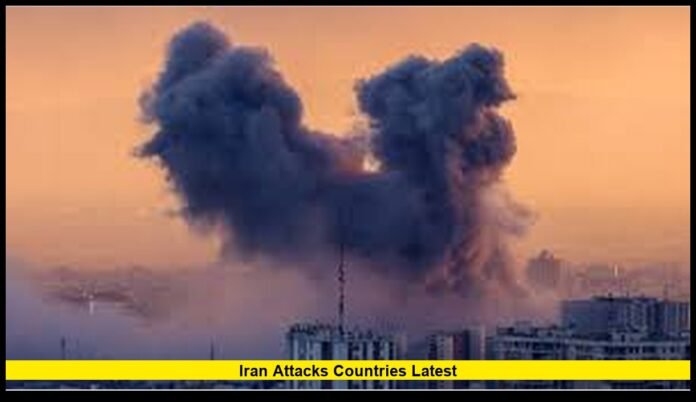

Iran attacks countries has become a widely discussed issue in international security as tensions across the Middle East continue to draw global attention. Over the past several years, Iran has been involved in direct military strikes and conflicts connected to allied groups operating in multiple countries. These developments have intensified geopolitical pressure and increased concerns among governments, especially in the United States and allied nations.
Recent military incidents involving missile launches, drone operations, and regional proxy conflicts have placed Iran at the center of several major security discussions. Events across Israel, Iraq, Syria, and the Red Sea region have highlighted how regional confrontations can quickly affect international stability.
Understanding the current situation requires examining the broader military strategy used by Iran, as well as the recent actions that have shaped tensions throughout the Middle East.
Iran’s Military Strategy in the Middle East
Iran has built a complex security strategy designed to influence events beyond its borders. The country combines traditional military power with partnerships involving allied groups operating in different parts of the region.
Instead of relying only on conventional warfare, Iran often supports organizations that share political or ideological alignment with its leadership. This approach allows Tehran to maintain influence while avoiding full-scale conflict with powerful rivals.
Key components of Iran’s regional strategy include:
- Development of long-range missile systems
- Expansion of drone warfare capabilities
- Support for armed groups in neighboring countries
- Strategic deterrence against perceived threats
This network of alliances has shaped many of the conflicts taking place across the Middle East today.
Direct Confrontation With Israel
One of the most dramatic escalations occurred in April 2024 when Iran launched a large-scale attack against Israel. Hundreds of drones and missiles were fired toward Israeli territory in an operation that marked a significant moment in the long-running confrontation between the two countries.
The strike represented the first time Iran launched such a large attack directly from its territory toward Israel. The incident followed heightened tensions after an earlier airstrike destroyed a diplomatic building used by Iran in Syria.
Israel activated its advanced air defense systems and worked with international partners to intercept incoming projectiles.
Several countries helped intercept the attack:
- Israel’s own missile defense network
- United States military forces in the region
- United Kingdom aircraft and defense systems
- Jordanian air defenses
Most drones and missiles were destroyed before reaching their targets. Even so, the attack marked one of the most serious escalations in the conflict between Iran and Israel.
Regional Conflicts Involving Iranian Allies
The broader debate around whether iran attacks countries directly or indirectly often centers on the network of allied groups operating throughout the Middle East.
Several armed organizations maintain close relationships with Iran’s leadership and security institutions. These groups operate in different countries and often participate in regional conflicts.
Areas where these alliances have played significant roles include:
- Lebanon
- Iraq
- Syria
- Yemen
While each group operates independently within its own territory, they share strategic ties with Tehran. These relationships have shaped multiple conflicts and military incidents across the region.
Yemen and the Houthi Conflict
The ongoing conflict in Yemen remains one of the most visible examples of Iran’s regional influence.
The Houthi movement controls significant areas of Yemen and has been involved in a long conflict with a Saudi-led coalition. The group has launched missiles and drones targeting military facilities and infrastructure in neighboring countries.
Saudi Arabia and the United Arab Emirates have both faced attacks during the conflict.
In recent months, the Houthis also targeted commercial ships traveling through the Red Sea, one of the most important shipping routes in the world. Several vessels experienced drone or missile strikes while traveling through the region.
These incidents disrupted international shipping and led to increased naval patrols by multiple countries.
Global shipping companies responded by rerouting vessels or increasing security measures.
Security Incidents in Iraq
Iraq has experienced numerous security incidents involving armed groups aligned with Iran.
Several militias operating in the country maintain political and military ties to Tehran. These groups have occasionally targeted bases where American forces are stationed.
Attacks often involve rockets or drones launched toward military facilities.
U.S. forces remain in Iraq as part of a mission focused on counterterrorism and regional stability. Because of that presence, American bases sometimes become targets during periods of heightened tension.
The United States has responded to certain attacks with defensive operations and strikes aimed at reducing threats to its personnel.
Syria’s Role in Regional Tensions
Syria also plays a central role in the broader regional conflict.
Iran has supported the Syrian government throughout the country’s long civil war. Military advisers and allied forces linked to Iran operate within parts of Syria.
Israeli airstrikes have frequently targeted facilities believed to be connected to Iranian military operations inside Syrian territory.
These strikes aim to prevent advanced weapons from reaching armed groups hostile to Israel.
The ongoing exchange of military actions has kept Syria at the center of regional tensions.
Iran’s Expanding Drone Technology
Drone technology has become one of the most important elements of Iran’s military capabilities.
Over the past decade, Iranian engineers developed several types of unmanned aerial vehicles designed for surveillance and combat missions.
These drones offer several strategic advantages:
- Long operational range
- Lower production costs compared to traditional aircraft
- Ability to conduct reconnaissance missions
- Precision strike capabilities
Iranian drones have appeared in multiple conflicts across the Middle East.
The growing use of unmanned aircraft has changed how regional conflicts are fought. Many attacks now involve drones instead of conventional fighter jets or large missile systems.
Ballistic Missile Development
Missile technology remains another central component of Iran’s military program.
Iran possesses a large inventory of ballistic missiles with varying ranges and capabilities.
Missile systems allow the country to strike targets hundreds or even thousands of miles away.
Major missile categories include:
| Missile Type | Primary Role |
|---|---|
| Short-range ballistic missiles | Tactical battlefield strikes |
| Medium-range missiles | Regional deterrence |
| Cruise missiles | Precision targeting |
| Drone-assisted missile systems | Coordinated strike operations |
These weapons play a major role in Iran’s defense doctrine.
Missile capabilities also influence how neighboring countries approach regional security planning.
Global Diplomatic Reactions
Iran’s military activities have prompted strong reactions from governments around the world.
Western nations continue to monitor developments closely due to the potential impact on global stability.
Common diplomatic responses include:
- Economic sanctions targeting Iranian industries
- Increased military cooperation among regional allies
- Naval patrols protecting international shipping routes
- Diplomatic negotiations aimed at reducing tensions
The United States has taken a leading role in coordinating security partnerships with countries in the region.
These efforts aim to deter attacks and prevent escalation into larger conflicts.
Impact on Global Trade and Energy
Middle Eastern conflicts often affect international trade and energy markets.
Shipping routes near the Persian Gulf and the Red Sea handle a large portion of the world’s oil and cargo shipments.
When military incidents occur near these routes, shipping companies may alter their routes or delay deliveries.
Such disruptions can influence:
- Oil prices
- Global shipping costs
- International supply chains
For the United States and its allies, maintaining secure trade routes remains a critical strategic priority.
The Role of International Alliances
Regional alliances play a major role in responding to security challenges involving Iran.
Countries including Israel, Saudi Arabia, and the United Arab Emirates maintain close security cooperation with the United States.
These partnerships involve intelligence sharing, missile defense systems, and joint military exercises.
The goal of these alliances is to strengthen regional stability and discourage large-scale conflict.
At the same time, diplomatic negotiations continue in an effort to reduce tensions between rival powers.
Ongoing Monitoring of Regional Developments
Military developments involving Iran remain under constant observation by governments and security analysts.
The combination of missile capabilities, drone technology, and regional alliances makes the situation complex.
Small incidents can quickly escalate if multiple countries become involved.
Because of this risk, global leaders continue to pursue diplomatic solutions while maintaining defensive preparedness.
A Region Facing Continuing Tension
The Middle East remains one of the most strategically important regions in global politics. Conflicts involving Iran influence international security, energy markets, and diplomatic relations.
Military actions connected to Iran have intensified discussions about stability across the region.
While diplomatic efforts continue, tensions remain high as governments monitor developments and prepare for potential changes in the security landscape.
What are your thoughts on the growing tensions across the Middle East and the impact of these conflicts on global security? Share your perspective and stay informed as events continue to unfold.