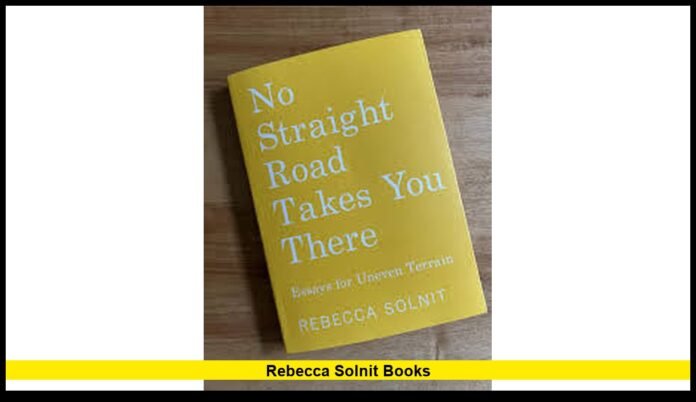

Rebecca Solnit books continue to shape conversations about feminism, environmental awareness, storytelling, and social change in the United States. The San Francisco–based writer has produced more than two decades of influential nonfiction that blends history, cultural commentary, and personal reflection. Titles such as Men Explain Things to Me, Hope in the Dark, and A Field Guide to Getting Lost remain widely read in universities, book clubs, and public discussions about modern society.
Solnit’s work connects historical insight with contemporary issues. Her essays examine how power, language, and narrative influence everyday life. Through books, lectures, and essays, she has become one of the most recognized voices in American nonfiction.
Early Life and Background
Rebecca Solnit was born in 1961 in Bridgeport, Connecticut. She moved to California as a teenager and later settled in San Francisco. The landscapes and culture of the American West would eventually shape much of her writing.
During her early years, Solnit developed an interest in literature, art, and social issues. She later attended the University of California, Berkeley, where she earned a master’s degree in journalism.
Her early writing career focused on art criticism and cultural commentary. Over time, she expanded her work to include essays on politics, gender, environmental history, and activism.
Living in California influenced her perspective on landscapes, urban development, and environmental challenges. Many of her books explore the connection between place, culture, and identity.
How Rebecca Solnit Built Her Literary Career
Solnit began publishing books in the 1990s. Her early works examined cultural history and art.
One of her first major books, Savage Dreams, explored the relationship between the American West, military history, and Native American land. The book combined travel writing with historical analysis.
As her career progressed, Solnit gained recognition for essays that connected historical events to present-day issues. She developed a distinctive voice that blends storytelling with careful research.
Her books often cross traditional genre boundaries. Some combine memoir with history, while others mix political analysis with philosophical reflection.
This approach has helped her reach readers across different fields, including literature, environmental studies, and gender studies.
Themes That Define Rebecca Solnit Books
Several recurring themes appear throughout Rebecca Solnit books. Her work frequently addresses social structures and the power of storytelling.
Common themes include:
- Feminism and gender equality
- Environmental protection
- Political activism
- Cultural history
- The role of storytelling in shaping society
Solnit often examines how narratives influence public understanding. She argues that stories help define how societies interpret events, history, and identity.
Her essays encourage readers to look closely at everyday experiences and the cultural systems that shape them.
Men Explain Things to Me and Cultural Conversations
One of Solnit’s most widely discussed books is Men Explain Things to Me, published in 2014.
The book grew from an essay she wrote about a familiar social interaction where men dismiss women’s knowledge and attempt to explain topics unnecessarily. The essay sparked widespread discussion about gender dynamics.
The book includes several essays addressing issues such as:
- Gender inequality
- Violence against women
- The importance of women’s voices in public spaces
The concept associated with the essay became widely known as “mansplaining.” The idea quickly entered public conversation in workplaces, universities, and media discussions.
The book’s impact extended beyond literary circles. Many readers saw it as a clear explanation of everyday experiences related to gender power dynamics.
Hope in the Dark and the Study of Activism
Another important title in Solnit’s body of work is Hope in the Dark.
Originally published in 2004, the book focuses on social movements and the unpredictable nature of political change.
Solnit examines historical moments when grassroots activism influenced national and global events. Her writing highlights the role of ordinary people in shaping political outcomes.
The book discusses themes such as:
- Civil rights activism
- Environmental movements
- Anti-war protests
- Grassroots organizing
Readers often turn to this book during periods of political uncertainty because it emphasizes the long-term impact of social action.
A Field Guide to Getting Lost
Published in 2005, A Field Guide to Getting Lost explores the idea of uncertainty and discovery.
The book combines personal reflections with cultural history and artistic exploration. Solnit discusses travel, literature, and the human experience of navigating unfamiliar places.
Topics addressed in the book include:
- Exploration and curiosity
- Artistic creativity
- Cultural ideas about wandering
- The meaning of maps and geography
The essays often move between historical events and personal observations. This structure gives the book a reflective and philosophical tone.
Many readers consider it one of Solnit’s most lyrical works.
The Mother of All Questions
In The Mother of All Questions, published in 2017, Solnit explores how society treats women’s voices and personal choices.
The title refers to a question women frequently face about motherhood. Solnit uses the idea to examine how expectations shape women’s roles in society.
The book includes essays on:
- Gender stereotypes
- Silence and voice in public life
- Representation in culture and politics
Through these essays, Solnit discusses how storytelling can challenge long-standing social assumptions.
Recollections of My Nonexistence
Solnit released her memoir Recollections of My Nonexistence in 2020.
The book reflects on her early life in California and her path toward becoming a writer. It also explores the broader cultural environment that shaped her experiences.
The memoir addresses topics such as:
- Growing up in the 1960s and 1970s
- Personal identity and independence
- Women’s opportunities in intellectual spaces
Solnit connects personal memories with cultural history, offering readers insight into the experiences that influenced her writing career.
Selected Rebecca Solnit Books
Rebecca Solnit has written many books across different topics. The following titles represent some of her most recognized works.
| Title | Year | Focus |
|---|---|---|
| Savage Dreams | 1994 | Cultural and environmental history |
| River of Shadows | 2003 | The story of photographer Eadweard Muybridge |
| Hope in the Dark | 2004 | Social movements and activism |
| A Field Guide to Getting Lost | 2005 | Exploration, art, and discovery |
| Men Explain Things to Me | 2014 | Feminism and gender dynamics |
| The Mother of All Questions | 2017 | Essays on gender and society |
| Recollections of My Nonexistence | 2020 | Memoir and cultural reflection |
These books illustrate Solnit’s wide-ranging interests, from photography history to feminist analysis.
Environmental Writing and Place
Environmental themes appear frequently in Solnit’s work.
Living in California has given her a close connection to landscapes such as deserts, coastlines, and urban parks. Her writing often explores how humans interact with natural environments.
Several of her essays address topics such as:
- Public land preservation
- Urban environmental change
- The cultural meaning of landscapes
She often connects environmental issues to social justice and community activism.
This approach highlights how environmental challenges affect both ecosystems and human communities.
Influence on Literature and Public Discussion
Rebecca Solnit’s books have reached readers across multiple fields.
Universities frequently assign her essays in courses related to:
- Gender studies
- American literature
- Environmental studies
- Cultural history
Book clubs also continue to discuss her work because her essays address issues that affect everyday life.
Her writing style makes complex ideas accessible without losing intellectual depth.
Through essays and public engagement, Solnit remains an important voice in conversations about culture and democracy.
A Distinctive Style of Storytelling
Solnit’s writing stands out for its combination of history, narrative, and reflection.
She often begins with a small personal observation before connecting it to larger cultural themes. This technique allows readers to see how individual experiences relate to broader social issues.
Her essays move easily between past and present. Historical stories often appear alongside contemporary reflections.
This storytelling approach encourages readers to reconsider how narratives influence society’s understanding of events.
Continuing Interest in Rebecca Solnit Books
Readers across the United States continue to explore Rebecca Solnit books for insight into culture, politics, and identity.
Her work invites readers to question assumptions and pay attention to the power of language and storytelling.
Whether writing about landscapes, feminism, or activism, Solnit connects ideas in ways that encourage deeper reflection.
Her books remain widely discussed in literary communities, classrooms, and public forums.
Which Rebecca Solnit book stands out most to you? Share your thoughts in the comments and join the conversation. 📚