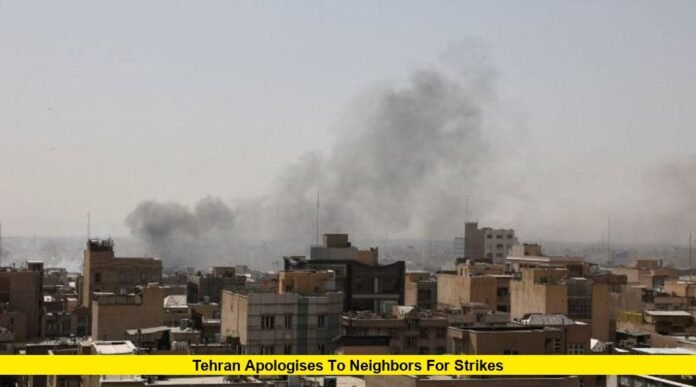

Tensions across the Middle East intensified this week as Tehran apologises to neighbors for strikes that hit several Gulf countries while the conflict involving Iran, the United States, and Israel continues to expand. The statement from Iran’s leadership marks a rare diplomatic move during a rapidly escalating regional crisis.
The apology came as missile and drone attacks spread across the region and global leaders warned that the fighting could widen further. Iranian officials said attacks on neighboring countries were not intended as acts of aggression but occurred amid chaotic military responses during the ongoing war.
Stay with us for the latest developments as this story continues to unfold across the Middle East and global politics.
Iran Issues Rare Apology to Gulf Nations
Iranian President Masoud Pezeshkian delivered a televised message acknowledging recent missile and drone strikes that impacted neighboring Gulf states. In the address, he apologized to countries in the region and said Iran had no intention of attacking its neighbors.
The Iranian leadership council announced a directive ordering the armed forces to halt strikes against neighboring countries unless those nations launch attacks on Iran first. The decision is intended to prevent the conflict from spreading further across the Middle East.
Officials also stated that Iran’s leadership structure has been under intense pressure following the killing of senior commanders and political leaders in recent airstrikes. According to Iranian authorities, the sudden loss of key military leadership contributed to uncoordinated retaliatory actions that affected regional targets.
Several Gulf nations—including Saudi Arabia, Bahrain, Qatar, Kuwait, and the United Arab Emirates—have experienced missile alerts or interceptions during the past week as the war intensified.
War in the Middle East Enters a Dangerous Phase
The conflict between Iran and its adversaries has now entered a new stage marked by widespread airstrikes, missile launches, and military operations across multiple countries.
Israeli warplanes carried out large-scale strikes targeting military infrastructure in Tehran and other Iranian cities. Iranian forces responded by launching missiles toward Israeli territory while also targeting locations connected to U.S. military operations in the region.
The fighting has also spread into Lebanon, where Israeli forces struck positions linked to Hezbollah. Clashes between Israeli troops and Hezbollah fighters have been reported along several areas near the Lebanese border.
Civilian casualties have continued to rise as strikes hit urban areas and military facilities. Airports, energy infrastructure, and shipping routes across the Persian Gulf have also been affected, raising concerns about disruptions to global energy markets.
Trump Signals Possible Escalation
U.S. President Donald Trump signaled that Washington may intensify its military campaign against Iran if hostilities continue. The administration has demanded Iran’s unconditional surrender and warned that additional targets could be considered.
American and Israeli forces have already conducted thousands of strikes against Iranian military sites since the conflict began. U.S. officials say the operations are aimed at weakening Iran’s military capabilities and preventing further attacks on American forces and regional allies.
The United States has also approved additional military support for Israel as the war continues. Pentagon officials say American troops and equipment in the region remain on high alert.
Despite the growing military pressure, Iranian leaders have rejected demands to surrender and say the country will continue defending itself.
Reports of Russian Intelligence Support
Another major development involves reports that Russia has provided intelligence information to Iran that could help identify American military assets in the region.
According to U.S. officials familiar with intelligence assessments, the information included data that could assist Iranian forces in targeting warships, aircraft, and other military infrastructure.
However, officials also indicated there is no evidence that Moscow is directing how Tehran uses the information. The development highlights the increasingly complex geopolitical dynamics surrounding the conflict.
Russia has publicly called for an immediate ceasefire and urged diplomatic negotiations to end the violence.
Regional Impact and Global Concerns
The widening conflict has triggered alarms among governments across the Middle East and beyond. Energy markets have reacted sharply as tensions threaten shipping routes in the Persian Gulf and the Strait of Hormuz, one of the world’s most important oil transit corridors.
Air travel across parts of the Middle East has also been disrupted as countries close airspace due to missile threats and military operations.
Regional leaders are pushing for diplomatic solutions, fearing that continued escalation could drag additional countries into the conflict.
The Iranian government’s statement that Tehran apologises to neighbors for strikes is being viewed as an attempt to prevent further deterioration of relations with Gulf states that have tried to avoid direct involvement in the war.
Uncertain Path Ahead
Despite Iran’s pledge to halt attacks on neighboring countries, missile launches and airstrikes across the region have continued as the conflict enters its second week.
Military analysts say the situation remains highly volatile, with several possible flashpoints that could expand the war further.
Iran has warned that U.S. and Israeli military bases across the region remain potential targets if attacks on Iranian territory continue. At the same time, Washington and its allies say they will maintain military pressure until their objectives are achieved.
As the conflict unfolds, governments around the world are watching closely for signs of either escalation or diplomatic engagement that could help stabilize the region.
What do you think about the latest developments in the Middle East? Share your thoughts below and stay tuned for more updates as this situation continues to evolve.