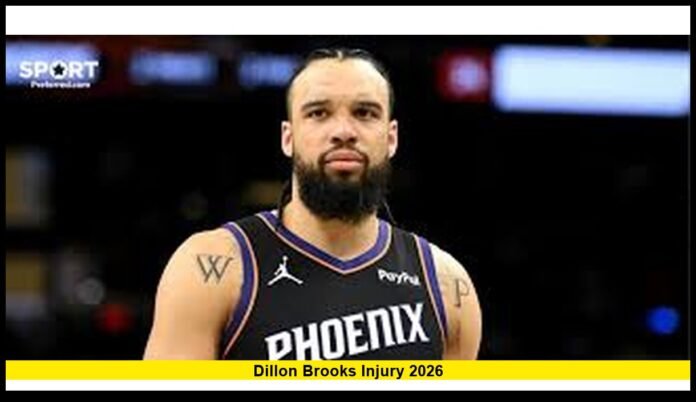

Dillon Brooks injury updates have drawn strong attention from NBA fans during the 2025–2026 season as the Houston Rockets forward has dealt with health concerns that briefly affected his availability. As of March 6, 2026, Brooks has returned to the court after missing time earlier in the season while managing a minor injury, and he continues to play a major defensive role for Houston.
The Rockets rely heavily on Brooks for his defensive toughness, leadership, and physical intensity. Whenever he appears on the injury report, it becomes a significant topic among fans and analysts because his presence directly influences the team’s defensive structure.
This report provides a detailed look at the injury situation, his recovery process, and why Brooks remains one of the most important players on Houston’s roster.
Dillon Brooks: A Key Piece of the Rockets’ Identity
Dillon Brooks has built a reputation as one of the most competitive defensive wings in the NBA. The Canadian-born forward brings physical play, emotional intensity, and a willingness to guard elite scorers.
Houston added Brooks to the roster in 2023 during a major shift in the team’s rebuilding strategy. The organization wanted experienced veterans who could help guide a young core of developing players.
Brooks quickly became one of the most vocal leaders in the locker room and one of the toughest defenders on the court.
Player overview
| Category | Information |
|---|---|
| Full Name | Dillon Brooks |
| Birthdate | January 22, 1996 |
| Birthplace | Mississauga, Ontario, Canada |
| Height | 6 feet 7 inches |
| Position | Small Forward |
| Current Team | Houston Rockets |
| NBA Draft | 2017, 45th overall |
His combination of physical defense and competitive attitude makes him one of the league’s most recognizable role players.
Details Surrounding the Injury
The Dillon Brooks injury situation during the current NBA season involved a short-term issue that forced the forward to miss several games earlier in the schedule.
Houston’s training staff monitored his condition closely and placed him on the injury report during the recovery process. The team decided to take a cautious approach to ensure he could return without risking further complications.
Key points from the timeline include:
- Brooks was listed on the injury report during the season.
- He missed multiple games while recovering.
- The injury was not considered long-term.
- Houston gradually reintroduced him to game action after recovery.
Once he completed rehabilitation and conditioning, Brooks returned to the lineup and resumed his usual minutes.
Immediate Impact of His Absence
When Brooks missed time, the Rockets felt the loss in several areas.
The forward typically handles difficult defensive matchups against opposing stars. His absence forced Houston to adjust defensive assignments and rotations.
Without Brooks on the court, the team experienced:
- Reduced perimeter defensive pressure
- Fewer experienced defenders on opposing wings
- Increased responsibility for younger players
- Less physical intensity on the defensive end
The Rockets rely on defensive energy as a key part of their identity, and Brooks often sets that tone early in games.
His return helped stabilize the defense and restore the aggressive style the team prefers.
Defensive Strengths That Define Brooks’ Game
Brooks stands out in the NBA because of his relentless defensive approach.
He often takes on the challenge of guarding the opposing team’s top scorer. Many players avoid that responsibility, but Brooks embraces it.
His defensive style includes:
- Strong on-ball pressure
- Physical play against elite wings
- Quick lateral movement on the perimeter
- High-energy effort throughout the game
These qualities make him a valuable player even when his scoring numbers fluctuate.
Coaches across the league recognize his ability to disrupt offensive rhythm.
Offensive Contributions
Although defense remains his primary strength, Brooks also contributes offensively.
During the 2025–2026 season, his offensive role includes:
- Spot-up three-point shooting
- Attacking the rim in transition
- Cutting toward the basket for scoring opportunities
- Providing spacing for teammates
Houston does not rely on him as a primary scorer. Instead, he provides balanced support while focusing on defense.
His ability to hit timely perimeter shots helps keep defenses honest.
College Career at Oregon
Before entering the NBA, Brooks developed his reputation at the University of Oregon.
He played for the Ducks from 2014 to 2017 and quickly became one of the program’s most successful players.
Major college achievements include:
- Pac-12 Player of the Year in 2017
- Consensus All-American honors
- Leading Oregon to the Final Four in the 2017 NCAA Tournament
His leadership and scoring helped transform Oregon into a national contender during his final season.
That success helped elevate his draft stock and prepared him for professional competition.
Entering the NBA
Brooks entered the 2017 NBA Draft after his junior season at Oregon.
He was selected in the second round with the 45th overall pick. Despite being chosen later in the draft, he quickly proved capable of competing at the highest level.
He began his career with the Memphis Grizzlies, where he developed into a starting wing player.
During his time in Memphis, Brooks became known for:
- Physical defense
- Aggressive scoring attempts
- Emotional competitiveness
- Strong confidence in big moments
His outspoken personality also made him one of the league’s most talked-about players.
Transition to the Houston Rockets
In 2023, Brooks joined the Houston Rockets during an offseason focused on adding veteran leadership.
Houston had a roster filled with young talent but lacked experienced players who could guide the team through difficult games.
The organization saw Brooks as an ideal fit because he provides:
- Defensive toughness
- Strong locker-room presence
- High-energy competitiveness
- Experience against elite NBA opponents
His arrival helped change the team’s defensive mentality.
Leadership on a Developing Roster
Houston’s roster includes several young players still adjusting to the NBA.
Veterans like Brooks help bridge the gap between potential and consistent performance.
His leadership role includes:
- Communicating defensive strategies on the court
- Encouraging teammates during tough stretches
- Maintaining intensity during practices
- Demonstrating physical effort in games
Younger players often follow the example set by experienced teammates.
When Brooks temporarily missed time because of injury, Houston lost one of its most vocal leaders.
Playing Style and Physical Demands
Brooks plays with an aggressive edge that requires strong physical conditioning.
His role demands constant effort. He frequently fights through screens, battles for loose balls, and applies pressure on opposing scorers.
That level of physical play can increase the risk of minor injuries during the long NBA season.
Professional basketball schedules are demanding. Teams play dozens of games across several months while traveling frequently.
Because of this workload, players occasionally deal with minor injuries that require short recovery periods.
Importance of Recovery Management
NBA teams invest heavily in medical staff and recovery programs to keep players healthy.
When Brooks dealt with his injury earlier this season, the Rockets followed a structured recovery plan.
Typical recovery steps for NBA players include:
- Medical evaluation and diagnosis
- Physical therapy and rehabilitation
- Strength training to support the injured area
- Gradual return to basketball activities
- Full participation in games
Houston’s cautious approach helped ensure Brooks returned without long-term complications.
Fan Interest and Media Attention
Any injury involving a high-energy defensive player like Brooks attracts attention.
Fans follow injury reports closely, especially during important stretches of the season.
The Dillon Brooks injury updates sparked discussion among:
- Houston Rockets supporters
- NBA analysts evaluating defensive matchups
- Fantasy basketball players monitoring roster changes
Once Brooks returned to action, many observers noted the immediate improvement in Houston’s defensive effort.
Role in Houston’s Season Goals
The Western Conference remains extremely competitive.
For Houston to compete consistently, the team needs players who bring defensive toughness and leadership.
Brooks plays a major role in that effort.
His responsibilities include:
- Guarding elite offensive players
- Setting a physical tone early in games
- Providing veteran stability during close contests
Even when he is not scoring heavily, his defensive presence affects the outcome of games.
Looking Ahead
With the injury behind him, Brooks continues to focus on helping the Rockets build momentum during the remainder of the season.
Houston’s coaching staff values his defensive commitment and leadership qualities.
If he remains healthy, Brooks will continue to serve as one of the most important defensive players on the roster and a central figure in the team’s competitive identity.
His intensity, toughness, and experience remain essential elements of Houston’s approach to the game.
What do you think about Dillon Brooks’ role with the Houston Rockets this season? Share your thoughts in the comments and keep following for the latest NBA updates.