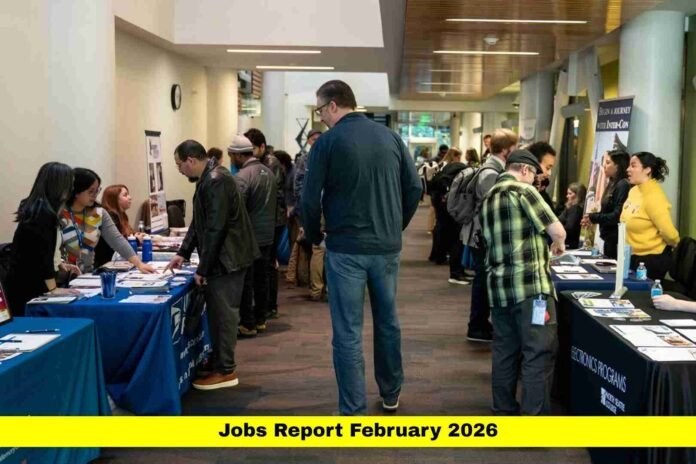

The jobs report february 2026 delivered one of the most closely watched snapshots of the American economy this year, and the results quickly captured national attention. Instead of showing continued job growth, the report revealed a decline in payroll employment and a rise in the unemployment rate. Economists, policymakers, and business leaders immediately began examining the data to understand what these numbers signal for the broader economic outlook.
Employment statistics play a powerful role in shaping expectations about the future of the economy. When hiring slows or unemployment increases, the effects ripple through households, businesses, and financial markets. The February labor market figures therefore provide an important moment to evaluate where the U.S. economy stands and where it might be headed.
The report presents a detailed picture of job changes across industries, wage trends, workforce participation, and the economic conditions influencing hiring decisions across the country. While monthly employment numbers can fluctuate due to seasonal shifts, labor disputes, or economic adjustments, the February results stand out because they show a clear slowdown after months of moderate growth.
Understanding the details behind these numbers helps reveal the forces reshaping the labor market in 2026.
How the U.S. Employment Report Works
The monthly employment report serves as one of the most important economic indicators in the United States. Each month, government statisticians collect and analyze data from large surveys designed to measure the health of the labor market.
One survey focuses on employers. Businesses and government agencies report how many workers they employ, how many hours those workers are paid for, and how wages change over time. This survey determines the payroll employment number that economists closely watch.
Another survey focuses on households. In this survey, individuals answer questions about whether they are working, looking for work, or outside the labor force. The household survey determines the unemployment rate and labor force participation rate.
Together, these two surveys provide a comprehensive view of the American workforce. They show not only how many jobs exist but also how people are participating in the economy.
Because employment affects consumer spending, business investment, and economic growth, the report attracts widespread attention every time it is released.
Major Takeaways From the February Labor Market Data
The February employment numbers revealed a shift in hiring momentum across the U.S. economy.
Payroll employment declined by roughly 92,000 jobs during the month. Instead of expanding their workforces, many employers reduced staffing levels or paused hiring.
At the same time, the unemployment rate rose to about 4.4 percent. This increase indicates that more people were actively looking for jobs but had not yet found employment.
These changes represent a noticeable shift compared with earlier months when job growth remained positive.
Several industries contributed to the decline, including health care services, information technology, transportation, construction, and federal government employment.
Although some of the job losses reflect temporary factors, the report highlights a broader cooling trend within the labor market.
Health Care Employment Experiences Unexpected Drop
Health care has traditionally been one of the most reliable sources of job growth in the American economy. Hospitals, clinics, and medical offices typically expand their workforces as demand for medical services continues to rise.
However, the February labor data showed a decline in health care employment. A significant portion of the reduction occurred in physician offices and related medical services.
Labor disputes played a major role in the decline. Medical workers participated in strike activity during the month, which temporarily reduced employment numbers in the sector.
Hospitals still added some workers, but those gains did not fully offset the losses recorded in outpatient medical services.
Even though the drop represents a break from the sector’s usual growth pattern, health care remains one of the largest employers in the United States.
Technology Sector Continues Workforce Adjustments
Employment in the technology and information sector declined again during February.
Technology companies have been reshaping their workforces as they adjust to changing business priorities and new innovations. In recent years, rapid growth in digital services, cloud computing, and artificial intelligence led to significant hiring across the industry.
However, as companies evaluate long-term strategies, some organizations have slowed hiring or reduced staff in certain areas.
These changes reflect the shifting structure of the technology industry. Companies are focusing more heavily on efficiency, automation, and specialized technical roles rather than broad workforce expansion.
The February employment data reflects that continuing transformation.
Federal Government Employment Declines
Another contributor to the overall decline in employment was a drop in federal government jobs.
Federal agencies periodically adjust staffing levels due to budget decisions, program changes, or administrative restructuring. During February, several departments reduced employment numbers.
Although government employment can fluctuate from month to month, changes in federal hiring can influence national payroll figures because the government remains one of the country’s largest employers.
Local and state government employment showed less movement, but the federal decline contributed to the overall drop in payroll jobs.
Transportation and Logistics Employment Slows
Transportation and logistics companies also reduced employment in February.
These industries play a critical role in the movement of goods throughout the country. Trucking companies, delivery services, warehouses, and distribution centers all depend heavily on consumer demand and supply chain activity.
After the busy holiday shopping season, shipping volumes typically decline as consumer demand returns to normal levels.
Companies often adjust staffing levels during this period to match changing business needs. As a result, the February employment report showed job losses in transportation and warehousing sectors.
Automation and technological improvements within logistics operations have also influenced hiring patterns.
Construction Employment Affected by Winter Conditions
The construction industry experienced a modest employment decline during the month.
Winter weather conditions across parts of the United States often slow building activity. Snowstorms, freezing temperatures, and hazardous conditions can delay projects or reduce working hours.
These seasonal factors temporarily affect employment levels in construction.
Although the February decline reflects these conditions, construction employment often increases again when warmer weather allows projects to resume at full pace.
Labor Force Participation Shows Slight Decline
Another important measure included in the employment report is the labor force participation rate.
This statistic measures the percentage of adults who are either working or actively seeking employment.
In February, the participation rate edged down to around 62 percent. A decline in participation can occur for several reasons, including retirement, education enrollment, family responsibilities, or discouragement among job seekers.
Demographic trends also influence participation. An aging population means more Americans are retiring each year, which gradually lowers the overall participation rate.
Changes in immigration patterns and population growth also affect the size of the workforce.
Wage Growth Continues at Steady Pace
Even as employment declined, wage growth remained stable.
Average hourly earnings increased at an annual rate of approximately 3.8 percent.
Steady wage growth suggests that many employers continue competing for workers despite slower hiring activity.
Higher wages can support household spending, which plays a major role in sustaining economic growth.
However, wage increases also influence inflation because businesses may raise prices to cover rising labor costs.
The February wage data therefore remains an important factor in evaluating economic conditions.
Comparison With January Employment Data
The February decline followed a more positive report in January.
During January, payroll employment increased by about 126,000 jobs.
This shift from job growth to job losses highlights the volatility that sometimes appears in monthly employment reports.
Economic data often fluctuates due to temporary factors such as strikes, seasonal adjustments, or revisions to earlier estimates.
Because of these fluctuations, economists usually analyze employment trends across multiple months to understand broader labor market patterns.
Revisions to Previous Employment Estimates
Employment reports frequently include revisions to earlier data.
When statisticians collect additional information from employers and government agencies, they sometimes update previous estimates to reflect more accurate numbers.
Recent revisions suggested that job growth during late 2025 may have been slightly weaker than originally reported.
Although revisions can change the details of earlier reports, they improve the overall accuracy of employment statistics.
These updates help economists better understand long-term labor market trends.
Broader Labor Market Trends Since 2025
Over the past year, job growth across the United States has slowed compared with earlier periods of rapid expansion.
During the early 2020s, the economy experienced strong hiring as businesses recovered from earlier disruptions and consumer demand surged.
By 2025 and 2026, hiring momentum began moderating as the economy entered a more stable phase of growth.
Businesses have become more cautious in expanding workforces while monitoring economic conditions such as inflation, interest rates, and global trade developments.
These broader trends help explain the slowdown reflected in the February employment data.
Economic Conditions Influencing Hiring Decisions
Hiring decisions depend on several economic factors.
Interest rates influence borrowing costs for businesses. Higher borrowing costs can make companies more cautious about expanding operations or hiring additional workers.
Consumer spending also plays a major role. When households spend more on goods and services, businesses often hire more workers to meet demand.
Energy prices, supply chain conditions, and global economic developments also shape hiring trends.
The February employment data reflects the interaction of these economic forces.
Why Labor Market Data Matters for Policy
Employment statistics guide many decisions made by policymakers and economic leaders.
Central bank officials monitor labor market trends when evaluating whether to adjust interest rates.
Government agencies use employment data to design workforce development programs, education initiatives, and economic policies.
Businesses also rely on labor market data to make strategic decisions about investment, expansion, and hiring.
Because employment affects so many areas of economic activity, the monthly employment report remains one of the most influential pieces of economic information released each month.
Financial Markets Respond to Employment Trends
Investors pay close attention to employment data because it influences expectations about economic growth.
When job creation slows, investors may adjust forecasts for corporate earnings and consumer spending.
Bond markets often react to employment data because labor market conditions can affect interest rate expectations.
Stock markets may also respond as investors interpret what employment trends mean for different industries.
The February employment figures therefore generated significant discussion across financial markets.
Regional Differences in Employment Patterns
Employment trends often vary across different regions of the United States.
Some states experience strong job growth due to expanding industries such as technology, manufacturing, or energy production.
Other regions may see slower hiring because of economic restructuring or population changes.
Urban areas with growing industries often attract workers from other parts of the country, while rural regions may experience slower employment growth.
These regional differences contribute to the overall national employment picture.
Industries Expected to Shape Future Job Growth
Several industries are likely to influence hiring trends throughout the rest of the year.
Health care demand continues increasing as the population ages and medical services expand.
Technology companies continue investing in artificial intelligence, cybersecurity, and digital infrastructure.
Manufacturing employment may fluctuate depending on investment in factories and supply chains.
Construction employment often responds to housing demand and infrastructure projects.
Transportation and logistics employment may evolve as supply chains adapt to new technologies and consumer behavior.
Each of these industries will play a role in shaping employment trends in the months ahead.
How Job Changes Affect American Families
Employment statistics represent real lives and livelihoods across the country.
When jobs disappear, workers and families must adapt by searching for new opportunities, pursuing training programs, or relocating for employment.
Communities also feel the effects of employment changes. Local businesses rely on the income that workers bring to their communities.
When employment rises, communities often experience economic growth through increased spending and investment.
When employment declines, the impact can spread across housing markets, retail businesses, and local services.
Understanding the Bigger Economic Picture
Employment trends connect directly to the overall health of the economy.
A strong labor market usually leads to higher consumer spending because more people have steady income.
Higher spending supports business revenue, which can lead to further hiring and investment.
When employment slows, consumer spending may also moderate, influencing economic growth across many sectors.
For this reason, economists analyze employment data carefully to understand broader economic conditions.
What Future Reports May Reveal
Upcoming employment reports will provide additional insight into the direction of the labor market.
If hiring rebounds in the coming months, the February decline may prove temporary.
If job growth remains weak, economists may view the February report as an early signal of a longer-term slowdown.
Monitoring future employment data will help clarify how the labor market is evolving during 2026.
Why This Employment Report Draws Attention
The jobs report february 2026 stands out because it highlights a moment of transition in the labor market.
After a long period of steady hiring, the report shows that job growth may be slowing in several important sectors.
Understanding these changes helps policymakers, businesses, and workers prepare for the evolving economic landscape.
Employment data will continue guiding decisions across government institutions, corporate boardrooms, and households nationwide.
Labor Market Data and Everyday Economic Life
The employment report does more than provide statistics.
It reflects the opportunities available to millions of Americans seeking work, building careers, and supporting their families.
It also influences financial markets, government policies, and business strategies that shape the broader economy.
By examining the details within each employment report, observers gain insight into how the labor market is changing and what those changes may mean for the future.
The Role of Employment Data in Long-Term Planning
Long-term economic planning depends heavily on labor market information.
Education systems use employment data to determine which skills students should learn.
Businesses analyze hiring trends when deciding where to open new offices or factories.
Governments rely on employment statistics to develop workforce programs and economic development initiatives.
Each employment report therefore contributes to a broader understanding of how the economy is evolving over time.
Conclusion
The February labor market report revealed a surprising slowdown in job growth across the United States. Payroll employment declined, the unemployment rate rose slightly, and several industries experienced workforce adjustments.
Although monthly employment data can fluctuate, the report offers valuable insight into how businesses and workers are responding to changing economic conditions.
As future employment reports are released, economists and policymakers will continue studying the numbers to understand whether hiring rebounds or remains subdued during the rest of the year.
What are your thoughts on the latest employment trends? Join the conversation below or keep checking back for more updates on the evolving job market.