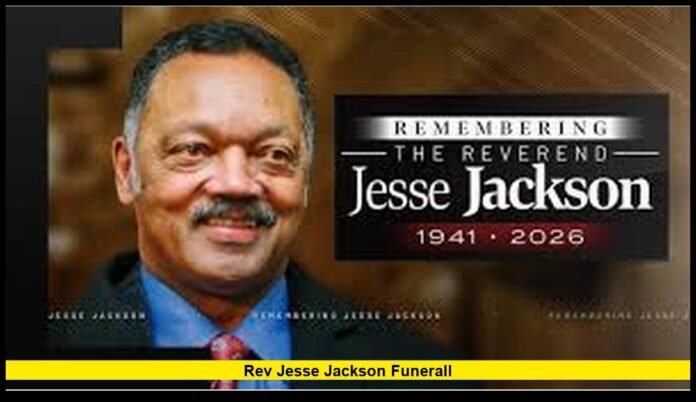

Interest in rev jesse jackson funeral has recently surged online as many Americans search for updates about the longtime civil rights leader and Baptist minister. Despite the spike in searches, there are no confirmed reports that a funeral has taken place. The renewed attention highlights the lasting impact of Rev. Jesse Louis Jackson Sr., whose decades of activism helped shape modern conversations around civil rights, economic opportunity, and political representation in the United States.
For more than half a century, Jackson has stood at the center of national debates about equality and justice. His leadership during and after the civil rights movement turned him into one of the most recognizable activists in American history. The ongoing interest in his life and legacy reflects how deeply his work influenced social and political change.
Early Life and Foundations of Activism
Jesse Louis Jackson Sr. was born on October 8, 1941, in Greenville, South Carolina. He grew up during a time when segregation laws shaped everyday life in much of the United States. These early experiences influenced his understanding of inequality and helped guide his commitment to activism.
Jackson attended the University of Illinois before transferring to North Carolina A&T State University, a historically Black university known for its role in the civil rights movement. During his college years, he became increasingly involved in social justice work and student activism.
The 1960s civil rights movement created opportunities for young leaders to take action against segregation and discrimination. Jackson joined demonstrations and campaigns that demanded equal treatment under the law.
His leadership abilities quickly drew attention from established activists. That recognition helped bring him into the inner circle of civil rights organizers working to transform American society.
Work Alongside Dr. Martin Luther King Jr.
Jackson’s national profile grew when he began working with Dr. Martin Luther King Jr., one of the most influential figures of the civil rights era. Jackson joined the Southern Christian Leadership Conference, a major organization coordinating nonviolent protests and voter registration campaigns.
Through this work, he participated in major civil rights initiatives that pushed for legislative and social reform. Activists organized marches, community programs, and public demonstrations to challenge segregation and discrimination.
These campaigns helped lead to landmark civil rights legislation during the 1960s. The movement also helped create new opportunities for political participation among Black Americans and other marginalized communities.
Jackson’s experience within the movement shaped his leadership style. He emphasized coalition-building and public advocacy as tools for social change.
Building Organizations for Economic Justice
After the assassination of Dr. King in 1968, the civil rights movement entered a new phase. Many activists sought ways to continue the fight for equality while addressing economic disparities.
Jackson founded Operation PUSH, which stood for People United to Save Humanity. The organization focused on expanding economic opportunities and promoting corporate responsibility.
Operation PUSH worked to increase hiring opportunities for minority workers and support minority-owned businesses. The organization also encouraged major corporations to adopt inclusive hiring practices.
Later, Jackson combined Operation PUSH with the Rainbow Coalition, forming the Rainbow PUSH Coalition. This organization remains active today and continues advocating for economic fairness and social justice.
Major priorities of the coalition include:
• Education access and school improvement
• Fair employment practices
• Economic development in underserved communities
• Voting rights protection
• Criminal justice reform
The coalition’s activities helped bring attention to the connection between civil rights and economic equality.
Historic Presidential Campaigns
Rev. Jesse Jackson entered national electoral politics during the 1980s. His presidential campaigns marked a significant moment in American political history.
He first ran for the Democratic presidential nomination in 1984. That campaign energized millions of voters, particularly within minority communities and among young people who wanted greater representation in national politics.
Jackson ran again in 1988, and that campaign gained even more momentum. He won several Democratic primaries and caucuses, demonstrating the strength of his political coalition.
His campaign emphasized unity among diverse communities and promoted policies aimed at improving economic opportunity.
Key goals included:
- Job creation and fair wages
- Expanded healthcare access
- Increased educational funding
- Diplomatic solutions to international conflicts
The campaign also encouraged millions of new voters to register and participate in elections.
Although Jackson did not win the nomination, his campaigns reshaped American politics. They showed that candidates representing diverse communities could compete on a national stage.
Advocacy Beyond Electoral Politics
Jackson’s influence extends far beyond political campaigns. Over the years, he has played roles in labor disputes, international diplomacy efforts, and humanitarian causes.
He often acted as a mediator during high-profile conflicts, helping facilitate dialogue between opposing sides.
In many cases, Jackson used his reputation and public platform to highlight injustices that might otherwise have received little attention.
His activism included efforts to:
- Advocate for workers’ rights
- Support community investment initiatives
- Address racial discrimination in employment
- Promote peace and diplomacy internationally
These activities reinforced his image as a public advocate willing to engage in difficult negotiations.
A Voice in National Conversations
Jackson remained a visible presence in American public life for decades. He regularly appeared at political conventions, civil rights anniversaries, and major public gatherings.
His speeches often combined moral conviction with calls for practical policy solutions.
Many supporters admired his ability to communicate complex issues in ways that inspired community action. He frequently emphasized unity and empowerment as key elements of progress.
Jackson also worked to mentor younger activists and community leaders. His experience helped guide a new generation working to address ongoing social challenges.
Health Challenges and Public Updates
In recent years, Jackson has faced several health issues that prompted widespread concern among supporters and fellow activists.
Public updates about his health often generate significant interest online. Those updates sometimes lead people to search for information about memorials or funeral arrangements.
This pattern helps explain the rise in searches related to rev jesse jackson funeral, even though no confirmed funeral has occurred.
Jackson has continued to receive support from civil rights organizations, political leaders, and community members across the country.
Supporters frequently recognize his decades of leadership and dedication to social justice.
Influence on Modern Civil Rights Leadership
Jackson’s activism helped shape the strategies used by modern civil rights organizations. His emphasis on coalition-building encouraged collaboration among communities with different backgrounds and concerns.
Today’s activists often draw inspiration from his approach to organizing and advocacy.
His influence can be seen in movements that focus on:
| Area | Influence |
|---|---|
| Voting access | Campaigns promoting voter registration |
| Economic equality | Programs supporting minority-owned businesses |
| Education | Advocacy for increased school resources |
| Political engagement | Encouragement of diverse leadership |
These efforts continue the work Jackson championed throughout his career.
Cultural and Historical Significance
Jackson’s impact reaches beyond politics. His speeches, public appearances, and community initiatives helped shape the national conversation about equality.
Throughout the decades, he remained one of the most recognized civil rights figures in the country.
His leadership during historic moments in American history gave him a unique place in the broader story of social progress.
Many historians consider him a key link between the civil rights movement of the 1960s and later efforts aimed at addressing economic inequality.
Jackson’s long career reflects the persistence required to achieve lasting social change.
Why Public Curiosity Continues
When influential public figures remain active for many decades, public interest often increases as people reflect on their legacy.
Online searches about memorials or funerals sometimes appear simply because people want updates about a leader’s health or historical impact.
The attention surrounding Jackson reflects how widely his work has been recognized across generations.
From community activism to presidential campaigns, his contributions left a lasting mark on American public life.
A Lasting Legacy
Rev. Jesse Jackson’s influence on civil rights, political participation, and economic justice remains significant. His work encouraged millions of Americans to become involved in civic life and advocate for fairness within their communities.
His leadership helped expand opportunities for people who previously lacked a strong voice in national discussions.
The attention surrounding his legacy demonstrates how deeply his efforts shaped the country’s social and political landscape.
Future generations of activists will likely continue studying and building upon the strategies he used to promote equality and empowerment.
Rev. Jesse Jackson’s life continues to spark discussion across the country, and readers are encouraged to share their thoughts on his lasting impact and follow ongoing updates about this influential American leader.