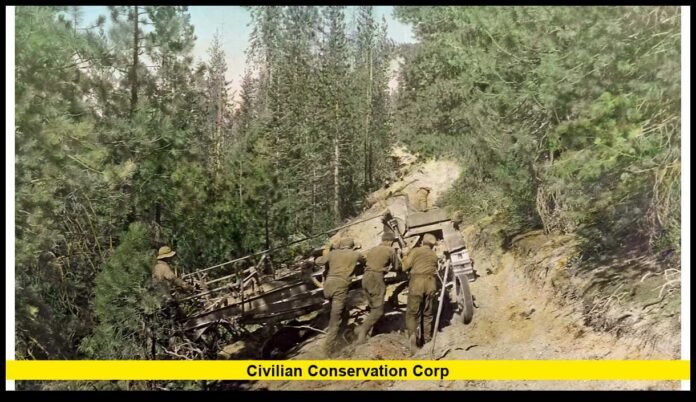

The Civilian Conservation Corps remains one of the most influential conservation and employment initiatives ever created in the United States. Established during the Great Depression, the program provided jobs to millions of young Americans while restoring forests, protecting farmland, and building much of the outdoor infrastructure still used across the country today.
Nearly a century later, its impact continues to shape national parks, state parks, forests, and rural landscapes. Trails, cabins, park roads, and fire towers built in the 1930s remain active parts of the U.S. recreation system. The program also transformed environmental policy by showing how conservation work could create jobs while protecting natural resources.
Understanding the origins, accomplishments, and legacy of this historic program helps explain how the United States addressed both economic hardship and environmental damage during one of its most challenging decades.
Economic Crisis and the Push for Job Creation
The early 1930s marked one of the most difficult periods in American economic history. The Great Depression caused widespread business closures and left millions of Americans unemployed.
Young men faced particularly severe hardship. Many had recently entered the workforce but found few opportunities as industries struggled to survive.
Unemployment reached levels the country had never experienced before. Families often lacked steady income, and communities faced growing poverty.
President Franklin D. Roosevelt introduced the New Deal soon after taking office in 1933. The New Deal included a range of programs designed to restore economic stability, provide relief to struggling families, and create employment opportunities.
One of the earliest initiatives focused on conservation work. Leaders believed that improving forests, farmland, and waterways could create jobs quickly while also protecting the country’s natural resources.
Establishing the Civilian Conservation Corps
Congress approved the program in 1933, launching what would become one of the largest conservation workforces in American history.
The Civilian Conservation Corps recruited young men between the ages of 18 and 25 during its early years. Many participants came from families experiencing financial hardship during the Depression.
Participants lived and worked in camps located near forests, parks, and other natural areas. These camps provided housing, meals, medical services, and equipment for conservation projects.
Workers received a monthly wage of $30. A large portion of that pay went directly to their families, helping households cover essential expenses during the economic crisis.
The program offered steady work at a time when employment opportunities were scarce.
Rapid Growth Across the Nation
The conservation program grew quickly after its launch. Within months, thousands of workers were participating in projects across the United States.
Over time, the program established thousands of camps in nearly every state.
Key numbers illustrate its scale:
| Program Statistic | Total |
|---|---|
| Years active | 1933–1942 |
| Total participants | More than 3 million |
| Camps nationwide | Over 2,600 |
| Trees planted | More than 3 billion |
The federal government coordinated the effort with help from several agencies. The Department of Agriculture, National Park Service, and other agencies supervised projects on public lands.
Military personnel assisted with camp organization and logistics, helping maintain order and efficiency.
Major Conservation Projects
Workers carried out a wide variety of environmental projects designed to restore damaged landscapes and protect natural resources.
Common assignments included:
- Reforestation projects
- Soil conservation programs
- Flood control construction
- Wildlife habitat restoration
- Forest fire prevention
- Development of public recreation areas
Many projects addressed environmental problems caused by decades of land misuse. Poor farming practices and widespread deforestation had damaged large areas of farmland and forest.
Conservation work helped reverse these problems while strengthening the nation’s natural ecosystems.
Reforestation and Tree Planting
Tree planting became one of the most widely recognized accomplishments of the program. Workers planted billions of trees across forests, farmland, and national parks.
This effort helped restore areas damaged by logging and agricultural expansion.
A major initiative known as the Great Plains Shelterbelt focused on planting trees across the central United States. The goal was to reduce wind erosion that contributed to the Dust Bowl during the 1930s.
Long rows of trees helped block powerful winds that carried away topsoil from farms. These shelterbelts improved soil stability and protected crops in several agricultural states.
The reforestation projects also strengthened wildlife habitats and improved forest health.
Development of National Parks
Many of the improvements visitors see in national parks today trace back to conservation work completed during the 1930s.
Workers built:
- Hiking trails and scenic pathways
- Campgrounds and picnic areas
- Lodges and park shelters
- Bridges and access roads
- Visitor facilities
These improvements made parks easier for the public to access while preserving the natural beauty of the landscape.
Parks such as Yosemite, Shenandoah, the Great Smoky Mountains, and Yellowstone received extensive improvements during this era.
State parks also benefited from conservation projects. Many park systems expanded rapidly as workers developed new recreational facilities.
Soil Conservation and Flood Prevention
Another important focus involved protecting farmland from erosion and flooding.
The Dust Bowl crisis of the 1930s revealed how fragile agricultural landscapes had become after decades of intensive farming.
Workers built terraces, dams, and drainage systems designed to control water flow and reduce soil loss.
These improvements helped stabilize farmland in several regions and supported long-term agricultural productivity.
Flood prevention projects also strengthened communities located near rivers and streams. Dams, levees, and erosion control systems reduced damage caused by seasonal flooding.
Fire Prevention and Forest Protection
Forest fires posed a major threat to American woodlands during the early twentieth century.
Workers helped protect forests by constructing firebreaks, lookout towers, and access roads for firefighting crews.
Fire lookout towers built during this period allowed rangers to detect smoke quickly and respond before fires spread widely.
Many of these towers still stand in forests today as reminders of the conservation work carried out during the program.
Improved forest management practices introduced during this era helped reduce wildfire risk and improve long-term forest health.
Daily Life in Conservation Camps
Life in conservation camps followed a structured routine. Participants lived in barracks and shared responsibilities within their camps.
Typical camp facilities included:
- Dormitories
- Dining halls
- Medical stations
- Recreation areas
- Administrative offices
Workers often began their day early with breakfast followed by transportation to project sites.
After hours of physical labor, participants returned to camp for meals and evening activities.
Recreation and education programs played an important role in daily camp life. Camps often organized sports, music events, and community gatherings.
These activities helped create a strong sense of teamwork among participants.
Education and Career Development
In addition to conservation work, the program offered educational opportunities designed to improve workers’ future job prospects.
Many camps organized classes in subjects such as:
- Reading and writing
- Mathematics
- Forestry skills
- Mechanical repair
- Construction techniques
Participants also learned valuable workplace habits including discipline, teamwork, and leadership.
These experiences helped many workers build careers after leaving the program.
Former participants later entered professions in forestry, engineering, construction, and public land management.
Economic Benefits for Families
The wages earned by workers played a significant role in supporting families during the Great Depression.
Most participants sent $25 of their monthly pay home. This income helped families pay for food, clothing, and housing.
Communities near conservation camps also benefited economically. Camps purchased supplies, food, and equipment from local businesses.
These purchases brought additional economic activity to towns that had struggled during the Depression.
The program therefore supported both workers and local economies across the country.
Conclusion of the Program During World War II
The conservation program continued throughout the late 1930s but began to decline as the United States prepared for World War II.
Military enlistment and defense industry jobs created new employment opportunities for millions of Americans.
As the wartime economy expanded, the need for federal job programs decreased.
The government officially ended the conservation workforce in 1942.
Despite its closure, the improvements created during the program continued benefiting the nation’s landscapes and communities.
A Lasting Environmental Legacy
The environmental achievements of the program remain visible across the United States today. Trails, campgrounds, park buildings, and forest improvements built during the 1930s continue serving millions of visitors each year.
Public lands across the country still rely on infrastructure developed during that period.
The success of the Civilian Conservation Corps demonstrated how conservation efforts could strengthen both the environment and the economy.
Its legacy continues to influence conversations about environmental restoration, workforce development, and public land management in the United States.
Have you ever visited a park, forest trail, or historic structure created by this remarkable conservation program? Share your thoughts in the comments and stay connected for more U.S. history insights.