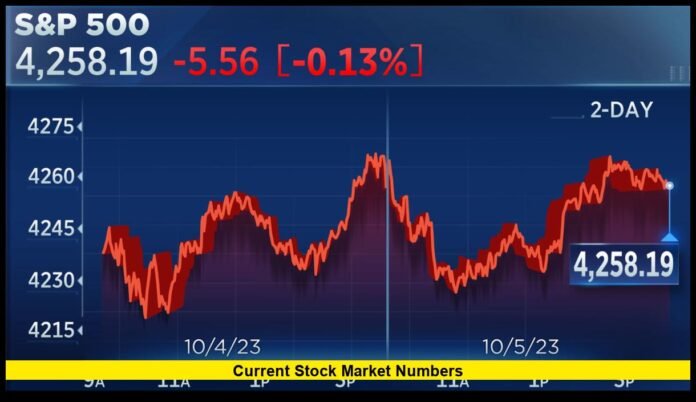

The latest current stock market numbers reveal U.S. indices trading lower on March 2, 2026, with the S&P 500, Dow Jones, and Nasdaq all slipping as investors react to heightened geopolitical tensions and rising energy prices. Trading activity reflects cautious sentiment and broad declines across risk-sensitive sectors as Wall Street reacts to fresh global developments.
Live U.S. Stock Market Overview — March 2, 2026
Here are the current stock market numbers for major U.S. indexes during today’s session:
| Index | Latest Level (Approx.) | Daily Change | Market Trend |
|---|---|---|---|
| Dow Jones Industrial Average | ~48,800–49,000 | Down ~300–500+ points | Red across blue chips |
| S&P 500 | ~6,860–6,880 | Down ~0.4%–0.9% | Broad sell-off |
| Nasdaq Composite | ~22,600–22,700 | Down ~0.9% | Tech stocks under pressure |
| VIX (Volatility Index) | ~21–22 | Climbed to multi-week high | Elevated fear |
These figures highlight today’s market decline as traders digest international tensions and the potential for wider economic impact.
Major U.S. Indices Fall as Markets Worry
U.S. stock markets are broadly lower with the Dow Jones Industrial Average down several hundred points. The S&P 500 is trading several points lower, while the tech-heavy Nasdaq Composite is also in the red. The slide reflects heightened risk aversion as traders reduce exposure to equities amid uncertainty.
Investors are moving into traditional safe-haven assets, as indicated by the rising VIX — a gauge of expected market turbulence. Markets are reacting not just to economic data but to geopolitical events that could influence energy supply chains and inflation expectations.
Drivers Behind the Current Stock Market Numbers
Geopolitical Pressure and Oil Prices
Escalating conflict in the Middle East has been a key catalyst for market jitters. Disruptions or threats to oil transport routes like the Strait of Hormuz have pushed crude prices higher. This spike in energy costs increases inflationary pressures, which can weigh on corporate profit margins and consumer spending.
Higher oil prices lift energy stocks but tend to drag broader equity markets lower as costs rise across multiple sectors.
Sector Performance Snapshot
- Energy Stocks: Showing relative strength as oil prices climb.
- Defense Stocks: Some defense names are stronger amid heightened global tensions.
- Technology Stocks: Contributing to today’s declines, with many tech names underperforming.
- Travel & Leisure: Suffering as fuel costs and uncertainty impact demand.
- Financial Stocks: Mixed, reflecting broader concerns about economic growth and credit conditions.
Market Volatility: Signs of Investor Fear
The CBOE Volatility Index (VIX) has jumped to levels not seen in recent weeks. Higher readings typically correspond with increased anxiety among traders and a preference for preserving capital over taking risks.
In volatile markets, liquidity can dry up quickly. This dynamic results in sharper price swings and wider spreads on trades, as investors reposition portfolios to protect against near-term losses.
Comparing Recent Market Levels
The current retreat comes after a period of strength earlier in 2026, when key indices reached historic highs. The S&P 500 and Dow Jones both traded above their current levels just weeks ago, before today’s shift in sentiment.
Looking at broader trends, U.S. equity markets had been relatively resilient despite earlier volatility from different macroeconomic pressures. Today’s current stock market numbers show that geopolitical triggers are once again reshaping trader expectations.
What Traders and Investors Are Watching Next
With markets reacting negatively today, participants are turning to several key indicators and upcoming economic data:
- Oil Price Trends: Continued rises could reinforce inflation fears and extend market pressure.
- Economic Reports: Job market data and retail sales numbers later this week may influence investor confidence.
- Earnings Season: Upcoming corporate results could help shape sector-specific momentum.
Investors often view volatility as both a potential signal and a risk. Sharp declines may offer buying opportunities for long-term holders, while short-term traders may seek protection through hedging strategies.
Understanding the Current Market Landscape
The current stock market numbers reflect a market in flux. While major indices are lower today, broader trends through February showed resilience. However, sharp reactions to geopolitical headlines underscore how quickly sentiment can shift.
The drop across key benchmarks highlights that markets are closely watching external events, not just economic fundamentals and corporate earnings.
As index levels adjust throughout the trading day, investors are focusing on risk management and sector rotation, particularly toward areas perceived as safer amid uncertainty.
Closing Thoughts on Today’s Market Movements
Today’s current stock market numbers reflect a broad pull-back in U.S. stocks amid global tensions and rising energy costs. Traders and investors are navigating volatility, seeking clarity from upcoming data and economic signals.
Share your thoughts in the comments and stay tuned as these market figures evolve throughout the session.