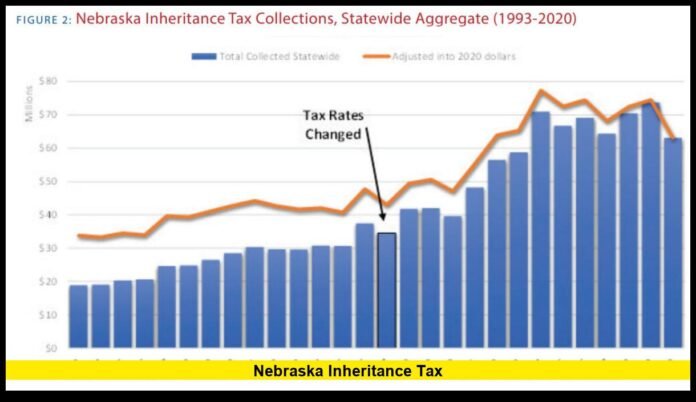

Nebraska inheritance tax continues to apply in 2026, affecting beneficiaries who receive property from estates in Nebraska and shaping estate planning decisions across the state.
Unlike federal estate tax, this tax targets the individual who inherits assets. Nebraska counties administer and collect it through local probate courts. Ongoing legislative debate keeps the tax in focus, but the current system remains active today.
Understanding the Nebraska Inheritance Tax
Nebraska inheritance tax is a state-authorized but county-collected tax imposed on people who inherit assets from someone who lived in Nebraska.
The amount owed depends on the beneficiary’s relationship to the deceased. Close relatives pay less, while distant relatives and non-relatives face higher rates.
Key features include:
- Paid by the beneficiary rather than the estate
- Administered through county courts
- Based on relationship categories
- Applied after probate determines asset distribution
Nebraska remains among the limited number of states that still use an inheritance tax model.
Nebraska Inheritance Tax Rates in 2026
The tax structure uses three relationship categories with different exemptions and rates.
Immediate relatives
This group includes children, parents, grandparents, siblings, and other close family members.
- Exemption: $100,000
- Rate: 1% above the exemption
Spouses are fully exempt.
Remote relatives
This category covers relatives such as nieces, nephews, aunts, and uncles.
- Exemption: $40,000
- Rate: 13% above the exemption
Non-relatives
Friends and unrelated beneficiaries fall into this category.
- Exemption: $25,000
- Rate: 18% above the exemption
These rates remain in effect in 2026.
How the Nebraska Inheritance Tax Is Calculated
County courts calculate the tax after identifying each beneficiary’s share.
Typical process:
- Determine the beneficiary category
- Apply the exemption amount
- Calculate tax on the remaining value
- Submit required inheritance tax filings
- Pay the tax within probate deadlines
Interest may apply if payment is delayed.
Recent Policy Discussions and Legislative Direction
Lawmakers have debated the Nebraska inheritance tax repeatedly in recent legislative sessions. Proposed changes have focused on reducing rates, expanding exemptions, or gradually eliminating the tax.
Current verified policy direction:
- The tax has not been repealed.
- Reform proposals continue to be introduced.
- Counties rely heavily on inheritance tax revenue.
- Discussions often involve replacing local funding before repeal.
Because of its role in county budgets, significant reform has progressed slowly.
Why Counties Depend on the Tax
Revenue from the Nebraska inheritance tax supports local government operations.
Counties commonly use the funds for:
- Infrastructure and road projects
- Law enforcement and emergency services
- Property tax relief efforts
- General county operations
Supporters view the tax as a tool to reduce pressure on property taxes. Critics argue it can create financial strain for heirs.
Who Typically Owes Nebraska Inheritance Tax
Not every beneficiary owes the tax. Liability depends on inheritance size and relationship category.
Situations where the tax may apply:
- Large inheritances received by distant relatives
- Real estate transferred to non-family beneficiaries
- Investment accounts exceeding exemption thresholds
- Estate transfers without tax-planning strategies
Smaller inheritances for close relatives often fall below taxable limits.
Assets Commonly Subject to the Tax
The Nebraska inheritance tax generally applies to property located in Nebraska or connected to a Nebraska resident’s estate.
Examples include:
- Residential and commercial real estate
- Bank and brokerage accounts
- Stocks and investment assets
- Vehicles
- Valuable personal property
Trust structures and beneficiary designations can affect tax exposure.
Estate Planning Approaches Used in Nebraska
Estate planning plays an important role in managing inheritance tax exposure.
Common strategies include:
- Lifetime asset transfers
- Trust planning
- Strategic beneficiary designations
- Property ownership restructuring
- Early tax planning for non-relative beneficiaries
Planning is especially important for estates involving real estate or large investment portfolios.
How Nebraska Compares Nationally
Most states no longer impose inheritance taxes. Nebraska remains one of the few that still does.
National comparison highlights:
- Several states eliminated inheritance taxes in the past decade.
- Some states rely on estate tax instead.
- Nebraska’s county-level collection system is uncommon.
- Higher rates for non-relatives attract policy attention.
This keeps the Nebraska inheritance tax part of broader national tax reform discussions.
Possible Future Changes
The Nebraska inheritance tax is widely discussed in policy circles, and potential changes remain under consideration.
Ideas frequently debated:
- Raising exemption thresholds
- Lowering rates for distant relatives
- Gradual phase-out plans
- State funding replacement for counties
- Full repeal proposals
As of today, none of these proposals have eliminated the tax.
Key Points Beneficiaries Should Know
Important facts for heirs:
- The Nebraska inheritance tax remains active in 2026.
- Relationship to the deceased determines tax rates.
- Counties handle filings and collection.
- Reform discussions are ongoing but incomplete.
- Early estate planning can reduce potential tax liability.
Understanding these rules helps beneficiaries prepare financially.
Conclusion
The Nebraska inheritance tax continues to influence estate planning, probate decisions, and beneficiary outcomes across the state in 2026. While lawmakers continue to debate reform, the existing structure of exemptions, relationship-based rates, and county administration remains firmly in place.
Do you believe Nebraska should change its inheritance tax system, or does it still serve an important role? Share your perspective and stay informed about future updates.