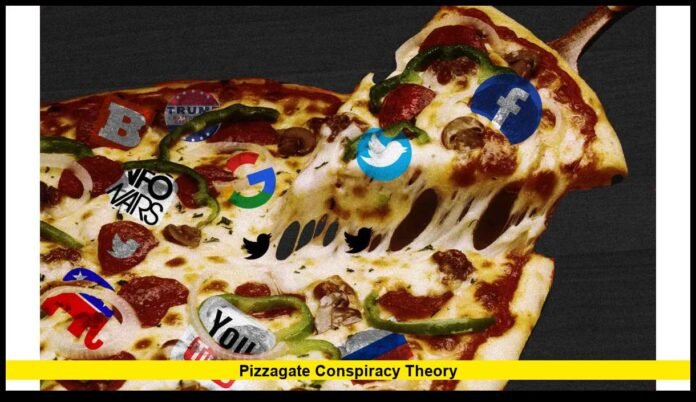

The pizzagate conspiracy theory continues to be referenced in 2026 as a defining example of modern online misinformation and its real-world consequences in the United States.
The narrative first appeared during the 2016 presidential election cycle. False claims circulated online alleging that political figures were connected to criminal activity at a Washington, D.C. pizza restaurant. Law enforcement investigations found no evidence supporting those allegations. The story was formally debunked, yet it became one of the most widely studied misinformation events in the digital era.
Today, discussion around pizzagate focuses on how the narrative spread, how platforms responded, and how the case reshaped conversations about online safety and media literacy.
Origins of the Conspiracy
The conspiracy began on internet forums and social media platforms in 2016. Users misinterpreted publicly released political emails and constructed a narrative that quickly spread across digital communities.
Several characteristics fueled early growth:
- Highly emotional claims
- Political tension during the election
- Rapid sharing across multiple platforms
- Viral posts amplified by large accounts
As the story circulated, fact-checking organizations, journalists, and authorities examined the claims and found them to be false.
The Real-World Incident
In December 2016, the conspiracy led to a dangerous offline event. An armed individual entered the restaurant at the center of the claims intending to investigate the allegations.
No victims were injured. Authorities arrested the individual, and the case later resulted in a criminal conviction.
This moment became a turning point. It demonstrated how online misinformation could translate into real-world risk, influencing policy discussions that continue today.
Timeline of Major Developments
2016 — Viral Spread
- Conspiracy narratives gained traction online.
- Misinterpreted emails became central to the claims.
December 2016 — Safety Incident
- Armed entry into the restaurant.
- Investigations confirmed no evidence behind the allegations.
2017–2020 — Platform Policy Changes
- Technology companies introduced stronger moderation tools.
- Content labeling and removal practices expanded.
2021–2024 — Research and Policy Attention
- Universities used the case in misinformation studies.
- Policymakers referenced it in platform accountability debates.
2025–2026 — Continued Relevance
- The case appears in election integrity discussions.
- Media literacy programs highlight it as a core example.
Why the Story Went Viral
Experts often point to structural factors rather than a single cause.
Key drivers included:
- Algorithms prioritizing engaging content
- Communities reinforcing shared beliefs
- Screenshots and short posts simplifying complex material
- Repetition increasing perceived credibility
The case illustrated how quickly narratives can move between platforms and audiences.
How Platforms Responded
The spread of the conspiracy accelerated moderation changes across major technology companies.
Important shifts included:
- Faster removal of harmful conspiracy content
- Warning labels on misleading posts
- Investment in trust and safety teams
- Changes to recommendation systems
By 2026, most major platforms treat similar claims as harmful misinformation and limit their reach.
Impact on Journalism
Newsrooms also changed coverage strategies after pizzagate.
Editorial approaches evolved to emphasize:
- Avoiding unnecessary repetition of false claims
- Providing context before describing misinformation
- Clear labeling when reporting on conspiracy narratives
These practices are now standard across many U.S. media organizations.
Influence on Media Literacy Education
Educators increasingly use the case to teach digital literacy skills.
Students analyze:
- How misinformation spreads
- The role of algorithms
- Verification techniques
- Emotional framing in viral content
By the mid-2020s, pizzagate became one of the most cited classroom examples of internet misinformation.
Connection to Later Conspiracy Narratives
Researchers observed that storytelling patterns from pizzagate appeared in later conspiracy movements.
Common elements included:
- Hidden-network claims
- Use of coded language interpretations
- Community-driven investigation narratives
- Cross-platform migration of content
The pizzagate conspiracy theory is frequently described as an early blueprint for modern viral conspiracy ecosystems.
Public Safety and Legal Implications
Authorities highlight the case as evidence that misinformation can create safety risks.
Key concerns include:
- Harassment targeting businesses and individuals
- Threat escalation from online communities
- Resource strain on law enforcement responding to false claims
These risks influenced how agencies monitor online threats connected to viral narratives.
2026: Current Status
As of 2026, the claims at the center of pizzagate remain fully debunked. No credible investigation has produced evidence supporting the allegations.
Current discussions focus on broader themes:
- Election misinformation prevention
- Platform transparency
- Online radicalization research
- AI-generated misinformation risks
The topic reappears during major political cycles and technology policy debates.
Key Lessons Identified by Experts
Several widely recognized lessons emerged from the case:
- Early misinformation spreads faster than corrections
- Platform design shapes information exposure
- Community reinforcement strengthens belief persistence
- Real-world harm can follow digital narratives
Public awareness of misinformation tactics is significantly higher today compared with the late 2010s.
Why the Case Still Matters
The importance of pizzagate lies less in the original false claim and more in its lasting influence.
It helped reshape:
- Platform moderation standards
- Journalism practices
- Academic research priorities
- Public understanding of misinformation
The case remains a reference point whenever viral conspiracy content becomes part of national conversation.
Looking Ahead
Experts expect future misinformation to evolve rather than disappear.
Areas receiving attention include:
- Synthetic media and AI content
- Faster detection technologies
- Platform transparency rules
- Public education initiatives
The structure of pizzagate continues to inform how researchers identify emerging misinformation patterns.
The story that began as a viral conspiracy now stands as a lasting warning about the power of online narratives — share your perspective on how misinformation should be addressed moving forward.