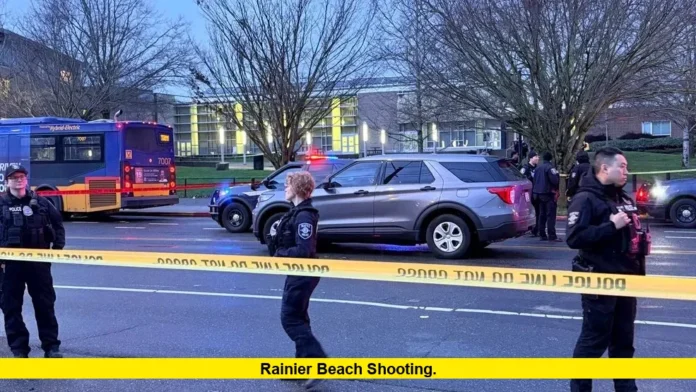

The Rainier Beach shooting has left families, students, and residents across Seattle grieving after two teenagers were killed near a bus stop in the Rainier Beach neighborhood. The incident, which unfolded shortly after school dismissal, has sparked renewed concern about youth safety, community violence, and the need for stronger local support systems.
Authorities say the fatal shooting happened in the afternoon near the intersection of Rainier Avenue South and South Henderson Street, an area surrounded by schools and frequently used by students. The tragedy immediately prompted a law enforcement response, school adjustments, and community gatherings aimed at helping families cope.
Local leaders and residents say rebuilding a safety net for young people is now a central focus as the neighborhood processes the loss.
Readers following this story are encouraged to stay engaged as developments continue and community responses evolve.
What Happened in the Rainier Beach Shooting
The shooting took place on Friday, January 30, 2026, shortly before 4 p.m. Police responded to reports of gunfire near a bus stop close to multiple schools, including Rainier Beach High School and South Shore PreK-8.
When officers arrived, they found two teenage boys with fatal gunshot wounds. Emergency medical care was provided at the scene, but both victims died.
Investigators said the suspect fled on foot, prompting an extensive search of the surrounding area. Detectives later described the incident as targeted, and officials indicated there was no broader threat to the public at that time.
The location — a busy transit stop used daily by students — intensified the shock felt throughout the school community.
Victims and Impact on the School Community
Officials later confirmed that the victims were teenagers believed to be students within the Seattle Public Schools district. The identification of at least one victim by the medical examiner brought further attention to the families affected.
In response, several Seattle schools adjusted schedules and increased counseling resources to support students and staff. School leaders coordinated crisis response teams, emphasizing emotional support and safe spaces for conversations.
For many students, the loss was deeply personal. Classmates, teachers, and coaches described the victims as friends and peers whose absence is being felt across classrooms and sports teams.
The incident also renewed broader conversations about youth exposure to violence and how schools can strengthen prevention efforts.
Community Works to Rebuild Safety Net After Deadly Rainier Beach Shooting
In the days following the tragedy, community members gathered at vigils near the scene, bringing candles, flowers, and messages of remembrance. More than one hundred people attended memorial events, many of them teenagers.
Parents, youth advocates, and local organizations emphasized the need for stronger support networks, including mentorship programs, safe after-school activities, and violence-interruption initiatives.
Community leaders described the moment as both a time of mourning and a call to action. Conversations have centered on:
- Expanding youth outreach programs
- Increasing mental health resources
- Improving safe transportation options for students
- Strengthening partnerships between schools and community groups
Residents say these efforts are essential to preventing future tragedies.
Police Investigation and Ongoing Search for Answers
Detectives continue to investigate the circumstances surrounding the shooting. Early information suggested the incident may have involved a targeted act, though authorities have not publicly released details about a suspect or motive.
Investigators canvassed the area, reviewed surveillance footage, and asked witnesses to come forward with information. The location’s proximity to multiple schools means investigators are analyzing movement patterns before and after dismissal time.
Officials have stressed the importance of community cooperation as the investigation moves forward.
Law enforcement also continues to coordinate with school officials to ensure safety measures remain visible and consistent.
How the Shooting Affected Seattle Schools
The shooting triggered immediate operational changes across nearby schools. Adjusted start times allowed administrators to provide counseling and support services.
School districts implemented:
- On-site mental health teams
- Additional staff presence
- Family communication updates
- Safe discussion spaces for students
Educators say these steps help students process trauma while maintaining routine.
Many families have expressed appreciation for rapid support, while also calling for long-term solutions that go beyond crisis response.
Neighborhood Response and Youth Advocacy
Rainier Beach has a long history of strong community organizing, and that response quickly became visible after the shooting.
Youth organizations hosted gatherings focused on healing, while community advocates highlighted the importance of listening to young voices. Some groups emphasized that safety conversations must include students directly.
Advocates also pointed to existing programs designed to reduce violence, arguing that sustained funding and expansion are key.
Several community members described the tragedy as a reminder that prevention requires collaboration across schools, families, nonprofits, and city leaders.
Public Safety Conversations Intensify
The shooting has reignited citywide discussions about public safety strategies, particularly those focused on young people and school-adjacent areas.
Topics emerging in local conversations include:
- Transit stop safety improvements
- After-school supervision options
- Gun violence prevention programs
- Community-based intervention models
Leaders have emphasized that addressing youth violence involves both immediate safety measures and long-term investment in opportunity and support.
Residents say visible action will be critical to restoring a sense of security.
Grief, Healing, and Community Strength
Memorial gatherings across Rainier Beach have highlighted both grief and solidarity. Vigils brought together families, students, faith leaders, and neighbors, many sharing stories about the victims and offering support.
For parents, the tragedy underscores ongoing fears about student safety during routine activities like commuting home from school.
For young people, the loss has sparked conversations about friendship, safety, and the realities of violence.
Community leaders say healing will take time but stress that collective action can transform grief into prevention.
What Happens Next
The investigation remains active as authorities work to identify those responsible and understand the events leading up to the shooting.
Meanwhile, schools continue providing counseling resources, and community groups are planning additional support efforts.
The long-term focus is shifting toward prevention — ensuring that students have safe environments not only inside schools but also in the spaces they travel through daily.
Residents say sustained collaboration will determine whether the tragedy leads to lasting change.
Why the Rainier Beach Shooting Matters Beyond One Neighborhood
While the incident is deeply local, its impact reflects broader national concerns about youth safety and community violence.
Experts often highlight that shootings near schools can have ripple effects across entire districts, influencing attendance, mental health, and perceptions of safety.
In Rainier Beach, the tragedy has become a catalyst for renewed commitment to youth support — from mentoring programs to neighborhood safety initiatives.
Community members say honoring the victims means investing in solutions that protect future generations.
Conclusion
The Rainier Beach shooting has left a lasting mark on Seattle’s Rainier Beach neighborhood, prompting grief, reflection, and action. As investigators continue their work, the community is focusing on rebuilding support systems that help young people feel safe, connected, and protected.
The response — from school adjustments to community vigils — shows how quickly residents mobilize when tragedy strikes. The next phase will depend on sustained collaboration between families, educators, community groups, and city leaders.
Share your thoughts or follow this story for continuing updates as the Rainier Beach community works toward healing and stronger safety for its youth.