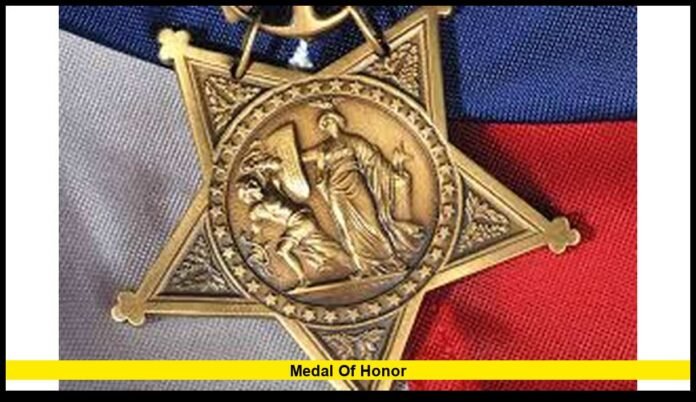

Medal of Honor remains the United States’ highest military award for valor, and as of February 2026, it continues to recognize extraordinary acts of bravery performed in combat. The decoration honors service members who distinguish themselves through conspicuous gallantry and intrepidity at the risk of their lives above and beyond the call of duty. The U.S. government continues to award the Medal of Honor to living recipients and, in some cases, posthumously to service members whose actions meet the strict criteria.
Here is a complete, factual update on the Medal of Honor, its history, current recipients, and its role in American military tradition today.
What Is the Medal of Honor?
The Medal of Honor is the highest military decoration presented by the United States government.
Congress authorized it during the Civil War. The Navy version came first in 1861, followed by the Army version in 1862. The Air Force received its own distinct design in 1965.
The President of the United States presents the medal in the name of Congress. Ceremonies usually take place at the White House.
The award recognizes service members who:
- Engage in action against an enemy of the United States
- Engage in military operations involving conflict with opposing foreign forces
- Serve alongside friendly foreign forces in armed conflict
The standard for approval remains extremely high. Each nomination undergoes a detailed review process through the Department of Defense and Congress before final approval.
How Many Medal of Honor Recipients Are There?
Since its creation, the United States has awarded more than 3,500 Medals of Honor.
As of 2026, fewer than 70 recipients remain living. Most living recipients served in the Vietnam War, Iraq War, or War in Afghanistan.
The number changes as new awards are presented or as recipients pass away. The Congressional Medal of Honor Society maintains official records of living recipients.
Recent Medal of Honor Recipients
In recent years, several service members have received the Medal of Honor for actions in Iraq and Afghanistan.
Recent presentations have included:
- Army soldiers recognized for actions in Afghanistan
- Marine Corps service members honored for battlefield valor
- Special operations personnel cited for life-saving heroism
These awards often occur years after the original acts of valor. The review process can take a decade or longer.
White House ceremonies typically include family members, fellow service members, and senior military leaders.
The Three Versions of the Medal of Honor
Each branch of service has a distinct design.
Army Medal of Honor
- Features a five-pointed star
- Suspended from a light blue ribbon with white stars
- Bears the inscription “Valor”
Navy Medal of Honor
- Awarded to members of the Navy, Marine Corps, and Coast Guard
- Distinct star design
- Similar light blue ribbon with white stars
Air Force Medal of Honor
- Created in 1965
- Features the head of the Statue of Liberty
- Awarded to Air Force personnel
All versions carry equal status and prestige.
Eligibility and Approval Process
The Medal of Honor requires documented evidence of extraordinary valor.
The process includes:
- Initial recommendation through the chain of command
- Review by service branch officials
- Department of Defense evaluation
- Congressional review
- Presidential approval
Investigators examine eyewitness accounts, operational records, and battlefield reports.
Officials reject nominations that do not meet the “above and beyond” threshold.
Notable Conflicts Represented
The Medal of Honor spans every major American conflict since the Civil War.
Major wars with significant numbers of recipients include:
- Civil War
- World War I
- World War II
- Korean War
- Vietnam War
- Iraq War
- War in Afghanistan
World War II accounts for the largest number of recipients.
Modern awards are far less frequent due to stricter standards and smaller troop deployments compared to earlier wars.
The Medal of Honor Flag
Congress established the Medal of Honor Flag in 2002.
Recipients receive the flag along with the medal. The design features a light blue background and thirteen white stars arranged in three chevrons.
The flag symbolizes national gratitude and recognition.
Benefits for Recipients
Medal of Honor recipients receive several benefits authorized by federal law.
These include:
- A special pension separate from military retirement pay
- Access to military commissaries and exchanges
- Space-available air travel on military aircraft
- Burial privileges at Arlington National Cemetery, if eligible
- Invitations to presidential inaugurations
Recipients also receive a unique military identification card reflecting their status.
The Congressional Medal of Honor Society
Congress chartered the Congressional Medal of Honor Society in 1958.
The society consists exclusively of living recipients. Its mission focuses on:
- Preserving the legacy of the Medal of Honor
- Promoting patriotism
- Educating future generations about service and sacrifice
The organization hosts annual conventions and public outreach events.
Members often visit schools and military installations to share their experiences.
Women and the Medal of Honor
Dr. Mary Edwards Walker remains the only woman to receive the Medal of Honor.
She served as a contract surgeon during the Civil War. The government awarded her the medal in 1865.
Officials later rescinded her medal in 1917 during a review of eligibility standards. In 1977, the U.S. government restored her Medal of Honor.
No additional women have received the award to date.
African American and Minority Recognition
In 1997, the U.S. government awarded the Medal of Honor to seven African American World War II soldiers after a review identified racial discrimination in earlier award decisions.
In 2000 and 2014, additional reviews led to Medals of Honor awarded to Asian American and Jewish American service members whose actions had previously gone unrecognized.
These reviews reflect ongoing efforts to ensure fairness in military honors.
Medal of Honor Day
The United States observes National Medal of Honor Day each year on March 25.
Congress designated this date in 1990.
The day honors all recipients and encourages Americans to reflect on acts of valor and sacrifice.
Military bases, veterans organizations, and civic groups hold ceremonies nationwide.
The Medal’s Cultural Impact
The Medal of Honor carries enormous symbolic weight in American society.
Its image appears in:
- Military museums
- Educational programs
- Documentaries
- Historical exhibits
Several books and films recount the stories of recipients from various wars.
The award represents courage under the most extreme circumstances.
Current Status in 2026
As of February 2026:
- The Medal of Honor remains the highest U.S. military decoration.
- Fewer than 70 recipients are living.
- The Department of Defense continues to review potential nominations from recent conflicts.
- The White House continues to host formal award ceremonies when new recipients are approved.
No structural changes to the award criteria have been announced this year.
The medal’s design and eligibility standards remain consistent with federal law.
Quick Facts About the Medal of Honor
| Category | Detail |
|---|---|
| Established | 1861 (Navy), 1862 (Army) |
| Highest Military Award | Yes |
| Presented By | President of the United States |
| Living Recipients | Fewer than 70 (2026) |
| National Observance | March 25 |
Why the Medal of Honor Still Matters
The Medal of Honor stands apart from all other U.S. military awards.
It recognizes actions that involve:
- Extreme personal risk
- Voluntary sacrifice
- Protection of fellow service members
- Mission accomplishment under fire
Each recipient’s story becomes part of American military history.
Younger generations continue to learn about these acts through educational outreach and public ceremonies.
The Medal of Honor continues to symbolize the highest standard of courage in the United States Armed Forces. Its legacy spans more than 160 years and remains active through new recognitions and national observances.
What does the Medal of Honor mean to you? Share your thoughts and stay connected for more updates on America’s highest military honor.