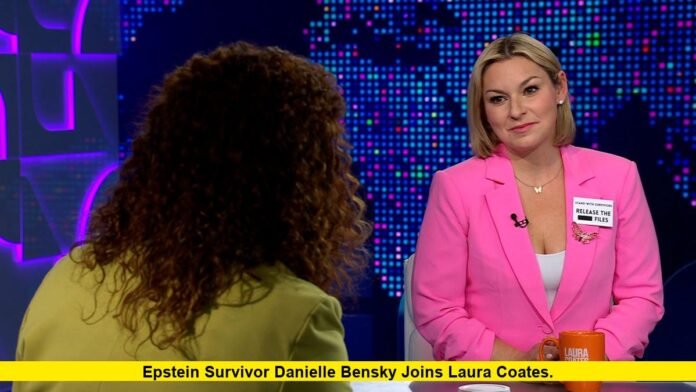

The appearance of Epstein survivor Danielle Bensky joins Laura Coates in a televised conversation has drawn national attention ahead of the State of the Union, highlighting how survivor advocacy continues to influence the public conversation about accountability and justice. Bensky’s participation reflects a broader effort by survivors of Jeffrey Epstein’s abuse network to remain visible during major political moments.
Her discussion centered on the significance of survivors attending the State of the Union as invited guests, underscoring that their presence inside the Capitol carries symbolic and political weight. The moment comes as lawmakers continue to face pressure from victims and advocates seeking further action related to the Epstein case and its wider network.
Readers following this story can share their perspective on how survivor voices are shaping political events and why their presence matters at moments of national focus.
Survivors Brought Into the State of the Union Spotlight
Danielle Bensky’s invitation to attend the State of the Union as a guest of Senator Chuck Schumer reflects a recurring approach in Washington: using high-profile events to amplify survivor perspectives.
Survivors attending major political addresses is not new, but in the context of the Epstein case, it carries particular meaning. The Epstein investigation exposed systemic failures across institutions, prompting congressional scrutiny, civil lawsuits, and ongoing public debate.
Bensky’s presence alongside other survivors signals that the issue remains active in the national conversation years after Epstein’s death in federal custody in 2019.
Advocates say visibility during major political events helps keep pressure on lawmakers to pursue reforms, including stronger protections for victims, transparency around investigations, and accountability for individuals connected to Epstein’s network.
Television Appearance Highlights Survivor Advocacy
During her conversation with Laura Coates, Bensky emphasized that survivor participation at the Capitol sends a clear message that victims will continue pushing for action. She framed attendance not as symbolic alone but as part of a sustained effort to influence policy and public awareness.
Televised interviews have become a key platform for survivors connected to the Epstein case. These appearances allow them to explain why legislative changes, investigative transparency, and continued attention remain priorities.
Bensky’s remarks focused on persistence. Survivors, she said, want decision-makers to understand that the case did not end with Epstein’s death and that broader accountability questions remain central to their advocacy.
Political Context Ahead of the Address
The State of the Union often features guests whose stories align with major policy themes. Lawmakers from both parties regularly invite individuals whose experiences highlight legislative priorities.
In this context, the decision to include Epstein survivors reflects continued political interest in issues tied to human trafficking, exploitation, and institutional accountability.
The Epstein case triggered bipartisan scrutiny, including hearings, investigations into prosecutorial decisions, and calls for reform in how high-profile abuse cases are handled. Bringing survivors to the address reinforces those themes in a highly visible setting.
The timing also coincides with ongoing public attention on civil litigation and investigative developments connected to individuals previously linked to Epstein.
Accountability Remains Central to Survivor Messaging
A key point raised during Bensky’s appearance involved accountability beyond Epstein himself. Survivors have consistently argued that the network surrounding Epstein requires continued legal and public examination.
Their advocacy has contributed to lawsuits, document releases, and renewed scrutiny of powerful figures whose names surfaced during investigations or court proceedings.
Bensky’s comments echoed a broader message shared by many survivors: progress has occurred, but they believe additional steps are needed to address gaps exposed by the case.
That message has remained consistent across public statements, court filings, and congressional discussions over several years.
Why Survivor Visibility Matters in Washington
Experts in victim advocacy note that visibility can influence legislative momentum. Personal stories often shape how policymakers prioritize issues, particularly those involving systemic failures.
Survivors attending nationally televised political events can shift the narrative from abstract policy debates to lived experience. That dynamic has played a role in past reforms related to sexual abuse, trafficking laws, and institutional reporting requirements.
In the Epstein context, survivor visibility has helped sustain attention even as the legal landscape evolves.
It also reinforces the idea that the case represents broader structural concerns rather than a single criminal prosecution.
Public Reaction and Ongoing Debate
Public response to survivor participation at political events tends to be mixed but engaged. Supporters view the invitations as necessary recognition of victims and a reminder of unfinished work. Critics sometimes question whether such moments risk politicizing personal trauma.
However, survivor advocates argue that policy change often requires visibility, especially in cases involving powerful individuals and complex legal histories.
The Epstein case remains one of the most consequential abuse scandals in recent U.S. history, shaping conversations about wealth, influence, prosecutorial discretion, and victim rights.
Bensky’s appearance adds another chapter to that ongoing discussion.
Broader Impact of the Epstein Case on Policy
Since the Epstein investigation gained global attention, it has influenced multiple policy areas:
- Renewed focus on federal trafficking enforcement
- Calls for transparency in plea agreements
- Legislative proposals aimed at expanding victims’ rights
- Increased scrutiny of how institutions respond to abuse allegations
Lawmakers continue referencing the case when discussing reforms tied to trafficking and exploitation.
Survivors appearing at national events reinforces the connection between individual experiences and systemic change.
Media Platforms as Advocacy Tools
Television interviews remain one of the primary ways survivors communicate with the public. Conversations with legal analysts and journalists provide space to explain legal developments, highlight gaps, and maintain visibility.
Bensky’s discussion with Laura Coates fits into a broader media pattern where survivors use high-profile platforms to keep attention on accountability and reform.
That visibility often intersects with key political moments, including congressional hearings, court document releases, and national addresses.
What Comes Next
The long-term trajectory of Epstein-related advocacy continues to involve both legal and political paths. Civil litigation remains active, document disclosures continue to shape public understanding, and policymakers face ongoing pressure from victims and advocacy groups.
Survivors attending major political events suggests that the issue remains part of Washington’s agenda rather than a closed chapter.
For many advocates, sustained attention — not isolated moments — is the central goal.
The appearance of Epstein survivor Danielle Bensky joins Laura Coates illustrates how survivor voices continue to intersect with national politics, media coverage, and policy debates years after the initial scandal.
Readers who want to follow developments can watch how survivor advocacy continues influencing legislative priorities and public conversation in the months ahead.
Share your thoughts on the role survivor voices should play in national political events and join the conversation below.