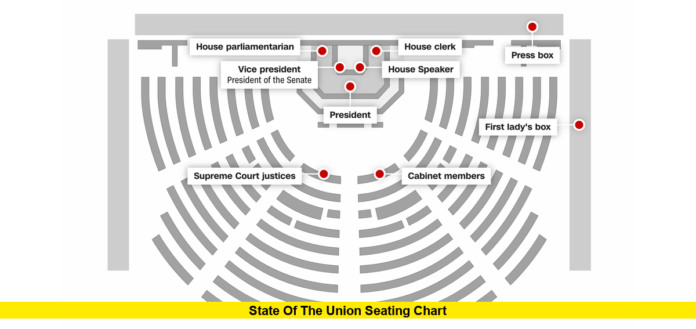

The seating plan inside the House chamber is one of the most closely watched elements of any presidential address. Who sits where at Trump’s State of the Union address is not random — it reflects tradition, protocol, politics, and carefully planned symbolism that shapes how viewers understand the event.
Each seat carries meaning. Lawmakers choose positions based on party strategy, visibility, and messaging. Guests are selected to highlight policy priorities. Cabinet members, military leaders, and the Supreme Court follow strict rules that have evolved over decades.
Stay with this breakdown of the chamber map and what every seating choice signals during one of Washington’s most high-profile political events.
Readers following U.S. politics closely can bookmark this guide for future addresses and seating changes.
How the State of the Union Chamber Is Organized
The address takes place in the House chamber of the U.S. Capitol.
Seating follows a structured layout:
- Members of the House sit on the main floor
- Senators join them, usually toward the front
- The president speaks from the rostrum
- Behind the president sit the Vice President and the Speaker of the House
- Cabinet members, military leadership, and invited guests occupy reserved areas
This layout allows cameras to capture reactions from both parties throughout the speech.
Where Trump Sits and How the Address Begins
The president does not sit during the speech. Instead, Trump enters the chamber, walks down the central aisle, greets lawmakers, and then delivers the address from the podium.
The entrance walk itself is politically important. Lawmakers choose whether to greet, shake hands, or remain seated — a visual indicator of party divisions or support.
Once at the rostrum, the president speaks while congressional leadership sits directly behind him, making them highly visible throughout the broadcast.
Leadership Seats: The Most Visible Positions
Two seats dominate the camera frame:
- The Speaker of the House
- The Vice President (as President of the Senate)
Their reactions — applause, silence, or gestures — often become defining visual moments of the night.
Leadership seating highlights institutional continuity even during intense political disagreements.
Where Democrats and Republicans Sit
Seating is divided by party:
- Democrats traditionally sit on one side of the chamber
- Republicans sit on the opposite side
However, lawmakers sometimes break tradition. Bipartisan seating has occurred during certain addresses to signal unity, especially after national crises.
Members also move seats to appear near cameras, allies, or committee colleagues.
Senators’ Seating Strategy
Senators join House members for the address.
Because they do not have permanent desks in the chamber, they typically sit near their party’s House delegation or alongside leadership.
High-profile senators often position themselves for camera visibility or quick media access afterward.
Guests in the Gallery: Messaging Through Seating
One of the most strategically planned parts of the address involves gallery guests.
Presidents invite individuals whose stories reflect policy themes. These guests sit in a highly visible balcony area near the First Lady or presidential guests.
Typical guest categories include:
- Military families
- Crime victims
- Small business owners
- Workers tied to economic policy themes
- Individuals connected to legislative proposals
Guest reactions frequently become headline moments.
The Cabinet Rule and the “Designated Survivor”
Most Cabinet members attend and sit together in a reserved section.
However, one Cabinet official stays away as the “designated survivor.” This practice ensures continuity of government in case of an emergency.
This tradition applies regardless of which president is delivering the address.
Supreme Court Seating and Protocol
Justices of the Supreme Court attend as invited guests.
They sit together in a reserved front-row section. Their presence underscores the separation of powers.
Unlike lawmakers, justices typically avoid visible reactions during speeches.
Military Leadership and Joint Chiefs Seating
Senior military leaders, including members of the Joint Chiefs of Staff, attend and sit in designated seats near Cabinet officials.
Their placement highlights the administration’s role as commander in chief and reflects national security priorities.
Why Seating Matters Politically
Seating choices create visual narratives that shape public perception.
Key signals include:
- Lawmakers switching seats to show unity
- Strategic guest invitations highlighting policy priorities
- Leadership reactions captured on camera
- High-profile lawmakers positioning themselves for media coverage
These visual cues often become as important as the speech itself.
Camera Strategy and Visibility
Television coverage influences where lawmakers choose to sit.
Members often aim for aisle seats or positions near leadership to increase visibility during applause shots and reaction clips.
This has become more intentional as social media amplifies short video moments.
Changes From Previous Addresses
Over time, seating trends have evolved:
- Increased coordination around guest messaging
- More strategic bipartisan seating efforts in certain years
- Greater awareness of camera positioning
- Expanded use of symbolic guests
These shifts reflect how modern political communication relies heavily on visuals.
What to Watch During Trump’s Address
Viewers often track seating details to understand political dynamics:
- Who greets the president during the entrance walk
- Which lawmakers sit together across party lines
- Guest reactions highlighted by cameras
- Leadership body language behind the president
- Empty seats or visible protests
These moments frequently drive post-speech analysis.
Why the Seating Guide Matters
Understanding Who sits where at Trump’s State of the Union address helps viewers interpret the event beyond the speech.
The seating chart acts as a political map. It reveals alliances, tensions, messaging priorities, and institutional tradition all at once.
For analysts and viewers alike, the chamber layout offers insight into the broader political landscape surrounding the address.
If you follow U.S. politics, tracking the seating plan can reveal just as much as the speech itself.
Share your observations about seating moments or standout guest reactions after the address.
What seating moment stood out to you during the address? Join the discussion and keep following updates as the political stage evolves.