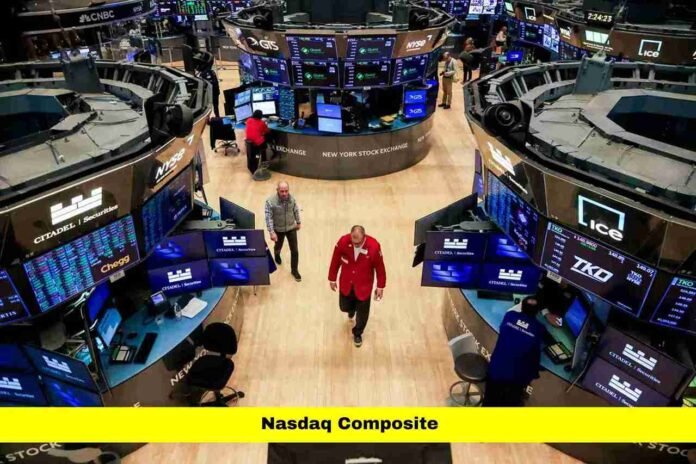

The nasdaq composite index is firmly in the spotlight for investors this week as U.S. stock markets react to global trade developments, shifts in tariff policy, and sector rotation among technology and growth stocks. After weeks of volatility, the tech-heavy index — which tracks thousands of Nasdaq-listed companies — has seen a series of dynamic moves that reflect broader economic uncertainty, shifting investor sentiment, and escalating trade tensions.
In this comprehensive analysis, we break down where the Nasdaq Composite stands right now, explain the forces driving recent market behavior, and explore what the latest price patterns and macroeconomic events mean for investors and everyday market watchers. From technical indicators suggesting a potential correction to the impact of new tariff policy on Wall Street, this article brings together the most recent verified market developments in clear, reader-friendly terms.
Current Market Snapshot: Nasdaq Composite and Broader Index Movements
On Monday, February 23, 2026, U.S. stock markets opened lower as investors reacted to a new 15% global tariff announcement from the White House. In early trading, major indices slipped, with technology-heavy benchmarks bearing the brunt of the sell-off.
The Nasdaq Composite, in particular, declined as tech stocks reacted to rising trade uncertainty and weaker sentiment across growth sectors. This move came as the broader market experienced a downward bias, with both the Dow Jones Industrial Average and the S&P 500 also posting losses.
Data from recent sessions shows the Nasdaq Composite oscillating below key technical levels that had acted as support earlier in the year. Investors have been watching this closely, as the index’s performance often reflects confidence in technology growth and innovation — sectors that contribute disproportionately to economic growth narratives.
Tariff Policy and Market Impact: What’s Driving the Drop
The recent downward pressure on the Nasdaq Composite and other U.S. benchmarks links directly to trade policy developments. A presidential decision to impose a new 15% global tariff sparked an immediate market reaction, with equities sliding as traders absorbed the implications of heightened trade costs.
Tariffs were reinstated under different statutory authority after prior levies were ruled inconsistent with emergency powers by the Supreme Court. The policy change introduced a layer of uncertainty around import costs, supply chain logistics, and multinational earnings projections, particularly for tech firms that depend heavily on global components and international revenue streams.
Investors responded with increased risk aversion. Shares of major U.S. technology companies — which make up a significant portion of the Nasdaq Composite — dipped as traders reassessed earnings prospects and capital allocation in the face of higher trade barriers.
Nasdaq Composite Technical Patterns Suggest Consolidation
Technical analysts have noted structural patterns in the Nasdaq Composite that suggest the index may be entering a consolidation phase. Recent movements show the index struggling to break above resistance levels near where it peaked in late 2025 and early 2026, indicating a potential exhaustion of previous upward momentum.
This sideways trading range has persisted for several months, mirroring periods in the past where markets traded within tight bounds before meaningfully moving in either direction. Analysts point out that a double-top formation near key highs often signals weakening upside pressure and can precede a broader retracement.
As of the most recent trading sessions, the Nasdaq Composite has found itself unable to sustain levels above certain technical ceilings, making the current phase one of consolidation rather than renewed dominance by growth names.
Longer-Term Trends: Year-to-Date Performance
Looking at year-to-date performance through February 22, 2026, the Nasdaq Composite remains in negative territory, reflecting headwinds that offset gains earlier in the year. This contrasts with other major indices like the Dow Jones Industrial Average, which has shown modest positive returns over the same period.
The divergent paths highlight the sectoral rotation that has occurred in recent months. While cyclical and value sectors have attracted capital as traders seek relative safety and earnings stability, high-beta technology and growth stocks have experienced renewed selling pressure.
This has contributed to the broader narrative that markets are reassessing the sustainability of aggressive growth valuations following years of outperformance driven by artificial intelligence optimism and low interest rate environments.
Sector Rotation: Growth vs. Value in Focus
The Nasdaq Composite’s struggles this year reflect a broader shift in investor focus. Over recent quarters, traders have rotated out of high-valuation growth names toward sectors perceived as more resilient or undervalued.
Growth categories, especially software and cloud revenue names, have faced increased scrutiny as debates over future profitability and the pace of AI adoption widen. Meanwhile, cyclical sectors like industrials, energy, and financials have drawn fresh inflows as macro data signals resilience in underlying economic activity.
This rotation has dampened the overall performance of the Nasdaq Composite relative to its past dominance. It’s a sign that many investors are no longer betting solely on sustained, uninterrupted growth for tech giants, and are instead balancing exposure across the wider market.
Economic and Macroeconomic Drivers Influencing Nasdaq Performance
Several macroeconomic factors have also shaped conditions for the Nasdaq Composite:
- Trade Policy Uncertainty: As discussed, tariffs have weighed on multinational earnings expectations.
- Monetary Policy: Federal Reserve communication around interest rates continues to impact growth valuations.
- Earnings Season: Corporate earnings results, especially from major tech firms, remain critical catalysts for short-term moves.
- Inflation Data: Recent inflation figures have influenced expectations for future rate decisions.
Investors are closely monitoring each data release, as even small shifts in inflation or Fed commentary can quickly reframe market narratives.
The Role of Mega-Cap Tech Names in Market Dynamics
A small group of mega-cap technology companies carries significant weight within the Nasdaq Composite. Movements in shares of these names often drive broader index performance due to their large market capitalizations.
In recent sessions, earnings expectations for leading AI chipmakers and software firms have created volatility. Strong earnings can lift sentiment, but cautious forecasts or concerns about demand slowdowns can exacerbate selling pressure.
This dynamic adds complexity for index performance, as gains in some sectors may be offset by weakness in others.
Investor Sentiment and Risk Appetite
Investor sentiment has shifted in recent weeks, with risk appetite waning amid global economic uncertainties and policy challenges. Traders have increasingly adopted a cautious stance, reducing leverage and trimming exposure to high-beta assets.
This sentiment shift is reflected in reduced participation in speculative sectors and increased demand for safer assets such as gold, which has seen inflows amid market weakness.
The overall sentiment picture suggests investors are not fully confident in sustained upside without clear policy direction or economic data confirming robust growth.
Global Influences on U.S. Equities
The Nasdaq Composite does not operate in isolation. Global markets, currency movements, and geopolitical dynamics all feed into U.S. equities.
Recent global trading conditions, including European responses to U.S. tariff policy and reactions in Asian markets, have created additional layers of complexity. Investors monitor cross-border capital flows and multinational earnings forecasts to gauge how international conditions may affect domestic indices.
A stronger or weaker U.S. dollar, shifts in trade balances, and foreign central bank policies all can influence the performance of the Nasdaq Composite, particularly through multinational technology firms with global revenue streams.
Market Volatility and the Volatility Index
Volatility measures, including the CBOE Volatility Index, have fluctuated in recent sessions reflecting heightened trader uncertainty. When volatility rises, equity risk premia tend to widen, leading to lower stock valuations and greater dispersion in performance across sectors.
The Nasdaq Composite, with its concentration in tech and growth names, often exhibits greater sensitivity to volatility shifts than broader or more diversified indices.
This correlation means rapid sentiment changes can result in outsized index moves, especially during earnings weeks or policy announcements.
Trading Strategies in a Choppy Market
For short-term traders and longer-term investors alike, conditions around the Nasdaq Composite call for thoughtful strategy:
- Diversification: Spreading exposure beyond core tech can mitigate concentrated risk.
- Risk Management: Setting stop-loss levels protects capital amid heightened volatility.
- Earnings Focus: Monitoring major earnings releases can anticipate directional shifts.
- Macro Awareness: Keeping an eye on policy announcements, inflation data, and global events remains essential.
In choppy markets, tactical flexibility often outperforms rigid positioning.
Historical Context: Recent Market Movements
The Nasdaq Composite has seen a roller coaster of performance over the past year. In 2025, it experienced strong gains as tech stocks rallied alongside AI optimism. However, signs of a correction emerged as tariff uncertainty and economic reassessments took hold.
More recently, the index slid into negative territory for 2026 as profit-taking and sector rotation gained traction, reflecting both profit realization and caution among investors.
These shifts highlight how quickly market conditions can evolve and why staying informed with current data is crucial for decision-making.
Looking Ahead: What Could Shape Nasdaq’s Path?
Several key developments could influence the Nasdaq Composite in the weeks and months ahead:
- Corporate earnings results from major tech firms
- Further trade policy updates or tariff adjustments
- Federal Reserve monetary policy decisions
- Inflation and labor market data releases
- Shifts in global economic growth projections
Each of these factors carries the potential to either reinforce current trends or trigger renewed volatility in technology sectors.
Investor Confidence and Market Psychology
Sentiment plays a central role in equity markets. When confidence wanes, markets often price in lower valuations ahead of confirmed data. In the current climate, mixed economic signals have breeders cautious sentiment, contributing to a more defensive stance among traders.
Investor psychology today is characterized by a careful balance between optimism for innovation and caution against macro risks.
The Broader Significance of Nasdaq’s Moves
The Nasdaq Composite serves as a barometer of investor confidence in technology and growth sectors. Its recent behavior underscores how global policy, market sentiment, and macroeconomic concerns intersect with investor performance expectations.
While movements may appear technical on the surface, they often reflect deeper shifts in how capital allocators view risk, growth prospects, and valuations for the future.
Why Nasdaq Matters to Everyday Investors
Even for those not directly trading tech stocks, the Nasdaq Composite’s performance can influence retirement accounts, index funds, and the broader economic narrative.
Movements in the index often correlate with changes in consumer and business confidence, impacting spending, hiring, and investment decisions across the economy.
What are your expectations for the Nasdaq Composite as markets navigate trade policy headwinds and earnings season? Share your thoughts below and stay connected as this story continues to unfold.