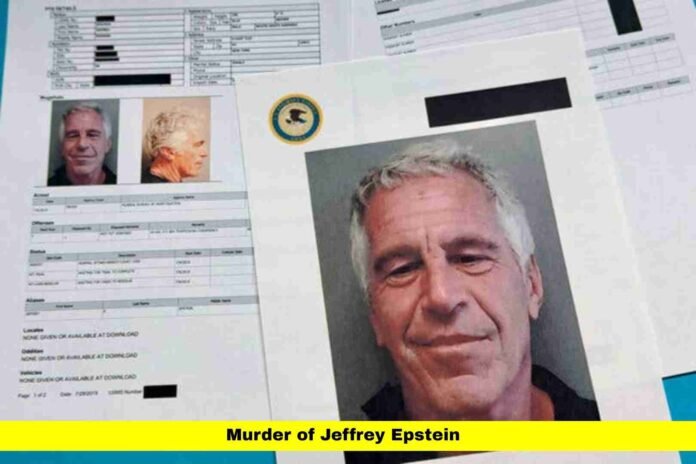

The Murder of Jeffrey Epstein remains a topic of intense public interest and national conversation as fresh details from newly released files continue to emerge. Ever since the wealthy financier was found dead in his New York jail cell in 2019, questions about the circumstances of his death have fueled debate, speculation, and examination of official records.
In 2026, the ongoing release of millions of pages of government documents has reignited discussions about Epstein’s death, creating headlines and deepening public curiosity about what truly happened in the days leading up to his final hours. These revelations do not change the official record, but they do shed new light on how federal agencies communicated internally and how individuals outside the government responded to Epstein’s death.
The Official Account of His Death
Jeffrey Epstein, a financier and registered sex offender, was found unresponsive in his jail cell at the Metropolitan Detention Center in New York City on August 10, 2019. The medical examiner ruled his death a suicide by hanging.
At the time, Epstein was in federal custody facing charges of federal sex trafficking involving minors. He had previously been convicted in 2008 on charges related to prostitution with a minor and was a registered sex offender.
The official finding by authorities attributed Epstein’s death to suicide, and that determination has remained the legal position of the government. Law enforcement and medical officials explained that multiple factors — including surveillance videos, cellmate assignments, staffing issues, and procedural lapses — were involved in the circumstances surrounding his death. Despite official findings, public skepticism persisted.
Release of Epstein Files and New Government Documents
In late 2025 and into early 2026, the Department of Justice released a massive archive of files related to Epstein under the Epstein Files Transparency Act. These documents encompass more than three million pages, including emails, communications among law enforcement, investigative records, and other material tied to the broader Epstein case.
Among the substantial volume of information were internal documents, draft statements, and email exchanges previously unseen by the public. These files offer insight into prosecutorial strategy, victim witness coordination, and interactions across federal offices.
As the files have been sorted, archived, and made accessible to the public, researchers and journalists have identified numerous entries that reference various aspects of Epstein’s life, associations with others, legal matters, and even reactions to his death.
What the Email Reveals That Stirred Debate
One of the most talked-about items found in the newly released documents is a 2020 email from an individual identifying themselves as an assistant U.S. attorney in the Eastern District of New York. In this email, the writer referred to the “investigation into the murder of Jeffrey Epstein,” noting that the Office of the Chief Medical Examiner signed a confidentiality agreement related to the matter. The message sought to extend a similar agreement in a related legal context.
The appearance of that language, in which a federal attorney refers to Epstein’s death as a “murder,” has raised eyebrows and captured headlines. People reading the email have seized upon the terminology as though it might suggest official reconsideration of Epstein’s cause of death or a revision of legal roles in the matter.
However, internal communications do not equate to an official change in the federal government’s position or in any medical examiner’s finding. At this point, the death remains legally classified as suicide, and federal investigative agencies have not announced any formal change in that determination.
Public Interpretation and Reactions
The email’s language has divided opinion. Some commentators argue that it shows breaches in communication or hidden inquiries into Epstein’s demise. Others view it as poor word choice or an internal reference that does not reflect formal government action.
The public reaction has been amplified on social media platforms, where some users have interpreted the email as confirmation of long-held beliefs that Epstein did not take his own life. Others caution against reading too much into a single internal message, especially one that lacks context and has not been framed as part of a formal investigation.
It’s important to note that such internal communications may include shorthand or speculative phrasing among professionals that does not align with public interpretations. Without a formal investigative announcement or legal proceeding, government language in internal emails does not constitute verified evidence of a murder instead of suicide.
Broader Context Around Epstein’s Death
The controversy surrounding Epstein’s death predates this email revelation. Since 2019, skepticism has persisted due to the high-profile nature of his case, the list of individuals connected to him socially or professionally, and procedural issues in the detention facility where he was held.
Public opinion studies have shown that a significant number of Americans do not believe Epstein died by suicide, with large percentages expressing that they think he was murdered or are uncertain about the official account. This distrust has persisted despite medical examiner findings.
Still, official investigations by federal authorities have maintained that the death was self-inflicted.
Other Emerging Details From the Epstein Files
The ongoing release of documents has yielded a range of information beyond the email describing a “murder” investigation. Among the materials:
- Draft statements from federal prosecutors that are dated shortly before or after Epstein’s death, suggesting how officials prepared messaging in the immediate aftermath.
- Emails identifying local victim assistance efforts and coordination with state or nonprofit entities.
- Communications showing efforts to manage the volume and sensitivity of records as they are made public, including decisions about redactions to protect victim identities.
- Records indicating notable historical connections with business, travel, and international contacts.
These documents offer a more complete look at the complexity of Epstein’s legal challenges, his relationships, and the procedural considerations that followed his arrest and death.
Investigations Beyond Death: Allegations at Zorro Ranch
Unrelated to the debate over Epstein’s death itself, a separate, active probe continues in New Mexico involving allegations tied to Epstein’s former Zorro Ranch property.
New information from state officials has prompted a review of claims that two foreign girls were buried near the property during violent sexual assaults that allegedly occurred under Epstein’s direction. These charges come from an anonymous 2019 email to a radio host that referenced alleged strangulation murders and offered evidence in exchange for a bitcoin payment.
State authorities have asked for unredacted records and have launched broader inquiries into the ranch’s history, including testimony and civil suits alleging abuse occurred there. The property — previously owned by a former governor and later repurposed — has become a focal point for those seeking accountability for ground-level crimes associated with Epstein’s circle.
This investigation is ongoing and broad in scope, separate from the federal classification of Epstein’s death.
Legal Status and Lack of New Charges in the Death Case
Despite public discussion and release of massive document sets, the federal government has not brought additional criminal charges related to Epstein’s death. Deputy officials have noted that the mere existence of voluminous correspondence, internal communication, and historical records does not necessarily create grounds for prosecution or new investigative directives.
At multiple points in 2025 and 2026, federal representatives have reaffirmed that no evidence has come to light justifying new charges related to Epstein’s death, and they have emphasized transparency efforts while balancing privacy protections for victims whose identities appear within the files.
This emphasizes the complexity of large litigated cases and the burden of evidence required for lawful action beyond initial determinations.
Claims Versus Official Statements
Many of the newly publicized files include “tips,” “allegations,” or “unverified claims” submitted by private individuals to law enforcement over the years. These entries are included in the document set by statutory requirement but do not necessarily reflect verified findings.
For example, one widely shared email claimed that Epstein’s brother, Mark Epstein, accused a former president of involvement in his sibling’s death. That email was one of many tips forwarded to federal authorities but is not confirmed as factual or supported by law enforcement investigation to date.
Official government statements have repeatedly noted that inclusion of such communications in the public files does not mean the claims have been substantiated.
Release Efforts and Transparency Law Implementation
The Epstein Files Transparency Act, passed by Congress, directed the Justice Department to disclose all internal communications, emails, memos, investigative records, and other related material concerning decisions to charge, not charge, or investigate Epstein and his associates.
Under this law, millions of pages of records were released beginning in late 2025 and continuing into 2026. These include records of:
- Investigative plans and strategy memos.
- Communications between prosecuting offices.
- Evidence lists and references.
- Emails among law enforcement and supporting agencies.
- Internal discussions about public communications and media handling.
In releasing these records, the government has applied significant redactions in an effort to protect potential victims and personal privacy while fulfilling statutory transparency requirements.
How the Public Has Responded to the Files Release
The public response to the data dump has been varied. Some individuals and commentators see the release as overdue and necessary for accountability. They argue that transparency can help uncover the depth of criminal activity and potential systemic failures in oversight.
Others caution that the raw volume of records, including informal correspondence, unverified tips, and internal emails, should not be conflated with legal findings. They emphasize that many entries require context before drawing conclusions about wrongdoing.
Experts in government transparency and legal processes note that large releases of unfiltered documents often generate headlines based on isolated passages rather than comprehensive analysis.
Ongoing Official Positions on Epstein’s Death
Federal authorities continue to stand by the official ruling that Epstein’s death was a suicide. Despite renewed public discussion, internal draft statements and early communications in the files, and controversial phrasing in some emails, there has been no formal shift in that determination by the medical examiner or the Justice Department.
Statements from department leaders reaffirm the official cause of death and caution against interpreting internal or preliminary documents as representing changes in legal conclusions.
The Independence of death certificates and coroner findings remains central to official records.
What This Means for Legal and Historical Records
The ongoing release of Epstein-related documents represents one of the largest transparency efforts for a high-profile federal case in decades. Millions of pages of material provide historians, legal scholars, journalists, and the public unprecedented access to internal federal communication and case documentation.
However, access to these records does not equate to new legal action. Sorting through the material, contextualizing entries, and understanding their relevance to ongoing legal standards and investigative thresholds will take time.
Court records, victim testimonies, settlement agreements, property records, and law enforcement files are now available for review, but official legal stances, including the cause of Epstein’s death, rest on formal determinations and structured investigations.
Why Debate Over His Death Continues
There are several reasons why public debate persists around Epstein’s death:
- His connections to powerful individuals across private, business, and political sectors.
- The procedural lapses in jail safety protocols that preceded his death.
- The high stakes of the criminal charges he faced at the time of his arrest.
- The sheer volume of newly released documents that include ambiguous or informal language.
- Historical mistrust among portions of the public toward official government narratives.
These factors contribute to ongoing discussion and heightened public engagement with every new document release.
Looking Forward: What Comes Next
As more pages are added to the public archive and analysts continue reviewing the material, experts expect additional insights into Epstein’s network, legal strategy, victim coordination, and related actions by federal agencies. Civil suits, independent investigations, and state inquiries such as the one in New Mexico will likely continue in parallel.
Understanding the full scope of archival records will take years, and the public’s grasp of the historical record will continue evolving as researchers and professional analysts extract new information from the files.
Do you think the newly released emails shed meaningful light on how justice was handled in the Epstein case, or do they raise more questions than answers? Share your thoughts below and stay engaged as this story develops.