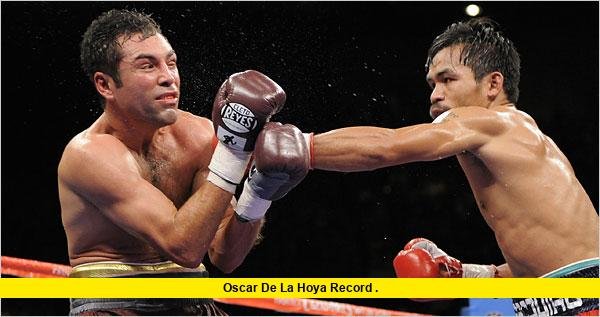

The oscar de la hoya record remains one of the most discussed legacies in modern boxing history. Known as “The Golden Boy,” Oscar De La Hoya built a career that reshaped the sport’s business, popularity, and pay-per-view era while delivering memorable fights against elite opponents across multiple weight classes.
His professional career ended with a record of 39 wins, 6 losses, and 30 knockouts, a résumé that reflects both dominance and a willingness to fight the best of his generation. From early championship runs to blockbuster showdowns like Pacquiao vs. De La Hoya, his record continues to be analyzed by fans, historians, and fighters alike.
If you follow boxing history and iconic fighters, keep reading to see how De La Hoya’s record was built fight by fight and why it still matters today.
Oscar De La Hoya’s Official Career Record
Oscar De La Hoya finished his professional career with:
- Wins: 39
- Losses: 6
- Knockouts: 30
- World titles in: 6 weight classes
He won championships from super featherweight to middleweight, an achievement that placed him among boxing’s most versatile champions.
De La Hoya turned professional in 1992 after winning Olympic gold at the 1992 Barcelona Games. His rapid rise through divisions showcased technical skill, speed, and strong promotional appeal.
Fans often highlight his knockout ratio and willingness to face elite competition as key reasons his record holds long-term significance.
Want more deep dives into legendary boxing careers and fight breakdowns? Stay connected for ongoing coverage of the sport’s biggest names.
Early Career: Building Momentum Fast
De La Hoya’s early professional run showed clear star potential. He quickly captured attention with fast combinations, disciplined footwork, and a marketable personality.
He won his first world title in 1994 at super featherweight. From there, he moved up divisions aggressively rather than defending belts repeatedly, a decision that shaped both his record and reputation.
Key early highlights included:
- Winning titles in multiple divisions within a short span
- High knockout frequency in early fights
- Growing pay-per-view interest
By the mid-1990s, De La Hoya had become one of boxing’s biggest draws.
Championship Success Across Six Divisions
One of the most important elements of the oscar de la hoya record is his ability to win titles across weight classes.
He captured championships in:
- Super featherweight
- Lightweight
- Light welterweight
- Welterweight
- Light middleweight
- Middleweight
Few fighters successfully navigate that many divisions while remaining competitive against top opponents.
His welterweight era especially defined his prime, featuring major fights that helped shape boxing’s late-1990s landscape.
Defining Rivalries and Big Fights
De La Hoya’s record includes bouts against several Hall of Fame fighters and major champions.
Notable opponents included:
- Julio César Chávez
- Pernell Whitaker
- Félix Trinidad
- Shane Mosley
- Bernard Hopkins
- Floyd Mayweather Jr.
- Manny Pacquiao
These matchups elevated his profile and explain why his six losses do not diminish his legacy. Many came in close, debated decisions or against elite champions at different stages of his career.
His willingness to face high-risk fights is often cited as a defining trait.
Pacquiao vs. De La Hoya: A Historic Turning Point
The 2008 showdown between Manny Pacquiao and Oscar De La Hoya became one of boxing’s most memorable cross-era fights.
The bout took place at welterweight and drew massive attention due to:
- Size difference narrative
- Generational clash storyline
- Pay-per-view significance
Pacquiao’s victory marked the final fight of De La Hoya’s career. It symbolized a shift toward a new era in boxing while closing the chapter on one of the sport’s biggest stars.
Despite the loss, the fight’s scale reinforced De La Hoya’s role in shaping major boxing events.
Close Decisions and Controversial Fights
Several losses on De La Hoya’s record remain debated among fans.
Examples often discussed:
- Félix Trinidad decision fight
- First Shane Mosley bout
- Floyd Mayweather Jr. split decision
These fights were competitive and frequently described as razor-close. Because of that, analysts often examine his record beyond simple win-loss totals.
His résumé reflects elite matchmaking rather than record protection.
Knockout Power and Fighting Style
De La Hoya’s 30 knockouts highlight an offensive style built on speed and precision.
Key traits of his style:
- Strong left hook
- Sharp jab
- Technical fundamentals
- Ability to adjust across divisions
His knockout rate was highest in earlier weight classes but remained a threat even as competition level increased.
This combination of technique and marketability helped define boxing’s pay-per-view boom.
Business Impact and Promotional Era
Beyond the ring, De La Hoya’s record intersects with boxing’s business evolution.
He became:
- One of the sport’s biggest pay-per-view attractions
- A crossover mainstream star
- Founder of a major boxing promotion company after retirement
His fights frequently set commercial benchmarks, demonstrating how performance and promotion can shape a fighter’s legacy.
That business success keeps his career relevant long after retirement.
How Historians Evaluate the Record Today
Analysts typically evaluate the oscar de la hoya record using three lenses:
Quality of Opposition
He consistently fought top contenders and champions.
Multi-Division Titles
Winning belts across six divisions remains a rare achievement.
Era Influence
He helped transition boxing into a modern superstar-driven pay-per-view era.
Because of these factors, his record is often considered stronger than fighters with fewer losses but weaker opposition.
Legacy Compared With Other Boxing Icons
When comparing De La Hoya to other stars of his era, his record stands out for risk level.
Unlike many champions who avoided certain matchups, he faced:
- Prime champions
- Larger opponents
- Rising stars
This approach explains why his record includes losses yet still ranks among the most respected résumés of the 1990s and 2000s.
His willingness to take major fights is a central theme in discussions about his legacy.
Why His Record Still Matters in 2026
Even years after retirement, De La Hoya’s record remains relevant because:
- Fighters continue chasing multi-division success
- Promotional influence shaped modern boxing
- His fights remain key historical reference points
New generations often study his career as an example of balancing performance, risk, and marketability.
The combination of championships, rivalries, and event-level fights ensures ongoing discussion.
Final Look at Oscar De La Hoya’s Career Numbers
Career snapshot:
- Record: 39-6
- Knockouts: 30
- World titles: 6 divisions
- Olympic gold medalist: 1992
These numbers tell only part of the story. His impact on matchmaking, event promotion, and crossover popularity remains equally important.
His career reflects a period when boxing stars drove global attention and blockbuster events.
If you enjoy exploring boxing history, De La Hoya’s career offers one of the clearest examples of how talent and timing shape a legend.
Keep following for more analysis of iconic fighters, career records, and historic fights that defined the sport.
What’s your take on De La Hoya’s legacy — underrated record or all-time great résumé? Share your thoughts and stay tuned for more boxing deep dives.