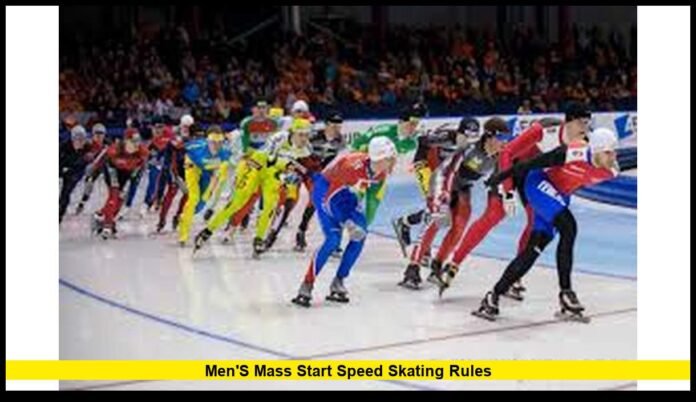

Men’s mass start speed skating rules shape one of the most tactical events in long-track competition, where pack racing, sprint scoring, and positioning determine the outcome. The current format remains in effect across World Cup races, world championships, and the 2025–2026 international season, giving athletes and fans a consistent structure built around points and final sprint execution.
This event continues to attract attention because results depend on race intelligence as much as speed. Every lap carries strategic value, and skaters must read the race constantly.
What Men’s Mass Start Speed Skating Is
Men’s mass start is a long-track speed skating event where a full field begins together and races as a group. Unlike traditional races that measure time, this event uses a scoring structure based on sprint placements.
Athletes skate in a pack, draft behind one another, and time attacks carefully. The race often unfolds slowly before explosive acceleration near sprint laps.
Key characteristics include:
- Pack start with multiple skaters on the track
- Tactical drafting similar to cycling
- Points awarded during the race
- A decisive final sprint
- Team cooperation within national squads
The discipline blends endurance racing with sprint competition, creating a format that rewards awareness and timing.
Race Distance, Track Layout, and Field Size
The event follows standardized technical parameters across major competitions.
| Element | Specification |
|---|---|
| Total laps | 16 |
| Track length | 400 meters |
| Total distance | 6,400 meters |
| Typical field size | Up to 24 skaters |
| Start type | Mass start |
All athletes begin simultaneously from the start line. Officials monitor pack movement, sprint zones, and safety throughout the race.
Because the distance is shorter than traditional endurance events, energy management becomes critical.
Sprint Points Structure
The scoring system sits at the center of the event’s identity. Points are awarded at specific sprint laps and during the final finish.
Intermediate Sprint Laps
Two sprint checkpoints appear early in the race.
- First sprint: After lap 4
- Second sprint: After lap 8
Points distribution:
- 1st place — 5 points
- 2nd place — 3 points
- 3rd place — 1 point
These points encourage aggressive racing and can influence podium outcomes when the final sprint becomes chaotic.
Many skaters attempt controlled attacks during these laps to collect early points without exhausting themselves.
Final Sprint Scoring
The final sprint carries the largest point allocation and usually decides the winner.
Typical scoring:
- 1st — 60 points
- 2nd — 40 points
- 3rd — 20 points
- 4th — 10 points
- 5th — 6 points
- 6th — 3 points
The athlete with the highest total points wins the race. When totals match, finish order at the final sprint determines ranking.
Because the final sprint offers a large reward, most athletes prioritize positioning over early breakaways.
How Pack Dynamics Influence Racing
Pack racing defines the event. Skaters rarely lead for long because wind resistance increases energy cost.
Drafting reduces effort significantly. Athletes often rotate positions inside the group, conserving energy while staying near the front.
Key pack behaviors include:
- Formation of a main group
- Pace control by teams
- Temporary breakaways
- Sudden accelerations before sprint laps
- Late reshuffling of positions
Positioning inside the top five entering the final two laps dramatically increases medal chances.
Strategic Approaches Used by Elite Skaters
Men’s mass start demands complex tactical decisions.
Energy Conservation
Athletes avoid unnecessary work early. Staying sheltered in the pack allows stronger finishing speed.
Sprint Timing
Successful skaters launch sprints from ideal distances. Starting too early risks fading before the line.
Breakaway Attempts
Some athletes attempt solo or small-group attacks. These moves can succeed when pack coordination fails.
Team Coordination
Nations with multiple entrants often execute coordinated plans. One skater may chase attacks while another prepares for the finish.
Late Position Battles
The final two laps become highly aggressive. Skaters fight for inside lanes and drafting advantage.
Role of Team Tactics
Although results are individual, team tactics influence race outcomes.
Teams may:
- Control pace to prevent breakaways
- Lead the pack into sprint laps
- Block rivals within legal limits
- Launch alternating attacks
- Protect a designated sprinter
This cooperative element adds complexity rarely seen in other long-track events.
Officials monitor team behavior to ensure fairness.
Penalties, Infractions, and Disqualification
Safety remains a priority due to pack racing.
Officials enforce strict rules against dangerous movement and interference.
Common infractions include:
- Blocking another skater’s path
- Sudden lane changes causing contact
- Impeding progress in sprint zones
- Excessive physical contact
- Cutting inside illegally
A disqualification removes all points earned in the race.
Yellow cards may also be issued. Repeated infractions across events can lead to suspension from subsequent races.
Handling Lapped Skaters
Unlike elimination formats, skaters usually remain in the race even if they fall behind.
However, officials may remove lapped athletes for safety reasons. This prevents interference with sprint scoring and reduces collision risk.
Situations leading to removal:
- Being overtaken by the main pack
- Inability to maintain safe speed
- Injury
- Technical problems
This rule protects the integrity of sprint laps.
Technology Used in Judging
Modern events rely heavily on electronic monitoring.
Officials use:
- Transponders for lap tracking
- Photo finish cameras for sprint order
- Video replay for penalties
- Position tracking software
- Timing systems integrated with scoring
Technology ensures accurate sprint placements and consistent rule enforcement.
Close finishes often require frame-by-frame review.
Differences From Other Speed Skating Events
Mass start stands apart from traditional long-track racing.
| Feature | Traditional Long-Track | Mass Start |
|---|---|---|
| Start format | Two skaters | Pack start |
| Winner determined by | Time | Points |
| Drafting | Not used | Essential |
| Physical interaction | Minimal | Moderate but regulated |
| Strategy level | Lower | Very high |
These differences make the event more dynamic and unpredictable.
Fans often describe it as the most exciting long-track discipline.
Qualification Format in Major Competitions
Large events use multiple rounds.
Typical structure:
- Semifinals with sprint scoring
- Top finishers advance
- Points reset before final
- Final determines medals
Semifinal races can be tactical because athletes only need to qualify rather than win outright.
Positioning remains crucial even when qualification is the main goal.
Equipment Requirements
Because of pack racing, equipment rules include additional safety measures.
Skaters must wear:
- Clap skates
- Aerodynamic racing suits
- Protective gloves
- Cut-resistant leg protection
- Helmets
- Number identification bands
Officials inspect equipment before races begin.
Helmets became mandatory due to increased collision risk compared with time-trial events.
Training Focus for Mass Start Specialists
Athletes preparing for this event follow a hybrid training model.
Endurance Work
Long aerobic sessions build the ability to handle sustained pack speed.
Sprint Development
Explosive training improves final sprint power.
Tactical Simulation
Practice races help athletes learn positioning and timing.
Drafting Practice
Skaters train to ride closely behind others without losing balance.
Race Awareness
Decision-making drills improve reaction time during sudden attacks.
Cycling remains a popular cross-training method because it mirrors pack dynamics.
Race Phases Explained
Mass start races typically unfold in distinct phases.
Opening Laps
The pace stays controlled. Skaters settle into pack formation and assess rivals.
First Sprint Phase
Aggressive skaters attempt early points. Others remain conservative.
Middle Phase
The pack stabilizes. Teams begin positioning for later attacks.
Second Sprint Phase
Tactical moves increase. Some skaters attempt breakaways.
Pre-Final Laps
Speed rises sharply. Position battles intensify.
Final Sprint
The race reaches maximum speed. Drafting and timing determine results.
Understanding these phases helps viewers interpret race decisions.
Why Final Sprint Position Matters Most
Because of the scoring structure, finishing position at the final sprint carries the greatest impact.
Athletes aim to enter the final lap near the front without leading too early.
Leading too soon exposes skaters to wind resistance. Staying too far back risks being boxed in.
Successful racers combine patience with decisive acceleration.
Common Tactical Mistakes
Even experienced skaters make errors.
Frequent mistakes include:
- Leading too early
- Missing sprint opportunities
- Poor positioning entering the final lap
- Overcommitting to breakaways
- Getting trapped near the boards
Small positioning errors can eliminate medal chances.
How Officials Evaluate Fair Racing
Judges observe several key factors.
They monitor:
- Movement during sprint zones
- Contact severity
- Lane changes
- Drafting behavior
- Intentional obstruction
Video review supports consistent decisions across events.
Officials must balance aggressive racing with safety enforcement.
Evolution of the Event
Mass start developed to increase spectator engagement in long-track speed skating.
Over time, governing bodies refined:
- Sprint scoring balance
- Safety requirements
- Helmet rules
- Penalty definitions
- Technology integration
The core structure has stabilized, allowing athletes to specialize in the discipline.
Its growth continues because of unpredictable finishes and visible strategy.
Why U.S. Viewership Continues to Grow
Several factors drive interest among American audiences.
- Clear race drama
- Frequent lead changes
- Sprint-style finishes
- Team strategy elements
- Easy visual storytelling for broadcasters
Viewers can follow positioning battles without needing split-time analysis.
This accessibility makes the event attractive to new fans.
Key Skills That Define Winners
Successful mass start skaters share specific abilities.
They demonstrate:
- High sprint speed
- Tactical patience
- Strong spatial awareness
- Efficient drafting technique
- Rapid decision-making
- Confidence in close-contact racing
Athletes rarely win through speed alone. Race intelligence plays a central role.
Future Direction of the Discipline
The current rules continue into the next Olympic cycle without major structural changes.
Focus areas include:
- Enhanced safety monitoring
- Improved judging consistency
- Technology upgrades
- Clearer sprint zone enforcement
- Athlete education on pack safety
Stability in the rules allows athletes to refine strategy over multiple seasons.
Why Understanding the Rules Improves Viewing Experience
Knowing how points work changes how the race appears.
Viewers begin to notice:
- Which skaters target sprint laps
- Team positioning patterns
- Drafting lines forming before attacks
- Subtle pace control by leaders
- Timing of final sprint launches
This awareness reveals the strategic depth behind the event’s fast finishes.
Conclusion
Men’s mass start combines endurance, sprint power, and tactical intelligence into a single race format built around points and positioning. The established structure — 16 laps, sprint checkpoints, and a decisive final sprint — continues to shape international competition.
Athletes must read the race constantly, manage energy carefully, and execute perfectly in the closing moments. Teams influence pacing, officials enforce safety, and technology ensures accurate scoring.
The result is a discipline defined by strategy as much as speed, where every lap carries meaning and every sprint can reshape the standings.
What part of mass start racing do you find most exciting — strategy, sprint finishes, or team tactics? Share your thoughts and stay updated on upcoming competitions.