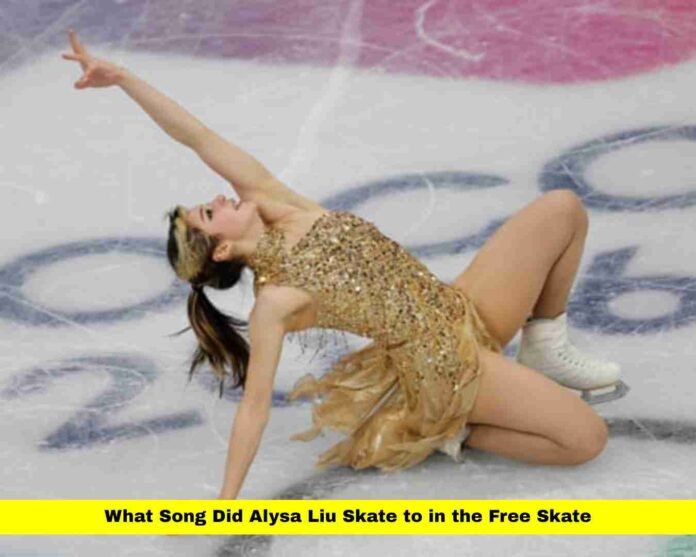

When fans ask what song did alysa liu skate to in the free skate, they are talking about one of the defining Olympic moments of 2026. At the Milan Cortina Winter Games, Alysa Liu delivered a breathtaking free skate performance set to MacArthur Park Suite by Donna Summer. That music choice became the emotional and artistic backbone of a routine that secured her the Olympic gold medal in women’s singles figure skating and marked a historic return to the top for Team USA.
Her performance was not just technically strong. It was expressive, commanding, and unforgettable. The music selection, choreography, and execution came together in a way that elevated her routine beyond a competition skate and into the realm of Olympic legacy.
The Music That Defined the Night
Alysa Liu chose MacArthur Park Suite, a powerful disco-era composition made famous by Donna Summer. The suite blends orchestral drama with driving rhythm and soaring vocals, giving skaters wide emotional range to interpret. For Liu, the music provided a bold structure that allowed her to shift between intensity and elegance throughout the program.
The opening section created immediate anticipation as she took her starting pose. As the music built, she launched into her first jumping pass with confidence and control. The rhythm gave her energy, while the melodic phrases allowed her to stretch movements and fully extend through transitions. The suite’s dynamic contrasts worked perfectly with her choreography, helping her accent jumps, spins, and step sequences at precisely the right musical moments.
Rather than relying on traditional classical music often heard in Olympic free skates, Liu’s selection stood out. It was modern yet dramatic. Emotional yet powerful. The music amplified her personality on the ice and helped her connect deeply with both the audience and judges.
A Historic Gold Medal for Team USA
Liu’s victory carried historic weight. She became the first American woman in more than two decades to win Olympic gold in women’s singles figure skating. The drought had been long and often discussed in skating circles. Her performance ended that conversation in emphatic fashion.
She entered the free skate within striking distance of the lead after the short program. The pressure was immense. Olympic free skates demand near perfection, especially in a field packed with technically advanced competitors. Liu responded with composure beyond her years.
Her total score combined high technical marks with strong program components. Judges rewarded her clean execution, edge quality, choreography, and musical interpretation. The arena erupted when her final score appeared, confirming her as Olympic champion.
The significance of that moment extended beyond personal triumph. It reignited excitement in American figure skating and inspired a new generation of skaters watching from home.
Technical Breakdown of the Free Skate
Liu’s free skate included a carefully constructed layout designed to maximize scoring potential while maintaining artistic flow. She opened with a high-impact jumping element that set the tone. Throughout the program, she executed multiple triple jumps, including combinations that demonstrated both power and precision.
Her triple Lutz combination stood out for its height and clean landing. She maintained tight air position and smooth exits, allowing seamless transitions into connecting steps. Her triple Salchow later in the program was equally controlled, showing no visible strain even as fatigue naturally builds during the second half of a free skate.
Spin sequences displayed strong centering and speed. Each spin variation matched musical accents, reinforcing the connection between choreography and sound. Her step sequence traveled confidently across the ice, incorporating deep edges, directional changes, and expressive arm movements that elevated performance component scores.
Importantly, Liu maintained energy through the closing section of the suite. Many skaters fade late in the program, but she built momentum toward the final crescendo. That stamina and commitment impressed judges and reinforced the impact of the routine.
Artistry and Emotional Interpretation
The free skate was not simply a display of technical skill. It was an artistic statement. Liu’s facial expression, upper-body carriage, and projection into the arena demonstrated maturity and growth.
The dramatic sections of MacArthur Park Suite allowed her to emphasize sweeping movements and extended lines. During quieter musical passages, she softened her edges and used subtle body language to convey emotion. When the rhythm intensified, her skating became sharper and more dynamic.
This balance between strength and vulnerability created a layered performance. It showed that she was not just completing required elements but telling a story. Olympic audiences respond to that authenticity. Judges reward it as well.
Her ability to interpret the music with such clarity marked a significant evolution from her earlier career years. It reflected experience, confidence, and a deeper understanding of performance artistry.
The Comeback Story
Liu’s path to Olympic gold was not linear. After competing in the 2022 Winter Games as a teenager, she stepped away from the sport. Many assumed her competitive career had ended.
Her return surprised fans and analysts alike. When she resumed training and competition, she approached the sport with renewed perspective. She appeared more relaxed, skating for joy rather than expectation.
That mindset shift became visible in her programs. She selected music that resonated personally and collaborated closely on choreography. By the time the 2026 Olympic season arrived, she looked composed and confident.
Winning gold after stepping away from elite competition made her story even more compelling. It underscored resilience and the power of returning on one’s own terms.
How the Music Elevated the Program
Free skate music plays a critical role in scoring under modern judging criteria. Interpretation, timing, and choreography are evaluated alongside technical difficulty. A well-chosen piece can amplify strengths and mask potential weaknesses.
In Liu’s case, MacArthur Park Suite provided clear musical phrasing. That structure allowed her to place jumps at climactic moments. Judges notice when elements match musical accents.
The suite also offered tempo variation. Faster sections supported powerful crossovers and jump entries. Slower segments created space for expressive skating and breath between elements.
Because the music builds toward a strong finale, Liu could increase intensity naturally. The closing moments felt earned rather than rushed. That cohesion strengthened overall impression marks.
Comparison With Other Competitors
The women’s field in Milan Cortina featured diverse musical choices. Some skaters leaned into classical compositions. Others selected contemporary instrumental pieces.
Liu’s disco-influenced orchestral suite stood apart. It carried bold personality and rhythmic energy rarely heard in Olympic finals. That uniqueness worked in her favor.
While her competitors delivered technically impressive routines, Liu’s program combined high difficulty with distinct character. Judges often reward programs that feel complete and memorable. Her free skate achieved that balance.
Choreography and Ice Coverage
The choreography of Liu’s program maximized ice coverage. She utilized the full rink, moving confidently from corner to corner. This spatial awareness enhanced visual impact.
Transitions between elements were carefully designed. Instead of pausing before jumps, she entered from complex footwork or turns. That increased difficulty value and strengthened flow.
Arm movements and body lines matched the suite’s dramatic swells. During crescendos, she expanded her reach. During quieter measures, she tightened movements for contrast. The choreography avoided repetition and maintained momentum.
This thoughtful construction ensured that no section felt empty. Every second contributed to storytelling or scoring potential.
Audience Reaction in Milan Cortina
As Liu completed her final pose, the arena responded immediately. Applause echoed through the venue before her score even appeared.
Spectators recognized the significance of what they had witnessed. Olympic performances often hinge on small margins. In this case, Liu left little doubt.
Her visible emotion after finishing resonated with viewers worldwide. Cameras captured her smile and relief as she waited in the kiss-and-cry area. When the scores confirmed gold, the celebration felt shared between athlete and audience.
Moments like these define Olympic sport. They transcend technical breakdown and enter cultural memory.
Impact on U.S. Figure Skating
Liu’s gold medal has ripple effects. American women’s figure skating had experienced years without Olympic singles gold. Her victory shifts that narrative.
Young skaters now have a recent champion to emulate. Programs across the country may see renewed enrollment and enthusiasm. Coaches often cite Olympic role models as catalysts for growth in the sport.
Her music choice may also influence future program selections. Skaters increasingly explore genres beyond classical standards. Liu demonstrated that bold choices can succeed at the highest level when paired with strong execution.
Training and Preparation
Leading up to the Games, Liu focused on refining both technical elements and stamina. Free skate programs push cardiovascular limits. Maintaining jump quality in the final minute requires conditioning.
Reports from the season indicated she prioritized consistency in practice. Clean run-throughs built confidence. Coaches adjusted choreography to ensure peak energy aligned with musical highlights.
Her preparation showed on Olympic night. Landings looked secure. Transitions flowed naturally. Even late in the program, her posture remained upright and controlled.
Preparation often determines performance under pressure. Liu’s disciplined approach paid off at exactly the right time.
Scoring and Execution
Her free skate score reflected balanced excellence. Technical element scores were competitive with the highest in the field. Program component marks demonstrated judges’ appreciation for artistry and interpretation.
Importantly, she avoided major errors. Olympic gold often requires minimizing mistakes rather than achieving absolute technical maximums. Her steadiness separated her from others who struggled with under-rotations or unstable landings.
The cumulative result placed her atop the standings. It was a victory built on precision, performance, and poise.
Legacy of the Performance
Years from now, discussions about Milan Cortina will include Liu’s free skate. The combination of comeback narrative, bold music choice, and historic medal creates lasting significance.
Her performance joins a lineage of memorable Olympic routines. Each generation remembers defining programs. For 2026, her skate to MacArthur Park Suite stands among them.
Athletes often speak about skating for themselves. That authenticity shone through in Liu’s delivery. It made the performance resonate beyond scoring sheets.
Alysa Liu’s free skate answered the question that fans continue to search: what song did alysa liu skate to in the free skate? She chose MacArthur Park Suite, and with it, she created an Olympic masterpiece that secured gold and reshaped American figure skating history.
What did you think of her music choice and performance? Share your thoughts and stay connected for more Olympic highlights and figure skating coverage.