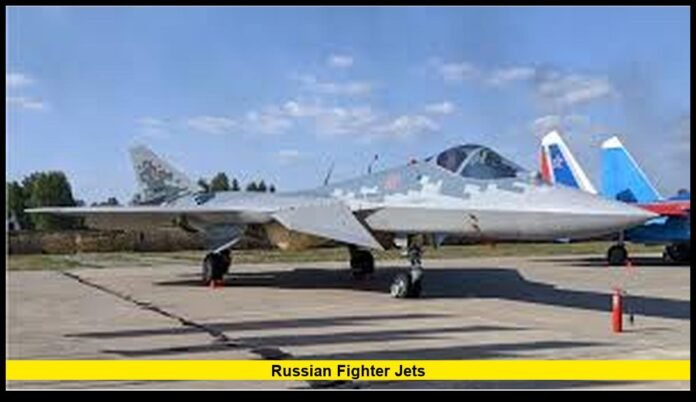

russian fighter jets continue to shape global military aviation strategy as deployments, modernization programs, and evolving tactics define air power competition in 2026. Across multiple regions, fighter aircraft activity reflects long-term planning focused on readiness, deterrence, and technological adaptation.
Recent operational patterns show consistent patrol missions, multi-aircraft exercises, and growing emphasis on integrating fighters into network-based warfare systems. These trends highlight how air power remains one of the most visible indicators of military posture.
Recent operational activity across key regions
Operational activity has remained steady throughout early 2026. Patrol flights continue near monitored airspace in Europe, the Arctic, and the Pacific. These missions often involve mixed aircraft formations that combine legacy platforms with modern multi-role fighters.
Defense monitoring groups report:
- Regular long-range patrol routes
- Escort missions supporting strategic aircraft
- Increased joint exercises involving multiple aircraft types
- More frequent presence around strategic maritime corridors
These operations support readiness objectives while allowing testing of upgraded avionics, weapons, and coordination procedures.
Air forces worldwide closely monitor these flights because they reveal capability trends, operational tempo, and strategic priorities.
Modernization strategy shaping fleet evolution
Modernization remains central to fleet development. Rather than relying solely on new production, upgrades extend the life of existing aircraft while introducing new capabilities.
Key modernization areas include:
- Radar improvements
- Electronic warfare enhancements
- Weapons integration updates
- Cockpit and sensor upgrades
- Engine performance refinements
This approach allows rapid capability gains without waiting for large-scale production increases.
Modernization programs also emphasize digital connectivity, enabling aircraft to operate as part of broader combat networks rather than independent platforms.
Aircraft platforms drawing the most attention
Several fighter models play major roles due to deployment frequency, capability upgrades, and operational flexibility.
Su-35
The Su-35 remains a primary air superiority platform. Its range, maneuverability, and sensor upgrades support escort missions and long-range patrol operations.
The aircraft often appears in high-visibility exercises and multinational drills.
Su-30 family
Su-30 variants continue to serve as versatile multi-role aircraft. They perform air defense, strike, reconnaissance coordination, and training roles across multiple regions.
The two-seat configuration supports complex mission planning and extended operations.
Su-57
The Su-57 represents next-generation development focused on stealth features, sensor fusion, and advanced weapons testing. Production continues gradually while operational trials expand.
This platform reflects long-term priorities rather than immediate large-scale replacement.
Deployment geography and strategic priorities
Operational geography reveals broader strategic goals.
Arctic focus
The Arctic remains a priority due to infrastructure expansion, resource routes, and geographic positioning. Patrol missions support air defense coverage for remote bases and logistics hubs.
Eastern Europe
Activity in Eastern Europe remains heavily monitored. Patrol flights often lead to identification missions by other air forces.
Black Sea region
The Black Sea continues to see consistent air activity tied to maritime security, surveillance, and air defense operations.
Asia-Pacific presence
Exercises in the Far East highlight long-range capability and coordination with regional partners. These drills emphasize interoperability and endurance.
Intercept missions and operational signaling
Intercept missions occur when aircraft approach monitored airspace. Fighter aircraft are launched to identify and shadow approaching flights.
These encounters support:
- Airspace awareness
- Response readiness testing
- Intelligence gathering
- Strategic signaling
While routine, intercept frequency offers insight into operational tempo and planning priorities.
Professional aviation protocols typically guide these interactions.
Technology transforming air combat roles
Technology integration is reshaping fighter roles. Modern aircraft increasingly operate within digital combat networks.
Key technology trends include:
- Data-link connectivity
- Sensor fusion improvements
- Electronic warfare coordination
- Stand-off weapons capability
- Drone collaboration
These developments shift emphasis from individual aircraft performance toward coordinated system effectiveness.
Future air operations will depend heavily on information sharing and network resilience.
Industrial factors influencing production
Production timelines reflect manufacturing capacity, supply chain challenges, and export commitments. Advanced aircraft production progresses steadily but not rapidly.
Industry patterns show:
- Incremental delivery of new aircraft
- Strong focus on refurbishment
- Engine development priorities
- Continued upgrade programs
This approach balances operational needs with industrial realities.
Export dynamics and global market presence
Fighter aircraft exports remain an important factor shaping development priorities. Countries operating Su-30 and Su-35 aircraft require ongoing maintenance, training, and upgrade support.
Export-related activity includes:
- Technical support agreements
- Pilot training programs
- Upgrade packages
- Competition with other global manufacturers
Export demand influences production scheduling and modernization decisions.
Evolving tactics observed in exercises
Exercises provide insight into tactical evolution. Observers identify several recurring patterns.
- Mixed aircraft formations
- Long-range strike simulations
- Electronic warfare scenarios
- Multi-domain coordination
- Emphasis on survivability in contested airspace
Training scenarios increasingly simulate complex environments involving advanced air defenses and electronic disruption.
Air power competition and strategic balance
Aircraft modernization and operational activity affect global defense planning. Many countries continue investing in counter-air capabilities, stealth technologies, and missile defense systems.
Air power competition now centers on:
- Detection advantage
- Network integration
- Weapons range
- Electronic warfare resilience
- Operational tempo
These factors influence procurement decisions worldwide.
Open-source intelligence and visibility
Public imagery, satellite analysis, and exercise footage have increased transparency around aircraft activity. Analysts track aircraft movement, base construction, and training patterns.
This visibility allows broader understanding of:
- Deployment cycles
- Infrastructure expansion
- Aircraft rotation between bases
- Exercise scale
Open-source monitoring has become a major component of aviation analysis.
Drone collaboration and future concepts
One of the most significant developments involves collaboration between fighters and unmanned systems. Testing continues on concepts where drones extend situational awareness and support mission execution.
Emerging concepts include:
- Loyal wingman support
- Electronic warfare drones
- Decoy aircraft
- Remote sensor platforms
These systems expand operational reach while reducing pilot risk.
Pilot training and readiness evolution
Training approaches continue evolving alongside technology. Simulator use has increased, allowing pilots to rehearse complex scenarios before live flights.
Training priorities include:
- Multi-aircraft coordination
- Electronic warfare environments
- Long-duration missions
- Night and adverse weather operations
Advanced simulation accelerates tactic development and readiness.
Weapons integration and capability expansion
Weapons integration remains a major focus area. Aircraft upgrades increasingly support long-range engagement and precision strike capability.
Key developments include:
- Extended-range air-to-air missiles
- Stand-off strike weapons
- Improved targeting systems
- Network-guided weapons
These changes aim to extend engagement distance while improving survivability.
Infrastructure expansion supporting operations
Air base infrastructure upgrades enable sustained operations. Construction efforts focus on resilience, logistics capacity, and forward deployment support.
Infrastructure priorities include:
- Runway upgrades
- Hardened aircraft shelters
- Maintenance facilities
- Fuel and logistics storage
Infrastructure investment signals long-term operational planning.
Strategic messaging through air operations
Air operations often serve strategic communication purposes. Visible patrols and exercises demonstrate readiness and reinforce deterrence posture.
Analysts interpret these activities as signals related to:
- Regional presence
- Military readiness
- Response capability
- Strategic positioning
Air activity therefore carries both operational and political meaning.
Platform comparison overview
| Aircraft | Primary Role | Key Advantage |
|---|---|---|
| Su-35 | Air superiority | Maneuverability and sensors |
| Su-30 | Multi-role | Versatility and range |
| Su-57 | Next-generation | Advanced sensors and stealth features |
This combination allows layered capability across mission profiles.
Outlook for the coming years
Current patterns suggest continued emphasis on modernization, digital integration, and sustained operational presence rather than rapid fleet replacement.
Expected focus areas include:
- Expanded drone collaboration
- Electronic warfare investment
- Incremental next-generation aircraft delivery
- Arctic operational growth
- Continued high patrol frequency
Operational tempo indicates long-term planning rather than short-term activity spikes.
Why global attention remains high
Fighter aircraft activity remains highly visible compared with other defense capabilities. Patrol missions, intercepts, and exercises often become widely reported events.
This visibility keeps attention focused on:
- Capability development
- Strategic posture
- Technology competition
- Regional security dynamics
Aircraft activity therefore remains central to aviation and defense analysis.
Conclusion
Air operations, modernization programs, and evolving tactics continue to define the trajectory of military aviation in 2026. Activity across multiple regions reflects a sustained approach focused on readiness, technological integration, and strategic signaling.
As new capabilities emerge and operational patterns evolve, air power will remain a key indicator of military posture and strategic intent. Ongoing developments in training, infrastructure, and technology suggest continued transformation in how advanced fighter aircraft operate within modern combat environments.
What do you think about the future of military aviation and evolving air combat strategy? Share your thoughts below or return for more updates as developments continue.
FAQ
What roles do these aircraft perform most often?
They commonly conduct air defense, patrol, escort, training, and strike missions.
Why is modernization emphasized instead of rapid replacement?
Upgrading existing aircraft delivers faster capability improvements while managing production limits.
How is technology changing fighter operations?
Connectivity, advanced sensors, electronic warfare, and drone collaboration are transforming mission execution.
Disclaimer:
This article is based on publicly available information and current reporting at the time of publication. Military activity can change quickly, and some operational details may remain classified. The content is provided for informational purposes only.