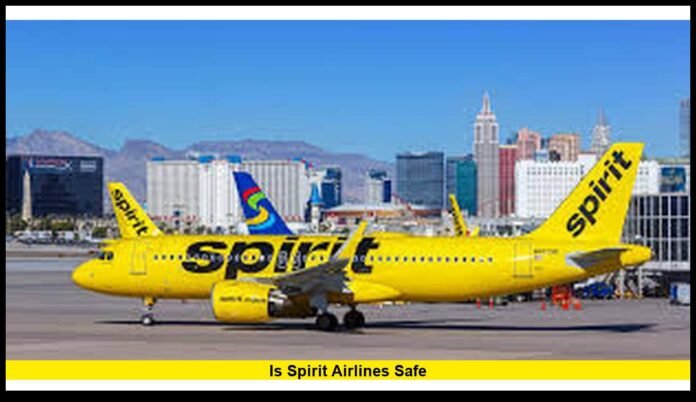

Is Spirit Airlines safe remains a frequent question among U.S. travelers in 2026 as more passengers choose low-cost carriers while expecting strong safety standards.
Spirit Airlines operates as a major ultra-low-cost airline across the United States, the Caribbean, and Latin America. Many travelers associate lower fares with reduced safety, but aviation safety depends on regulation, aircraft maintenance, crew training, and federal oversight rather than ticket price.
This guide explains the latest confirmed safety record, operational standards, fleet reliability, and the key facts travelers should understand today.
Federal Safety Oversight
Spirit Airlines operates under the same strict federal aviation regulations as every U.S. commercial airline. The airline holds required certification to run passenger flights and must comply with continuous inspections and audits.
Safety oversight includes:
- Aircraft maintenance monitoring
- Pilot licensing and recurrent training
- Operational procedures and safety programs
- Safety management systems
- Routine regulatory inspections
Airlines cannot operate if they fail required safety compliance. These rules apply equally to low-cost and full-service carriers.
Fleet Modernization and Aircraft Safety
Spirit uses a standardized Airbus fleet, which helps improve maintenance efficiency and operational consistency.
Primary aircraft types
- Airbus A320
- Airbus A320neo
- Airbus A321
- Airbus A321neo
Newer aircraft models introduce updated engines, digital monitoring, and improved system redundancy. These technologies allow maintenance teams to detect potential issues earlier.
A relatively young fleet supports reliability because newer aircraft require fewer major structural repairs compared with older fleets.
Maintenance Standards and Safety Programs
Commercial airlines follow strict maintenance schedules that include multiple inspection levels. Spirit’s maintenance framework includes:
- Pre-flight aircraft checks
- Daily inspections
- Scheduled heavy maintenance
- Component replacement cycles
- Continuous aircraft performance monitoring
Modern aircraft transmit performance data after flights, allowing engineers to identify irregular patterns before they create safety risks.
Maintenance activities require documentation and review under regulatory supervision.
Safety Record and Incident Overview
Many travelers evaluate safety by accident history. Spirit Airlines has not recorded a fatal crash involving its scheduled mainline passenger operations.
Like other airlines, Spirit experiences routine operational events such as:
- Aircraft returning to departure airports after alerts
- Weather diversions
- Technical warnings that require precautionary checks
- Flight delays tied to operational disruptions
These events often reflect safety procedures functioning as intended. Precautionary returns and inspections are normal parts of commercial aviation safety.
Overall safety performance remains consistent with industry norms among U.S. carriers.
Pilot Training and Crew Standards
Pilot training requirements remain standardized across U.S. airlines. Spirit flight crews complete structured programs that include:
- Simulator training cycles
- Emergency procedure practice
- Recurrent evaluations
- Crew resource management training
Training emphasizes decision-making, situational awareness, and coordination between pilots, dispatchers, and maintenance teams.
Operational support teams monitor weather, route planning, and aircraft readiness before every flight.
Understanding the Low-Cost Airline Model
The low-cost airline model focuses on pricing strategy rather than safety reductions. Cost savings usually come from:
- Unbundled services
- High aircraft utilization
- Simplification of routes
- Network efficiency
- Optional add-on fees
Safety requirements remain mandatory expenses. Airlines cannot reduce maintenance or training below regulatory standards.
This distinction explains why lower fares do not indicate lower safety.
Reliability vs Safety: A Key Difference
Public perception sometimes links delays or cancellations with safety concerns. However, reliability and safety measure different aspects of airline performance.
Safety refers to aircraft airworthiness, procedures, and compliance. Reliability refers to schedule performance and operational efficiency.
Recent discussions around Spirit have focused more on operational disruptions than safety performance.
How Spirit Compares to Other U.S. Airlines
Safety comparisons typically consider:
- Incident frequency
- Fleet age
- Participation in safety audits
- Maintenance programs
- Regulatory findings
Spirit’s safety profile generally aligns with other U.S. low-cost carriers. The U.S. aviation system maintains one of the highest safety standards globally, which benefits all certified airlines.
Fleet modernization and standardized aircraft types support consistent safety practices across the network.
Onboard Safety Features Passengers Notice
Passengers encounter several visible safety elements on every flight:
- Pre-departure safety briefings
- Clearly marked exit rows
- Cabin crew safety checks
- Aircraft-specific safety cards
Aircraft also include advanced systems that operate continuously, including:
- Collision avoidance technology
- Terrain awareness alerts
- Automated engine monitoring
- Multiple backup flight control systems
These technologies form the foundation of modern commercial aviation safety.
Common Questions Travelers Ask
Do ultra-low-cost airlines compromise safety?
No. Regulatory requirements prevent airlines from lowering safety standards.
Is Spirit Airlines safe compared with major carriers?
Safety performance falls within typical ranges for U.S. airlines.
Why do precautionary landings occur?
Precautionary actions reflect safety procedures designed to reduce risk.
Does fleet age matter?
Newer aircraft support monitoring technology and reliability improvements.
Key Takeaways for Travelers in 2026
Safety across U.S. commercial aviation remains highly regulated and standardized. Travelers evaluating Spirit Airlines should consider:
- Federal certification status
- Fleet modernization progress
- Personal comfort preferences
- Route availability
- Schedule reliability
Spirit’s pricing strategy focuses on cost efficiency, but required safety practices remain identical to competitors.
Final Perspective
The question is spirit airlines safe continues to appear because travelers often equate low fares with lower standards. Current confirmed information shows Spirit operates within the same strict safety framework as all major U.S. airlines.
The airline maintains a modern Airbus fleet, follows structured maintenance programs, and trains crews under federal requirements. Its safety record reflects normal industry patterns rather than systemic concerns.
Operational reliability may influence traveler experience, but safety oversight remains consistent.
Have you flown Spirit recently? Share your experience or stay informed as airline safety and travel trends continue to evolve.