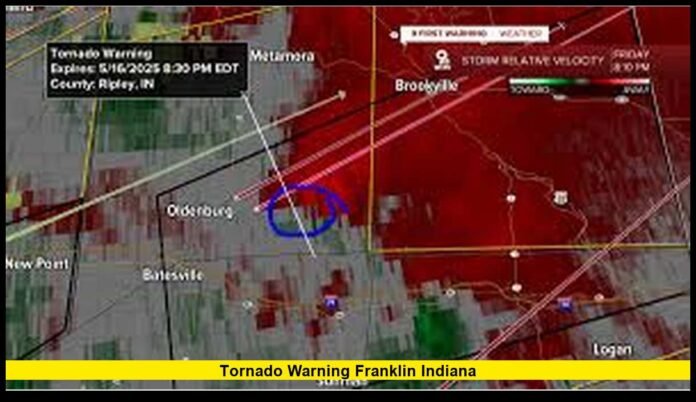

Residents across Johnson County faced dangerous weather conditions after a tornado warning franklin indiana was issued during a significant severe weather event impacting south-central parts of the state. Officials activated alerts as powerful storms moved through the region, bringing the risk of tornadoes, damaging winds, hail, and heavy rainfall.
The warning came amid a broader severe weather setup that placed multiple Indiana counties under heightened monitoring. Emergency managers urged residents in Franklin and nearby communities to take immediate shelter as storms intensified and radar indicated rotation capable of producing tornadoes.
Severe Weather System Moves Across South-Central Indiana
A strong storm system developed across the Midwest, creating conditions favorable for severe thunderstorms and tornado formation. Meteorologists identified increasing moisture, strong wind shear, and unstable atmospheric conditions as key drivers behind the threat.
South-central Indiana became a focus area as storms organized into supercells capable of producing tornadoes. Communities including Franklin, Columbus, Bloomington, and surrounding towns were placed under watches before warnings were issued when storm rotation strengthened.
The progression from watch to warning signaled a shift from potential risk to immediate danger. Local officials activated emergency messaging systems and advised residents to move indoors quickly.
Why Franklin Was Placed Under a Tornado Warning
Franklin sits in Johnson County, an area directly within the storm track during the event. Weather radar detected rotation within thunderstorms approaching the county, prompting forecasters to issue warnings covering multiple nearby counties.
Warnings are typically issued when:
- Radar indicates rotation consistent with a tornado
- A tornado is visually confirmed
- Storm signatures show rapid intensification
In this case, storm structure and movement patterns met warning criteria as severe cells moved eastward across the region.
Counties Impacted Alongside Franklin
The severe weather event extended beyond Franklin. Several south-central and southern Indiana counties were included in watches and warnings during the same period.
Affected areas included counties such as:
- Johnson
- Bartholomew
- Brown
- Jackson
- Lawrence
- Monroe
- Greene
- Sullivan
- Daviess
Cities across these counties experienced heavy storms, lightning, strong wind gusts, and tornado potential.
The widespread nature of the event prompted coordinated responses from emergency services, schools, and local governments.
Timeline of the Storm Event
The weather threat developed throughout the afternoon and evening as atmospheric conditions strengthened.
Afternoon:
Storms began forming across Illinois and western Indiana. Meteorologists issued tornado watches covering large portions of southern Indiana.
Late Afternoon:
Storms intensified into supercells. Radar indicated rotation approaching south-central counties, including Johnson County.
Evening:
Warnings were issued for multiple counties as severe cells moved east. Residents in Franklin were advised to seek shelter immediately.
Night:
Storms gradually shifted eastward, reducing the immediate tornado threat but leaving behind strong winds and heavy rain.
What a Tornado Warning Means for Residents
A tornado warning indicates an immediate threat. Residents must act quickly rather than prepare.
Recommended actions include:
- Move to a basement or lowest level of a building
- Stay away from windows
- Take cover in an interior room
- Use mattresses or helmets for protection if available
- Avoid vehicles and mobile homes if possible
Emergency management agencies repeatedly emphasize that seconds matter when a warning is issued.
Reports of Severe Conditions Across the Region
During the event, many communities reported classic severe storm impacts:
- Intense lightning
- Strong wind gusts capable of downing trees
- Heavy rainfall reducing visibility
- Large hail in isolated areas
Power outages were reported in parts of south-central Indiana as strong winds moved through.
Officials monitored damage reports while emergency crews prepared for rapid response if tornado damage occurred.
Rare February Tornado Risk Highlighted
Severe weather in February is not unheard of, but strong tornado potential during winter months often draws attention.
Meteorologists pointed to unusually warm temperatures and strong atmospheric dynamics as factors increasing risk. When winter systems pull warm, moist air northward, the environment can resemble spring-like severe weather setups.
This event represented one of the first significant severe weather threats of 2026 for Indiana.
Community Response in Franklin
Local authorities took precautionary steps once warnings were issued.
Common actions included:
- Activating outdoor warning sirens
- Sending emergency alerts to mobile devices
- Adjusting evening events and activities
- Encouraging residents to monitor weather updates
Schools, businesses, and public venues reviewed shelter procedures while storms moved through.
Community preparedness played a key role in reducing risk during the warning period.
Difference Between a Watch and a Warning
Understanding the difference helps residents respond appropriately.
Tornado Watch:
Conditions are favorable for tornadoes. Stay alert and be ready to act.
Tornado Warning:
A tornado is occurring or imminent. Take shelter immediately.
The progression from watch to warning occurred across several counties, including those surrounding Franklin, as storms intensified.
Storm Characteristics Observed
Forecasters identified several severe weather indicators:
- Strong vertical wind shear supporting rotating storms
- Rapid thunderstorm development
- Supercell structures capable of producing tornadoes
- Potential for damaging wind gusts to reach severe levels
- Large hail risk in isolated storms
These features are commonly associated with tornado-producing systems.
Emergency Preparedness Lessons From the Event
Weather officials emphasize that severe weather events highlight the importance of readiness.
Key preparedness steps include:
- Having multiple ways to receive alerts
- Identifying a safe shelter location in advance
- Keeping emergency supplies accessible
- Charging devices before storms arrive
- Practicing family safety plans
Events like the tornado warning reinforce the value of preparation even outside peak tornado season.
Impact on Travel and Evening Activities
Severe weather created travel hazards across south-central Indiana.
Drivers experienced:
- Reduced visibility from heavy rain
- Debris on roadways
- Rapidly changing conditions
- Temporary road closures in isolated areas
Authorities advised limiting travel while warnings remained active.
Evening events were adjusted in some communities as officials prioritized safety.
How Storms Moved After Franklin
After impacting Franklin and surrounding counties, storms continued eastward into other parts of Indiana and neighboring states.
As the system progressed, the tornado threat gradually shifted. However, strong storms continued producing heavy rain and gusty winds.
Meteorologists monitored downstream communities while assessing conditions behind the storm line.
Ongoing Monitoring After the Warning
Even after warnings expire, officials continue evaluating conditions.
Post-storm actions typically include:
- Damage assessments
- Power restoration efforts
- Reviewing emergency response performance
- Monitoring additional storm development
Weather agencies also analyze radar data and reports to determine whether tornadoes touched down.
Why Staying Alert Matters Year-Round
Events like the tornado warning demonstrate that severe weather is not limited to spring.
Indiana frequently experiences severe storms during transitional seasons, especially when strong weather systems move through the Midwest.
Residents are encouraged to remain weather-aware throughout the year, particularly when forecasts highlight severe risk.
Public Safety Messaging Emphasized Immediate Action
Emergency messaging during the tornado warning franklin indiana event focused on urgency.
Officials consistently repeated core guidance:
- Do not wait to see a tornado
- Take shelter immediately when warned
- Monitor alerts continuously
- Check on vulnerable neighbors if safe
Clear communication remains one of the most effective tools during severe weather events.
What Comes Next After a Tornado Warning Event
Following severe weather, communities shift from response to recovery and evaluation.
Authorities review:
- Storm damage
- Infrastructure impacts
- Emergency communication effectiveness
- Preparedness improvements for future events
Weather agencies also refine forecasts using new data gathered from the event.
Severe storms moved quickly through Franklin and surrounding counties, but the rapid activation of alerts and safety actions helped residents respond to the immediate threat.
Stay aware of local alerts and share your experience or safety tips in the comments to help others stay prepared when severe weather strikes.