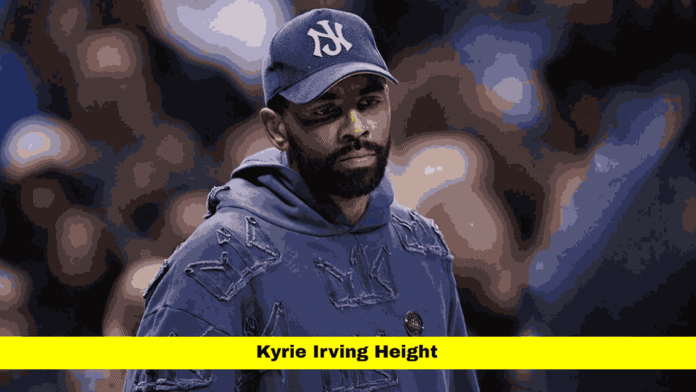

Kyrie Irving’s height — 6 feet 2 inches — may seem like a simple fact, but for a player of his caliber, it tells a much deeper story about how he competes, excels, and impacts basketball. Listed at 6’2” and weighing approximately 195 pounds, Irving combines size, skill, and explosiveness in ways that have helped make him one of the most dynamic guards of his generation.
At 33 years old in 2026, his physical profile continues to influence his on-court performance, training priorities, injury recovery, and how coaches use him strategically. In a league where size often dictates roles, Irving’s height and body type have shaped his career from the moment he stepped onto an NBA court as a rookie to where he stands today — a proven scorer, clutch performer, and influential veteran.
This detailed article goes far beyond a single measurement. It explains how his height intersects with his playing style, how it compares to other stars, how it affects defense and injury recovery, and how it fits into the evolution of modern basketball.
How Tall Is Kyrie Irving? The Exact Measurement
Kyrie Irving is officially listed as 6 feet 2 inches tall. This height places him within a common range for point guards but slightly below average compared with some combo guards and wings.
Point guards in the NBA vary in size, but many successful players have stood near the 6’2” mark. This height allows Irving to blend agility, balance, and explosiveness in ways that smaller or larger players often cannot.
His listed weight of roughly 195 pounds also supports his ability to absorb contact at the rim, finish through traffic, and maintain balance during quick changes of direction.
Why Height Matters in Basketball
Height is one of the first physical attributes coaches and scouts evaluate. It influences how a player sees the court, defends multiple positions, and battles through physical play. But height alone doesn’t define success. It interacts with other traits like strength, agility, wingspan, and basketball intelligence.
For a guard:
- Height can help with vision over defenders
- Size contributes to stability against physical pressure
- Taller stature can aid rebounding and contesting shots
- Plus-minus on defense often relates to ability to switch on bigger opponents
Irving’s height at 6’2” positions him as a guard who must maximize skill and athleticism to overcome size mismatches, especially on defense against taller guards or wings.
How His Size Complements His Playing Style
Irving’s game is built around an extraordinary combination of ball-handling, footwork, and scoring creativity. His height supports a low center of gravity, allowing him to change direction sharply while maintaining balance and control.
Rather than overpowering opponents with size, he outsmarts them with movement and skill. His ability to create space comes from the way he manipulates angles and leverage, something his height assists by making him agile off the dribble.
He often uses:
- Quick first steps to beat defenders
- Spin and hesitation moves to create separation
- Low body position to shield the ball
- Soft touch on finishes around the rim
This style makes his height less of a limitation and more of a strategic advantage.
Height and Scoring Techniques
At 6’2”, Irving does not rely on dunking over bigger defenders. Instead, he uses finesse and timing.
His scoring arsenal includes:
- Pull-up jumpers
- Mid-range step-backs
- Floating runners in the lane
- Spot-up threes off movement
These techniques showcase how his size works in harmony with technique rather than raw physical domination.
His ability to score effectively even when defenders expect his moves is part of what separates him from typical guards of similar height.
Comparison With Other NBA Guards
In an era where guard sizes vary widely, Irving’s height is neither unusually short nor exceptionally tall for his position. Many successful guards in NBA history have operated within a similar range.
Some guards with comparable height often bring different strengths — leadership, shooting efficiency, or defensive excellence. Irving distinguishes himself with elite ball control and finishing skills, making his height less of a defining constraint and more of a platform for skill-based play.
Defensive Impact at 6’2”
Defense at the NBA level requires both physical and mental tools.
At his height, Irving is expected to cover quicker guards and sometimes switch onto larger players. This role is challenging, but his lateral quickness and anticipation allow him to navigate screens and stay in front of opposing ball handlers.
While he may not match the length of taller guards or wings, his ability to read plays and disrupt passing lanes often compensates. He uses his body position and quick hands to contest shots, poke the ball away, and create turnover opportunities.
Playmaking and Court Vision
Beyond scoring, Irving’s height plays into his playmaking abilities. As a point guard, seeing over defenders and identifying passing angles is crucial.
At 6’2”, he maintains a clear sight line on the floor while coordinating offense. His ball distribution, timing, and decision-making reflect how well he uses his physical perspective and basketball IQ together.
Whether threading a pass through traffic or setting up a cutter, his ability to handle and deliver the ball reflects how his physical profile supports playmaking responsibilities.
Career Chronology and Body Evolution
Irving entered the league as a teen prodigy and quickly gained attention for his skill and poise. As his body matured, his combination of muscle, agility, and balance allowed him to compete physically even against larger opponents.
Over more than a decade, his game evolved. He added layers of strategic scoring, improved his understanding of defensive matchups, and refined his conditioning to match his high-tempo playing style.
At 6’2”, he maximized a combination of strength and mobility that helped him maintain a high level of performance through multiple seasons.
How His Size Played Into Major Career Moments
Some of Irving’s most memorable achievements show how his physical traits played off his skill set.
For example:
- Situations where he navigated double teams with subtle pivots
- Moments when he scored in traffic against bigger defenders
- Clutch game-winning shots created in tight spaces
These moments reflect how a 6’2” guard uses body control and timing more than pure height dominance.
Height and His Championship Success
Irving’s performance in crucial playoff games, especially in championship contexts, demonstrated how his physical profile blends with situational play.
In pressure moments, his quickness at 6’2” allowed him to evade defenders and finish plays that many larger players could not anticipate as quickly.
This adaptability made him a critical contributor during runs toward titles and deep playoff stretches.
Injury and Recovery: How Height and Body Composition Matter
A significant knee injury — a torn ACL — in March 2025 became a major moment in Irving’s career. Such injuries require extensive physical rehabilitation, especially for guards who rely on quick cuts, explosive first steps, and lateral movement.
Rehabilitation for an athlete of his size focuses heavily on:
- Stability and balance
- Regaining explosive acceleration
- Preventing loss of speed or control
- Rebuilding confidence in cutting and pivoting
His physical stature influences how trainers design workouts and progression plans to ensure his frame supports elite movement once healed.
Physical Training: Strength and Conditioning for a 6’2” Guard
Conditioning for guards of Irving’s size combines several priorities:
- Lower body power
- Core strength for stability
- Shoulder strength for contact absorption
- Cardiovascular endurance for long games
At 6’2”, maintaining sharpness through long possessions and multiple defensive assignments requires consistent, targeted training. Elite guards often spend as much time off the court building strength as they do perfecting skills on it.
Irving’s training routines reflect that balance, allowing him to sustain high performance through taxing NBA seasons.
Height and Shooting Mechanics
Irving’s shooting success also relates to his physical profile. His release point, foot positioning, and balance all benefit from the way he uses his height to set up shots.
He generates power from his hips and legs, allowing fluid wrist and arm motion. This combination ensures consistency whether he shoots off the dribble or in rhythm sets.
His ability to control his body through spin and quick stops supports scoring efficiency from long range.
Impact on Team Dynamics
Coaches often design offensive schemes around a player’s strengths. At 6’2”, Irving’s role typically centers on ball initiator and primary scorer.
His height allows him to navigate through traffic, find passing angles, and force defensive rotations. This creates open looks for teammates and maintains offensive flow.
On defense, his size positions him to match up with smaller guards while occasionally switching onto bigger players when necessary.
Height Comparisons Across the League
The league features guards ranging from shorter, quicker players to taller, combo types. At 6’2”, Irving sits in a central part of that spectrum — not exceptionally tall, but tall enough to challenge many defenders while still maintaining elite quickness.
In recent seasons, many guards over 6’4” have emerged as primary scorers. Irving’s sustained success at 6’2” highlights how his body type works with his skill set rather than against it.
His performance underscores the idea that height is important, but mastery of skill, anticipation, and spacing can elevate impact regardless of size.
Height and Longevity in the NBA
Some guards have extended their careers well into their 30s by relying on experience and shooting rather than peak athleticism. At 6’2”, Irving’s game already emphasizes skill and finesse, which supports longevity.
As he ages, his focus likely shifts toward precision, pacing, and leadership — areas where experience outweighs pure athletic profile.
Mental Aspects Enhanced by Physical Profile
Height impacts not just physical aspects of play, but also visual perspective and confidence on the court.
At 6’2”, Irving consistently sees passing lanes and anticipates defensive rotations. His psychological confidence in tight spots often leads to clutch performances.
Off-the-Court Perceptions of Height
In public perception, height often becomes shorthand for how a player should perform. Fans sometimes underestimate guards under a certain height. Irving’s success challenges these assumptions, showing that impact derives from skill, instincts, and preparation.
What His Height Means for Young Players
Young players who do not stand 6’8” or taller can still see Irving as a model for success. His career demonstrates that:
- Mastery of fundamentals matters
- Quick decision-making can beat size
- Footwork and balance are elite differentiators
- Height is one piece of a larger puzzle
Players of similar height can learn from how he uses angles and ball control.
How He Compares to Other Great Guards
Across NBA history, many guards around 6’2” have excelled. The common thread among them is that they use skill, timing, and awareness to compete at elite levels.
Irving’s career adds to that legacy by proving that height combined with exceptional talent can produce championship results.
Height and Leadership Presence
Leadership does not depend solely on size, but presence on the court can influence how teammates respond. Irving’s stature, courage, and command during late-game situations give him an authoritative feel that extends beyond his physical frame.
Enduring Relevance in Modern Basketball
At 6’2”, Irving embodies the skill-based guard prototype that modern basketball increasingly values. His height aligns well with spacing, pick-and-roll creation, and efficient scoring patterns favored in today’s game.
Final Thoughts on His Height and Career
Kyrie Irving’s height of 6 feet 2 inches is more than a number. It interacts with his ball skills, basketball intelligence, physical balance, and scoring prowess to create a complete player profile.
His size supports his ability to see over defenders, attack angles, and make creative plays that few others can replicate. Even as he works toward a full return following injury, his physical profile remains central to how he plays and contributes to his team.
What part of his playing style do you think connects most strongly to his physical size — tell us in the comments and stay tuned for more updates.