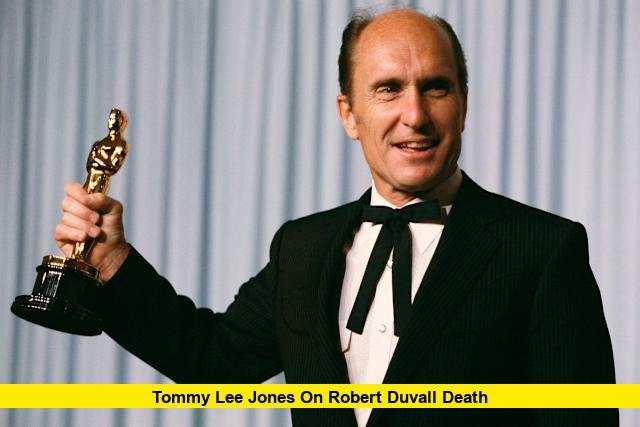

Tommy Lee Jones on Robert Duvall death shared his thoughts as artists and audiences alike grieve the passing of one of Hollywood’s most distinguished actors. Robert Duvall, whose career spanned more than seven decades, died on February 15, 2026 at the age of 95 at his home in Middleburg, Virginia. In the wake of his death, Jones, known for his own storied career, offered reflections on a life in film that intersected deeply with Duvall’s, especially through their celebrated collaboration on the classic miniseries Lonesome Dove.
The impact of Duvall’s passing has rippled across the entertainment world, prompting heartfelt responses from fellow actors, directors, and fans. Jones’ comments capture both personal loss and respect for a peer whose work helped shape the art and craft of generations of performers and storytellers.
A Life That Defined American Cinema
Robert Diuvall’s filmography reads like a tour through the most iconic works of American cinema. From his early role as Boo Radley in To Kill a Mockingbird to his Academy Award-winning performance in Tender Mercies, Duvall was admired for his emotional depth and gripping presence on screen.
His body of work included unforgettable characters such as Tom Hagen in The Godfather films, the intense Lt. Col. Kilgore in Apocalypse Now, and a retiring lawman in Lonesome Dove. Directors and co-stars repeatedly praised Duvall’s commitment to authenticity and the nuanced humanity he brought to each role.
Duvall’s contributions extended beyond acting into directing and producing, showcasing a multifaceted talent that influenced both mainstream and independent cinema. Even in his final years, he remained engaged with audiences through personal reflections and social media moments that underscored his gratitude for fan support.
Tommy Lee Jones Reflects on a Creative Partnership
Jones and Duvall’s connection on Lonesome Dove stands as one of television’s most celebrated collaborations. The Western miniseries, first broadcast in the late 1980s, starred Duvall as the charismatic Augustus “Gus” McCrae and Jones as the stoic Woodrow F. Call. Their on-screen partnership brought depth and complexity to characters that remain beloved by fans around the world.
In his comments after Duvall’s passing, Jones emphasized the bond between the two actors, describing his colleague as not just a brilliant performer but a trusted collaborator whose presence shaped their shared work. Jones’ tribute underscored how much their creative synergy meant to him personally and professionally.
Industry observers note that Lonesome Dove helped elevate both actors’ visibility, cementing their status as enduring figures in Western storytelling. Jones’ acknowledgment of Duvall’s contribution reflects wider admiration across Hollywood for an artist whose range defied easy categorization.
Tributes from Across the Entertainment Community
Following Duvall’s death, tributes have poured in from across the entertainment world and beyond. Musicians, actors, and directors alike have spoken about his influence on their own careers and creative journeys. One well-known music artist described Duvall as “one of the all-time greats,” highlighting how his work transcended genre to touch the hearts of diverse audiences.
Fans on social platforms shared their memories of scenes and performances that resonated deeply, from the quiet intimacy of his character moments to the commanding presence he brought to major cinematic landscapes. These collective remembrances underscore the breadth of Duvall’s impact and the enduring connection his work forged with viewers.
Jones’ tribute fits into this larger pattern of homage, reflecting how Duvall’s colleagues have expressed both professional praise and genuine personal admiration. The commentary from Jones has been widely shared, serving as a central voice in the ongoing conversation about Duvall’s legacy.
Remembering a Storied Career
Duvall’s trajectory in Hollywood was marked by versatility and a willingness to take on diverse challenges across film and television. Despite his long list of standout roles, he remained grounded in the craft, often choosing parts that revealed deeper emotional truths and human complexities.
Many tributes have emphasized the actor’s devotion to storytelling rather than fame, noting that his best work often involved characters who grappled with moral dilemmas, personal struggles, and quiet resilience. Whether portraying a hardened military officer or a reflective soul in a small-town drama, Duvall consistently delivered performances that felt both powerful and personal.
His influence stretched across generations of actors who admired his ability to embody roles with thoughtful precision. Tributes highlighted that Duvall’s approach to his craft inspired peers and newcomers alike, giving rise to a legacy that will be studied and appreciated for years to come.
Cultural Impact and Ongoing Appreciation
Institutions and community groups have begun organizing memorial screenings and retrospectives to honor Duvall’s remarkable body of work. These gatherings aim not just to celebrate his greatest roles but also to introduce his films to younger audiences who may have discovered his performances through streaming or special broadcasts.
Cultural commentators argue that Duvall’s work serves as a touchstone for understanding shifts in American cinema over the decades. His ability to embody both the rugged and reflective aspects of character storytelling helped bridge classic Hollywood traditions with contemporary narrative styles.
Jones’ reflections are part of this broader effort to acknowledge how Duvall shaped collective memory around film and television. By speaking about his late colleague not only as an actor but as a human being, Jones contributed a personal dimension to how Duvall’s contributions will be remembered within the industry and beyond.