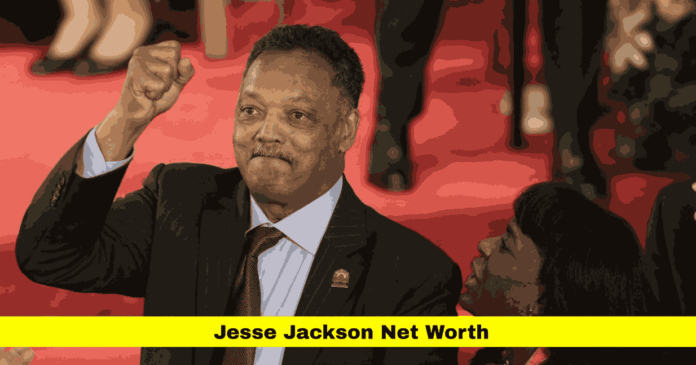

The topic of jesse jackson net worth continues to generate public interest, especially following renewed national reflection on his decades of activism, political influence, and leadership in the Civil Rights Movement. As one of the most recognizable civil rights leaders in modern American history, Jesse Jackson built a career centered on social justice, voter empowerment, and economic equality. While he never pursued corporate wealth or private-sector fortune, his long public career did result in measurable financial standing.
Understanding his net worth requires looking beyond headline numbers. It involves examining his income sources, nonprofit leadership, political campaigns, public speaking engagements, media presence, and personal financial decisions. His wealth tells a story not of business empire building, but of sustained public engagement over more than five decades.
Below is a comprehensive and structured exploration of his financial life and how it reflects a lifetime devoted to advocacy.
Estimated Net Worth at the Time of His Passing
Jesse Jackson’s estimated net worth stood at approximately $4 million in his later years. This figure reflects cumulative earnings from decades of nonprofit leadership, public speaking, political activity, and media involvement. Compared with corporate executives or career politicians who held long-term public office with substantial benefits, his financial standing remained moderate. His wealth did not come from large-scale private investments or commercial enterprises. Instead, it developed gradually through consistent public-facing work tied directly to activism and organizational leadership.
This estimate accounts for personal assets, reported compensation through nonprofit leadership, and standard financial holdings. It does not suggest extravagant accumulation but rather a stable financial profile built over a lifetime of national visibility and leadership.
Income Through Nonprofit Leadership
One of the primary contributors to Jesse Jackson’s financial position was his leadership of civil rights organizations. After working closely with Dr. Martin Luther King Jr. in the 1960s, Jackson eventually founded Operation PUSH in 1971. The organization later merged into the Rainbow PUSH Coalition, a civil rights group focused on economic justice, education access, and voter registration.
As founder and longtime leader, Jackson received compensation consistent with nonprofit executive roles. While nonprofit salaries vary, leaders of national advocacy organizations typically receive structured compensation packages approved by governing boards. These earnings provided steady income over several decades. However, nonprofit leadership rarely leads to substantial wealth accumulation compared with corporate leadership positions.
Jackson’s financial stability grew through sustained involvement in these organizations rather than through high-profit ventures.
Political Campaigns and National Visibility
Jesse Jackson ran for the Democratic presidential nomination in 1984 and again in 1988. While campaign funds cannot be used for personal enrichment, his presidential bids elevated his national prominence. That increased recognition translated into expanded speaking invitations, book opportunities, and public appearances.
Although he did not secure the nomination, his campaigns played a historic role in expanding minority voter engagement and increasing African American representation in national politics. The exposure associated with national campaigns contributed indirectly to income opportunities that followed.
Public life often creates financial doors through visibility. For Jackson, this meant invitations to conferences, universities, faith-based gatherings, and international forums.
Public Speaking and Appearances
Over the course of his career, Jackson became one of the most sought-after speakers in America. Universities, churches, civic organizations, and advocacy groups frequently invited him to deliver keynote addresses.
Speaking engagements typically include honorariums, which vary depending on the scale and audience of the event. Over decades, these appearances likely contributed significantly to his cumulative earnings.
Unlike entertainment celebrities who command large performance fees, Jackson’s speaking engagements centered on advocacy and civic engagement. The income generated through this avenue reflected public interest in his message rather than commercial branding.
Media Contributions and Commentary
Jackson’s public profile extended into television and news commentary. Throughout the 1980s, 1990s, and early 2000s, he appeared on broadcast programs to discuss civil rights issues, elections, and public policy debates.
Media contributions may involve compensation for appearances, analysis, and participation in televised events. While such engagements rarely produce extraordinary wealth, they add incremental value to long-term earnings.
His consistent presence in public discourse reinforced his authority and sustained demand for appearances.
Books and Published Works
Over the years, Jackson authored and contributed to written works that reflected on civil rights history, political activism, and faith-based leadership. Book royalties typically generate modest but ongoing income for authors with national readership.
While publishing did not serve as a major wealth driver, it supplemented his financial base and reinforced his intellectual legacy.
Personal Assets and Lifestyle
Jesse Jackson’s lifestyle reflected his mission-driven priorities. He did not cultivate a reputation for luxury living or high-profile real estate investments. His financial profile suggests steady asset ownership typical of a long-serving public figure rather than a business mogul.
Most estimates of his net worth include primary residence holdings, retirement savings, and general investment accounts. There is no public record of extensive corporate ownership or large-scale entrepreneurial ventures contributing to his wealth.
His financial path aligns with that of many nonprofit leaders whose careers center on advocacy rather than private accumulation.
Comparing Net Worth to Other Public Figures
When evaluating jesse jackson net worth, it is important to contextualize the number. Civil rights leaders historically have not amassed fortunes comparable to entertainers, corporate CEOs, or career politicians with private-sector ties.
Jackson’s estimated $4 million places him comfortably above average American household wealth but far below the net worth figures commonly associated with national celebrities or high-ranking corporate executives.
This contrast underscores the economic realities of nonprofit activism. Influence and income do not always correlate directly.
Family and Shared Financial Structure
Jesse Jackson married Jacqueline Lavinia Brown in 1962. Over decades, their shared household finances reflected the responsibilities of raising a family while sustaining national activism.
Family financial planning likely included standard long-term savings, retirement accounts, and educational investments. While details remain private, the stability of his net worth estimate suggests disciplined financial management rather than aggressive risk-taking.
Later Years and Health Considerations
In his later years, Jackson faced health challenges, including a Parkinson’s disease diagnosis announced in 2017. Health care expenses and reduced public appearances can affect income streams for public figures.
As his public schedule slowed, compensation from speaking engagements likely decreased. However, his established financial base provided stability.
His later years reflected the transition from active national organizer to elder statesman of the Civil Rights Movement.
The Broader Conversation About Wealth and Activism
Discussions about net worth often spark curiosity about how leaders accumulate resources. In Jackson’s case, his financial standing reflects a career rooted in public service.
Civil rights activism traditionally prioritizes collective advancement over personal enrichment. Many leaders in social justice movements earn modest incomes relative to their influence.
Jackson’s net worth mirrors this reality. His value to American society extends far beyond financial measurement.
Why Public Interest Remains Strong
Search trends frequently spike around high-profile public figures during major anniversaries, health updates, or national commemorations. Financial curiosity often accompanies those moments.
In Jackson’s case, his historic role in civil rights, presidential politics, and community leadership sustains public attention. People seek to understand how decades of prominence translate into financial outcome.
The answer reveals a consistent theme: his wealth remained secondary to mission.
Legacy Beyond Dollars
Financial estimates provide numerical context, but they cannot capture the scale of Jackson’s social impact.
His leadership influenced voter turnout, corporate hiring practices, educational access, and national political discourse.
He helped expand minority representation in American politics and advocated for economic fairness long before such discussions became mainstream.
These contributions carry societal value far exceeding monetary measurement.
Understanding the Meaning of Net Worth
Net worth represents total assets minus liabilities. It does not measure influence, historical significance, or cultural transformation.
In the case of jesse jackson net worth, the figure represents decades of steady earnings rather than sudden financial gain. It reflects nonprofit leadership, advocacy compensation, and incremental income from public engagement.
It does not reflect the magnitude of his role in shaping American democracy.
Final Reflection on Financial Legacy
Jesse Jackson’s financial standing offers insight into the economic dimensions of a life devoted to justice. His estimated $4 million net worth reflects steady income from advocacy-based leadership, speaking engagements, and organizational work.
It does not suggest extravagant accumulation, nor does it diminish the scope of his achievements.
His wealth tells the story of sustainability in public service — a reminder that transformative leadership often prioritizes community over personal fortune.
What are your thoughts on how public service shapes financial legacy? Join the conversation and stay informed on more in-depth profiles of influential leaders.