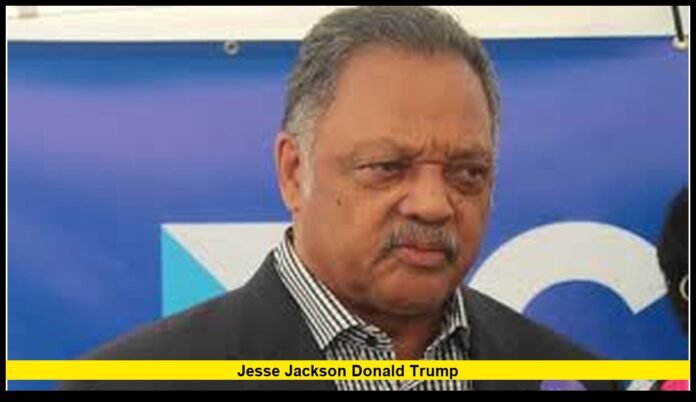

The national spotlight returned to Jesse Jackson Donald Trump this week after the passing of civil rights leader Jesse Jackson at age 84 and former President Donald Trump’s public response honoring his life. The moment has reignited decades of history between two towering figures who shaped very different corners of American public life.
Jackson’s death on February 17, 2026, closed one of the most influential chapters in modern civil rights leadership. Trump’s statement acknowledging Jackson’s personality and impact quickly circulated across television, digital media, and social platforms. Together, these developments have prompted renewed discussion about how their paths crossed over the years.
This story is not about speculation or rumor. It is about documented encounters, political differences, shared public stages, and the lasting effect both men had on the country.
Jesse Jackson’s Passing and National Reaction
Jesse Jackson spent more than half a century at the center of American activism. His death prompted tributes from lawmakers, clergy, civil rights leaders, and community organizers nationwide.
Born in Greenville, South Carolina, in 1941, Jackson rose to prominence during the civil rights movement of the 1960s. He worked closely with Martin Luther King Jr. and later founded organizations focused on economic empowerment and voting access.
Over the decades, he became known for:
- Organizing voter registration drives
- Advocating corporate diversity initiatives
- Negotiating international humanitarian releases
- Running two historic presidential campaigns
His 1984 and 1988 Democratic primary campaigns reshaped national political coalitions. They mobilized minority voters and expanded participation in ways that influenced future elections.
In his later years, Jackson faced significant health challenges, including Parkinson’s disease. Even as his public appearances decreased, his legacy remained firmly embedded in American political culture.
News of his death immediately triggered bipartisan statements. Many praised his endurance and commitment to justice. Others reflected on his role as a bridge between faith leadership and political activism.
Donald Trump’s Public Tribute
Shortly after confirmation of Jackson’s passing, Donald Trump posted a message expressing condolences. He described Jackson as a strong personality with grit and acknowledged knowing him for many years.
The statement did not dwell on political disagreements. Instead, it focused on character and longevity in public life.
Trump’s remarks gained attention because of the complex history between the two men. While they stood on opposite sides of many policy debates, their relationship was not always adversarial.
In earlier decades, their interactions were more cooperative than confrontational. That history resurfaced in coverage following Jackson’s death.
New York Roots: Early Interactions
Before Trump entered electoral politics, both men operated in New York’s public and business spheres.
During the late 1980s and 1990s, Jackson engaged corporate leaders through his Rainbow Coalition initiatives. At the time, Trump was a prominent real estate developer in Manhattan.
Trump provided office space in Trump Tower for Jackson’s organization during that era. The arrangement reflected a period when business and civil rights leaders often collaborated on economic inclusion discussions.
Jackson, in earlier public comments, acknowledged Trump’s business visibility. Those remarks later resurfaced during Trump’s presidential campaigns as supporters pointed to them in political debates.
These early exchanges reveal a more nuanced relationship than later headlines sometimes suggest.
Political Divide During the Presidency
The tone shifted dramatically once Trump entered national politics as a Republican candidate and later president.
Jackson criticized several policy decisions during Trump’s administration. He expressed concern over immigration enforcement, voting regulations, and rhetoric surrounding race.
He argued that certain policies disproportionately affected marginalized communities. Trump supporters countered that his economic policies improved employment levels across demographic groups.
Despite strong policy differences, Trump did not regularly single out Jackson personally. Their divide centered on ideology and governance rather than personal insults.
The contrast illustrated a broader national polarization unfolding during those years.
Jonathan Jackson’s Public Role in 2026
As Jesse Jackson stepped back from public life, his son, Congressman Jonathan Jackson, became increasingly visible on the national stage.
A defining moment occurred at the 2026 National Prayer Breakfast in Washington, D.C. Standing near President Trump, Jonathan Jackson delivered a prayer that called for compassion, clarity, and courage in leadership.
He referenced struggling communities, working families, and those facing hardship. His words blended faith and policy concern.
Video from the event spread rapidly online. Viewers noted the symbolism of a Democratic congressman addressing a Republican president in a setting traditionally framed as nonpartisan.
Trump listened attentively during the prayer. The interaction remained respectful.
The moment underscored the Jackson family’s continued presence in American political dialogue.
Contrasting Visions of America
The historical intersection of these two figures highlights deeper philosophical differences.
Jackson devoted his life to civil rights activism rooted in protest, coalition-building, and faith-based advocacy. He focused on expanding political access and confronting systemic inequities.
Trump built his political brand around economic nationalism, border security, and populist messaging. He energized voters who felt disconnected from traditional political institutions.
Their visions often clashed:
- Jackson emphasized social justice coalitions
- Trump emphasized national sovereignty themes
- Jackson championed grassroots mobilization
- Trump emphasized executive authority and campaign rallies
Yet both commanded loyal followings and influenced millions.
Their interaction reflects the broader evolution of American political identity over four decades.
The Role of Media in Shaping the Narrative
Media coverage has played a significant role in how the public interprets their relationship.
Early reporting in the 1990s highlighted collaboration between business leaders and civil rights advocates. Later reporting focused heavily on ideological divides.
The cycle intensified during presidential campaigns, when past statements resurfaced in political ads and televised debates.
Now, following Jackson’s death, coverage has shifted again. Many outlets are examining the full arc of their relationship rather than focusing solely on conflict.
This renewed attention demonstrates how public memory evolves.
Civil Rights Legacy in Modern Politics
Jackson’s influence extended far beyond electoral campaigns.
He helped:
- Elevate minority political participation
- Pressure corporations to diversify leadership
- Advocate international humanitarian diplomacy
- Inspire future Black political leaders
His efforts laid groundwork for future national candidates from diverse backgrounds.
Trump’s political era overlapped with debates about racial equity and national identity. These debates intensified during his administration and continue today.
The intersection of these two public figures reflects ongoing national conversations about inclusion, economic policy, and leadership style.
Generational Transition in 2026
Jackson’s passing marks a generational shift in civil rights leadership.
Many contemporary activists credit him as a mentor. His organizing style blended religious conviction with strategic political engagement.
Trump, meanwhile, remains active in political discourse. His commentary on Jackson’s life showed acknowledgment of a historic peer.
Observers note that moments like this can soften public tone, even temporarily, in highly polarized times.
Jonathan Jackson’s growing role in Congress suggests continuity in advocacy, though expressed through legislative channels rather than mass protest movements.
Public Memory and Political Complexity
The relationship between these two men resists simple characterization.
It includes cooperation, criticism, respect, and ideological distance.
Their story illustrates how political relationships can evolve:
- Early professional contact
- Later ideological divergence
- Public acknowledgment at key historical moments
Such arcs are not unusual in American political life. What makes this case unique is the scale of influence both figures wielded.
Why This Story Resonates Now
Americans are reflecting on leadership, history, and the direction of the country.
Jackson represented the moral urgency of civil rights activism. Trump represents a populist movement that reshaped party politics.
Their intersection symbolizes broader tensions and transformations in American society.
In moments of loss, the nation often reassesses past conflicts. Tributes and reflections can bring unexpected nuance.
That nuance is visible now.
A Lasting Impact on American Political History
Jesse Jackson’s life reshaped civic participation. His presidential campaigns expanded voter engagement. His activism influenced corporate America.
Donald Trump reshaped electoral messaging and party alignment. His presidency altered policy direction and political discourse.
Their overlapping decades in public life form a compelling chapter in modern American history.
The renewed focus following Jackson’s death ensures that historians, commentators, and citizens will continue examining how these two figures influenced each other and the nation.
Their story captures both division and acknowledgment. It reflects tension and respect.
Most of all, it reflects the complexity of American democracy.
What are your thoughts on how these two leaders shaped the national conversation? Join the discussion below and stay informed as the story continues to unfold.