
Every year, millions of Christians around the world mark Easter as one of the most important religious holidays. Yet despite sharing a common purpose — celebrating the Resurrection of Jesus Christ — different Christian traditions observe this day on different dates. For many in the Eastern Orthodox faith, the question when is orthodox easter 2026 has a clear answer, and understanding the date also opens a window into ancient traditions, cultural customs, and the way faith communities observe one of Christianity’s central celebrations.
In 2026, Orthodox Easter will fall on Sunday, April 12, 2026, according to calendars used by the majority of Eastern Orthodox churches around the world. This date is distinct from the Easter Sunday observed by many Western Christian denominations, reflecting centuries-old differences in calendar systems and methods of calculating holiday observances.
Over the coming weeks, Orthodox communities in the United States and around the globe will prepare for Pascha — the term many Eastern Christians use for Easter — with special services, feasts, processions, and spiritual traditions that trace back to the earliest centuries of Christianity.
In this in-depth article, we explore the date, the traditions, the significance, and the cultural richness surrounding this major observance in 2026.
What Date Orthodox Easter Falls on in 2026
In 2026, Orthodox Easter is officially observed on Sunday, April 12, 2026. This date applies to many Eastern Orthodox traditions including Greek, Russian, Romanian, Serbian, and others that calculate the holiday using the Julian calendar.
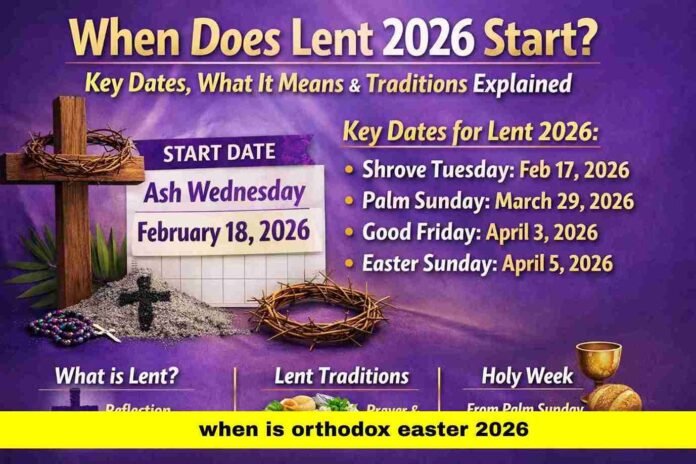
The use of the Julian calendar — which runs 13 days behind the more commonly used Gregorian calendar — means that Orthodox Easter often falls later than the Easter observed by Western churches. In 2026, Western Easter will be celebrated on April 5, one week earlier than the Orthodox date.
This difference is not unusual and reflects the distinct ways that various Christian traditions compute the timing of Easter each year.
Understanding the Name “Pascha”
Within Orthodox Christianity, Easter is frequently referred to as Pascha. The term comes from the Aramaic and Hebrew word Pesach, meaning “Passover.” For Eastern Christians, Pascha carries deep theological resonance because it connects the Resurrection of Christ to themes of liberation, spiritual renewal, and the fulfillment of ancient covenant promises.
Pascha is the climax of the liturgical year for Orthodox believers. It is celebrated with great joy and reverence, and services begin with a midnight vigil on Holy Saturday, moving into the dawn celebration of Christ’s rising from the dead.
Why Eastern and Western Easter Dates Differ
The difference in Easter dates between Eastern Orthodox and Western Christian traditions stems from two main factors: calendar discrepancies and variations in how the date is computed.
Most Western churches use the Gregorian calendar, which was introduced in the 16th century as a refinement to better align the calendar year with the solar year. In contrast, many Eastern Orthodox churches retain the Julian calendar for calculating Easter. Although the liturgical rules for determining Easter — such as falling on the first Sunday after the Paschal full moon — are shared in principle, the underlying calendar systems cause the dates to diverge.
In 2026, this leads to Orthodox Pascha landing on April 12, while Western Easter is observed on April 5.
Orthodox Holy Week: Traditions Leading Up to the Date
The period leading up to the Orthodox Easter date is known as Holy Week, and it begins on Palm Sunday, one week prior to Pascha. During Holy Week, worshippers participate in a series of services that reflect on the final days of Jesus’ life, His crucifixion, and His ultimate resurrection.
Each day of Holy Week has a distinct liturgical emphasis:
- Palm Sunday: Commemorates Jesus’ triumphant entry into Jerusalem, often marked by blessing palm branches.
- Holy Monday to Holy Wednesday: Services focus on reflections about betrayal, forgiveness, and spiritual preparation.
- Holy Thursday: Observes the Last Supper, with special emphasis on the Eucharist and Christ’s commandment of love.
- Good Friday: A solemn remembrance of the crucifixion, often marked by processions and chanting.
- Holy Saturday: A transitional day of quiet reflection leading into the Paschal Vigil.
The culmination of this week is the midnight celebration of Pascha, beginning in the darkness of Holy Saturday night and transitioning into the joy of sunrise services.
Orthodox Easter Services and Traditions
On the night of April 11 and into April 12, Orthodox congregations around the world will gather for one of the most cherished events of the year: the Paschal Vigil. This service begins late on Holy Saturday and continues into early Easter Sunday morning. The service includes readings, hymns, and the proclamation of Christ’s Resurrection.
A central moment occurs when worshippers light candles and proclaim, Christ is Risen! — a joyful affirmation repeated throughout Pascha services and often exchanged among family and friends.
In many Orthodox communities, Easter customs include:
- Decorating eggs often dyed red, symbolizing the life-giving blood of Christ.
- Preparing special festive meals that break the Lenten fast.
- Sharing traditional foods such as lamb, bread, and pastries after the long period of fasting.
- Engaging in feasts, family gatherings, and expressions of joy and renewal.
These traditions vary by region but share the common theme of celebrating the Resurrection with both solemn reverence and joyful festivity.
How Churches Prepare for the Celebration
Orthodox parishes begin preparations for the Easter observance well before April 12. Lent — a 40-day period of fasting and spiritual discipline — precedes Holy Week. During Lent, worshippers may observe dietary restrictions, attend additional services, and engage in practices designed to deepen their faith and focus on spiritual renewal.
In the final week before Pascha, more frequent services and rituals take place as communities deepen their reflection on the meaning of Christ’s suffering and Resurrection.
The preparation culminates in Holy Week, where the liturgical calendar unfolds a rich tapestry of theological reflection, prayer, and communal worship.
Cultural Expressions of Orthodox Easter
Across countries with strong Orthodox traditions, the Easter period is marked not just by church services but also by community customs and cultural festivals. In Greece, Easter egg dyeing, midnight feasts, and parish celebrations draw believers and visitors alike. In Slavic nations, family gatherings and traditional foods create a festive atmosphere that extends beyond church walls.
In the United States, Orthodox parishes serve vibrant communities drawn from various ethnic heritages, including Greek, Russian, Romanian, and Ukrainian traditions. These communities celebrate Pascha with both religious reverence and cultural expression, inviting both faithful and curious observers to experience the unique rhythm of Orthodox Easter festivities.
Timing and Calculation Explained
The date of Orthodox Easter in 2026 hinges on the ancient formula established by the early Church: Easter must fall on the Sunday following the first full moon after the vernal equinox. However, because Eastern churches rely on the Julian calendar for this calculation, it often results in a later date compared to Western observances.
In 2026, this calculation results in a one-week difference between Western Easter and Orthodox Easter, with the latter set for Sunday, April 12.
This pattern reflects centuries of tradition and theological interpretation, and it continues to be observed by Orthodox communities worldwide as they honor the Resurrection.
How the Date May Influence Local Observances
Although Easter is not a public holiday in many countries that observe the Gregorian calendar, Orthodox Easter carries significant religious importance within local communities. In parts of the United States, Orthodox churches host Easter services, cultural festivals, and community dinners that reflect both faith and heritage.
Families often plan travel, meals, and gatherings around the Pascha date, and knowledge of the specific date — April 12, 2026 — helps many communities coordinate a variety of celebrations and traditions.
Differences and Similarities With Western Easter
While the dates differ, the underlying meaning of Easter unites Christian traditions around the world. Both Western and Eastern celebrations focus on the Resurrection of Jesus, albeit through different calendars and liturgical rhythms.
Western Easter in 2026 falls on April 5, a week earlier than the Orthodox date. Despite this difference, the shared themes of rebirth, renewal, and hope create common ground between traditions, allowing believers of various backgrounds to reflect on the central message of Christianity.
Preparing for Pascha in 2026
Many Orthodox families and church communities begin planning months in advance for Pascha. This preparation includes:
- Scheduling liturgical services
- Arranging special meals and cultural traditions
- Organizing community outreach or outreach services
- Coordinating children’s activities tied to Easter customs
The date of April 12, 2026 serves as the central anchor for these preparations, helping communities align their spiritual and cultural observances around a shared moment in the calendar year.
How Churches Teach the Meaning of Pascha
Orthodox clergy often use the period leading up to Easter as an opportunity to deepen understanding of faith among congregants. Sermons, teachings, Sunday school lessons, and special study groups focus on the theological significance of the Resurrection, the meaning of sacrifice, and the promise of new life.
By the time Pascha arrives on April 12, 2026, many worshippers have walked a reflective journey through Lent and Holy Week, arriving at Easter Sunday with a profound sense of celebration and spiritual renewal.
The Joy of Pascha Celebrations
For many believers, Orthodox Easter is more than a date on the calendar. It is a culmination of weeks of spiritual growth and reflection. Services held in the early hours of April 12 will resonate with centuries-old hymns, chants, and declarations of joy.
Families gather afterwards for festive meals, sharing stories, laughter, and traditional foods in a communal expression of joy.
Whether celebrated in parish churches or community centers, the spirit of Pascha echoes across Orthodox communities, inviting believers to reflect on faith, hope, and renewal.
Why the Date Matters to Millions
For the estimated hundreds of millions of Orthodox Christians worldwide, knowing that April 12, 2026 is the date of Easter provides a focal point for both spiritual and cultural life. Churches schedule their liturgies, families plan their celebrations, and communities come together to mark one of the most important days in the Christian year.
This date holds significance not just as a religious observance, but as a moment of shared identity and tradition.
Looking Forward to 2026 Celebrations
With the date set for April 12, 2026, Orthodox Christians across the globe and in the United States are already preparing for this meaningful celebration. From liturgical planning to decorating homes and churches, the countdown to Pascha has begun.
As traditions unfold and communities gather, the date will serve as a reminder of the enduring power of faith and the lasting beauty of shared ritual.
What are your thoughts on this year’s celebration and the traditions surrounding the date? Share your reflections and stay engaged as communities worldwide prepare for the Easter celebration on April 12, 2026.