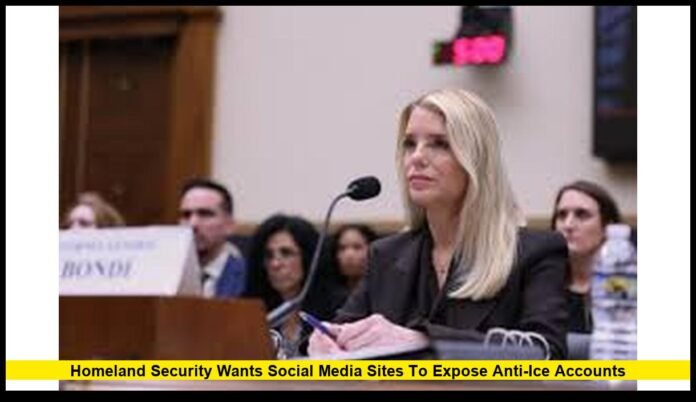

Homeland Security wants social media sites to expose anti-ICE accounts, and that push is rapidly reshaping the national debate over privacy, political speech, and federal power in the digital age. As of February 14, 2026, reports confirm that the Department of Homeland Security (DHS) has issued administrative subpoenas to major tech platforms seeking identifying details tied to accounts that post about, track, or criticize Immigration and Customs Enforcement (ICE).
The development has triggered a wave of concern across legal, political, and technology communities. While federal officials argue the effort aims to protect agents and prevent threats, civil liberties advocates warn it could undermine constitutional protections for anonymous speech.
The story continues to unfold, and its implications stretch far beyond immigration policy.
What Prompted the Federal Action
Federal officials say online activity related to ICE operations has intensified in recent months. Posts have included live tracking of enforcement actions, publication of alleged agent identities, and coordination of protests near active operations.
DHS leadership reportedly views certain online activity as potentially dangerous. Officials argue that sharing operational details could expose agents to harassment or physical harm.
At the same time, many activists insist their posts aim to protect immigrant communities by providing alerts about enforcement activity. They describe their efforts as public safety communication, not interference.
This tension sits at the center of the current controversy.
How Administrative Subpoenas Work
The legal mechanism driving this situation is the administrative subpoena.
Unlike a search warrant, this tool does not require a judge’s prior approval. A federal agency can issue it directly under its statutory authority. Companies receiving such requests must either comply or challenge them in court.
Administrative subpoenas typically request:
- Names connected to accounts
- Email addresses
- Phone numbers
- IP logs
- Account creation details
- Activity records
Because these subpoenas do not involve immediate judicial oversight, critics argue they offer agencies broad investigatory power.
Supporters counter that courts remain available to review disputes, and companies can refuse overly broad demands.
What Social Media Companies Are Facing
Major technology companies now find themselves in a delicate position.
On one side, they have legal obligations. On the other, they have user privacy commitments and public trust concerns.
Companies must weigh:
- Compliance risks
- Public backlash
- Legal challenges
- Transparency commitments
Some platforms reportedly notify users when their data is requested, provided legal rules allow it. Others review requests internally before responding.
None have announced a sweeping refusal. None have announced unconditional compliance either.
This middle ground reflects how complicated the issue has become.
The Constitutional Debate
The First Amendment protects freedom of speech, including criticism of the government. Anonymous speech has played a major role in American political history.
Legal experts now ask:
Does identifying critics through administrative subpoenas cross a constitutional line?
Several legal questions are emerging:
- Is the government targeting specific viewpoints?
- Are the requests narrowly tailored to credible threats?
- Does compelled identification chill lawful political speech?
- Are privacy protections being adequately considered?
Courts have previously upheld government data requests in criminal investigations. However, cases involving political speech receive heightened scrutiny.
The outcome may depend on whether evidence shows legitimate safety concerns or broad monitoring of dissent.
Impact on Online Political Speech
Even without prosecutions, the exposure of anonymous accounts can reshape digital behavior.
When users believe their identities may be revealed, they often self-censor. This phenomenon, known as the “chilling effect,” does not require arrests to influence speech.
Online communities focused on immigration advocacy now face uncertainty. Some accounts have reportedly reduced activity. Others have shifted to encrypted platforms.
Supporters of DHS say legitimate critics have nothing to fear. Opponents argue that anonymity protects vulnerable communities from retaliation.
The divide remains sharp.
Immigration Enforcement and Public Tension
The backdrop to this controversy includes heightened immigration enforcement nationwide.
Protests have occurred in several states. Activists frequently use social media to share real-time information about enforcement operations.
Common online posts include:
- Location alerts
- Video recordings of enforcement activity
- Legal resource links
- Protest announcements
Federal officials argue that some posts cross a line into operational interference. Activists say they are documenting public actions by public officials.
The clash between transparency and enforcement secrecy continues to intensify.
Privacy Concerns in the Digital Era
Digital privacy experts say this moment highlights how much personal data social media platforms store.
Even anonymous accounts often connect to:
- Device identifiers
- IP addresses
- Backup email addresses
- Phone numbers
- Metadata logs
A subpoena can link online speech to a real person quickly.
Privacy advocates argue that Americans rarely understand how traceable their online activity truly is.
Calls for stronger federal data protection laws have resurfaced as a result.
The Role of Tech Transparency
Many tech companies publish annual transparency reports outlining government data requests.
However, these reports often group requests by type rather than by subject matter. That makes it difficult for the public to know how many requests involve immigration-related speech.
Observers now call for:
- More detailed breakdowns of subpoena categories
- Public explanation of compliance standards
- Clear user notification policies
Greater transparency could help restore public trust.
Political Reactions Emerging
Lawmakers have begun discussing the issue in interviews and committee meetings.
Some members of Congress express concern about executive overreach. Others defend federal authority to protect law enforcement personnel.
Potential next steps could include:
- Oversight hearings
- Proposed limits on subpoena authority
- Broader digital privacy legislation
- Public agency guidance clarifications
Whether legislative action materializes remains uncertain.
Legal Challenges on the Horizon
Civil liberties organizations are reportedly exploring possible court challenges.
Key arguments could include:
- Overbreadth of subpoenas
- Viewpoint discrimination
- Violation of anonymous speech protections
- Lack of probable cause standards
If lawsuits move forward, federal courts may clarify limits on administrative subpoenas involving political speech.
Such rulings could shape digital governance for years.
Balancing Safety and Speech
Supporters of DHS stress that law enforcement officers face real-world risks.
They argue that online threats can escalate quickly. Identifying individuals behind credible threats may prevent harm.
Critics respond that broad data collection targeting critics risks undermining democratic accountability.
The challenge lies in distinguishing:
- Protected criticism
- Protest coordination
- Threatening behavior
- Operational interference
Striking that balance remains complex.
How This Could Set a Precedent
The implications extend beyond immigration.
If agencies can use administrative subpoenas to identify critics in one context, similar tactics might appear in others.
Future administrations could apply comparable strategies involving:
- Environmental protests
- Corporate regulation debates
- National security issues
- Public health disputes
This is why observers across the political spectrum are watching closely.
The outcome could influence the future of online political engagement.
Public Sentiment and Social Media Reaction
Ironically, social media platforms themselves host the largest debates about this issue.
Trending conversations reveal divided opinion:
- Some users support enforcement transparency.
- Others defend strong federal authority.
- Many express confusion about legal standards.
Digital communities are increasingly aware of data vulnerability.
The story continues to evolve in real time across the very platforms at its center.
What to Expect Next
In the coming weeks, several developments may shape the trajectory:
- Possible legal filings
- Updated platform transparency reports
- Clarification statements from DHS
- Congressional discussions
The situation remains fluid.
Both privacy advocates and federal officials appear prepared for extended debate.
Why This Matters Now
The intersection of government authority and digital speech defines modern democracy.
Social media has become the public square. Government agencies now operate within that square.
How these institutions interact will shape the boundaries of civic participation.
The issue touches on fundamental principles:
- Freedom of expression
- Protection of law enforcement
- Data privacy rights
- Accountability in governance
Each carries significant weight.
The national conversation surrounding Homeland Security wants social media sites to expose anti-ICE accounts shows no sign of slowing. As legal, political, and public responses develop, the balance between digital privacy and federal authority will remain under intense scrutiny.
FAQs
1. What is DHS requesting from social media companies?
DHS is seeking identifying information such as names, emails, phone numbers, and IP data connected to certain accounts discussing or tracking ICE activity.
2. Do social media platforms have to comply with these requests?
Companies must respond to administrative subpoenas but can challenge them in court if they believe the requests are too broad or unlawful.
3. Does this affect ordinary users who criticize government policy?
Criticism of government agencies is protected under the First Amendment. Legal consequences would require separate evidence of unlawful conduct beyond protected speech.
Disclaimer
This article is published for informational and editorial purposes only. It is based on publicly available reports and developments as of the date of publication. Circumstances, legal interpretations, and government actions may change after publication.
The content does not constitute legal advice, political endorsement, or official government communication. Readers seeking legal guidance should consult a qualified attorney or review official government statements.
This website is not affiliated with the Department of Homeland Security (DHS), Immigration and Customs Enforcement (ICE), or any social media platform mentioned. All agency and company names belong to their respective owners.
What are your thoughts on this unfolding situation? Share your perspective below and stay connected for continued coverage as this story develops.