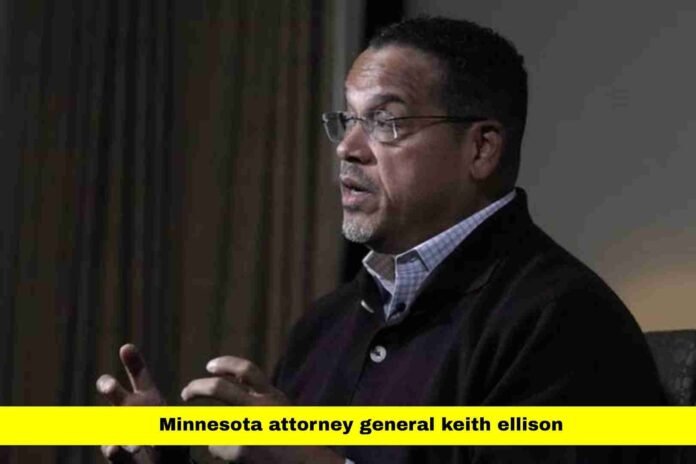

Minnesota Attorney General Keith Ellison has become a central figure in one of the most intense political and legal confrontations in the United States in recent months, drawing national attention amid a major federal immigration enforcement operation that unfolded in Minnesota’s Twin Cities. As federal agents deployed in unprecedented numbers, thousands of arrests were made and two U.S. citizens were killed — events that fueled protests, public debate, and legal action led by Ellison.
His leadership has defined how Minnesota leaders have pushed back against what they describe as overreach by federal authorities, helping to bring about a major shift in enforcement strategy. This article delivers a comprehensive, factual look at who Ellison is, how his office has responded to federal immigration activity, and why his role has become so significant on both a state and national stage.
Minnesota Attorney General Keith Ellison: Background and Career
Prior to entering statewide office, Ellison built a career marked by legal advocacy and public service. He originally practiced law focusing on civil rights and criminal defense, giving him direct experience representing people facing the justice system. That early work laid the foundation for his approach to public leadership, emphasizing legal protections and individual rights.
Ellison later served in the U.S. House of Representatives, where he became known for championing consumer protection, fighting for civil rights, and advocating for working families. His congressional tenure included efforts to strengthen protections against corporate abuses and defend civil liberties.
In 2018, he was elected Minnesota’s Attorney General, placing him at the helm of one of the state’s most powerful legal offices. As attorney general, Ellison oversees a wide range of responsibilities, from prosecuting cases on behalf of the state to defending Minnesota’s laws in federal court. His leadership has expanded into areas including consumer protection, environmental enforcement, public safety, and defending constitutional rights.
The Emergence of a Major Immigration Dispute
Late in 2025, the federal government launched an extensive immigration enforcement operation in Minnesota and the Twin Cities area. Known by federal officials as Operation Metro Surge, this large-scale deployment brought thousands of federal immigration agents into the state. The strategy was pitched as a response to alleged immigration violations and related concerns.
Within weeks, the operation became one of the most controversial law enforcement campaigns in recent U.S. history. Thousands of people were arrested, but the surge also sparked widespread alarm in local communities. Critics questioned the tactics and scope of enforcement, alleging that officers operated with limited oversight and engaged in aggressive conduct in public spaces.
The arrests and the high visibility of federal agents stirred deep concern among residents, community leaders, and public safety officials. Minnesota officials, including Ellison, argued that the approach created fear among families, overwhelmed local resources, and strained relationships between law enforcement and the public.
The situation drew national attention, partly because of its scale and partly because of the intense debate over federal authority and community rights.
Legal Action to Challenge Enforcement Practices
In early January 2026, Ellison, acting on behalf of the State of Minnesota and in coordination with the cities of Minneapolis and Saint Paul, filed a legal challenge against the Department of Homeland Security (DHS) and related federal agencies. The lawsuit sought to halt the federal enforcement operation, which Ellison’s office characterized as excessive, harmful to residents, and in violation of constitutional protections.
In the complaint, Minnesota officials argued that the large-scale deployment of federal agents had led to unlawful conduct, including harassment of residents, detentions without probable cause, excessive use of force, and the disruption of daily life in sensitive locations such as schools and hospitals. The lawsuit contended that Minnesota’s civil and constitutional protections were being undermined and that public safety resources were being diverted away from routine duties to respond to federal enforcement actions.
Ellison described the operation as a threat to state authority and public safety, emphasizing the responsibility of the attorney general’s office to defend residents’ rights and ensure lawful conduct by federal actors operating within Minnesota.
Daily Life Amid Enforcement and Public Reaction
As the federal presence grew, Minneapolis and Saint Paul experienced notable disruptions. Businesses in high-traffic areas reported declines in customers as residents stayed home or altered routines out of concern about enforcement activity. Schools temporarily shifted schedules or implemented heightened security measures to protect students and staff.
Local law enforcement agencies also reported increased demands on personnel as they balanced routine public safety needs with responses to enforcement-related incidents. These pressures highlighted the resources required to maintain community stability amid heightened federal action.
Public protests erupted in response to the enforcement surge. Many were peaceful demonstrations advocating for the protection of civil rights and criticizing the federal approach. Others were more confrontational, reflecting anger over the escalation of federal law enforcement tactics. These protests drew support from advocacy groups, community organizations, and residents who felt the operation had gone too far.
Throughout this period, Ellison’s office maintained a focus on documenting community impacts. The attorney general launched an online reporting system to gather firsthand accounts from Minnesotans about their interactions with federal agents. Residents were encouraged to submit written reports, photos, and other documentation to help build an evidentiary record that could support legal challenges and oversight efforts.
Protests, Fatal Incidents, and Political Backlash
The federal operation drew intense political scrutiny when two U.S. citizens were killed during encounters involving federal agents. The deaths intensified public outrage and became focal points of criticism from state and local officials, civil rights advocates, and lawmakers.
These incidents sparked additional protests and escalated the political debate surrounding the enforcement effort. Minnesota’s leaders, including Ellison, called for independent investigations into the fatal shootings and demanded accountability for any misconduct.
At federal hearings, political clashes highlighted the deep divide over the operation. Some national figures criticized Ellison and other state leaders, attributing blame to them for the unrest and the deaths rather than focusing on federal tactics. These exchanges made headlines and underscored how the situation in Minnesota had become embedded in broader political conflicts over immigration policy and enforcement.
Federal Pullback After Sustained Pressure
After weeks of controversy, protests, and legal challenges, federal authorities announced a decision to wind down the aggressive enforcement operation in Minnesota. National leaders acknowledged growing backlash and the complicated legal and political environment, leading to a phased withdrawal of federal agents.
Officials credited improved coordination with state and local law enforcement as part of the rationale for the drawdown, but it was clear that sustained public pressure and legal opposition played significant roles in prompting the change.
Despite the operation coming to an end, some federal personnel remained temporarily to ensure a smooth transition and handover of responsibilities back to local and regional offices. Federal authorities emphasized that immigration enforcement efforts would continue nationwide, but the strategy would shift away from large-scale, militarized deployments in Minnesota.
Ellison’s Broader Legal Agenda and National Influence
Ellison’s involvement in this high-profile dispute fits within a broader agenda of legal action against federal policies viewed as overreaching or unconstitutional. In previous years, he joined multistate coalitions to challenge federal data-sharing practices related to health insurance and immigration enforcement, winning court orders to block the use of personal health information for deportation purposes. These actions reflect a consistent pattern of legal activism aimed at defending privacy rights and protecting state autonomy.
In another case, Ellison led efforts to block federal conditions on emergency services funding that could have jeopardized public safety programs in Minnesota. In that lawsuit, he and other attorneys general argued against federal attempts to condition essential funding on state cooperation with immigration enforcement, winning a significant legal victory that preserved important public safety resources.
Such legal actions illustrate the broader influence of Ellison’s office in shaping national debates over federal authority, civil rights, and state protection of residents’ legal and constitutional rights.
Legal Battles and Ongoing Oversight
While the federal enforcement surge has ended, legal challenges continue. The lawsuit filed by Ellison and Minnesota leaders remains active, with courts expected to consider claims about constitutional violations, federalism, and public safety impacts.
Minnesota’s legal team continues to document firsthand accounts, interviews, and evidence of enforcement conduct that residents and local leaders argue violated civil liberties. This ongoing effort aims to establish judicial clarity on the limits of federal enforcement actions within state boundaries.
Local leaders in Minneapolis and Saint Paul continue to emphasize healing and recovery while advocating for greater federal accountability and oversight of immigration enforcement practices.
What This Means for Federal-State Relations
The events in Minnesota have nationwide implications for how federal immigration enforcement is executed and how state governments respond when enforcement activities escalate beyond conventional operations.
Ellison’s leadership demonstrated how a state attorney general can leverage legal authority, public documentation, and coalition building to challenge federal policy. Whether in courtrooms or public forums, state leaders have asserted that constitutional protections and individual rights must be upheld even amid efforts to enforce national laws.
This clash has heightened awareness of federal-state tension over immigration policy and opened discussion about how to balance enforcement priorities with community trust, constitutional protections, and local autonomy.
Looking Forward
As Minnesota adjusts to the end of the enforcement surge, public focus is shifting toward accountability, community healing, and future legal proceedings. Many residents and leaders continue to reflect on how the operation affected daily life and on what steps are needed to prevent similar conflicts in the future.
For legal professionals and policymakers, Minnesota’s experience will likely shape more refined approaches to immigration enforcement and state engagement with federal actions going forward.
How do you think state governments should balance public safety and individual rights when federal enforcement actions expand? Share your thoughts and stay informed on future developments.