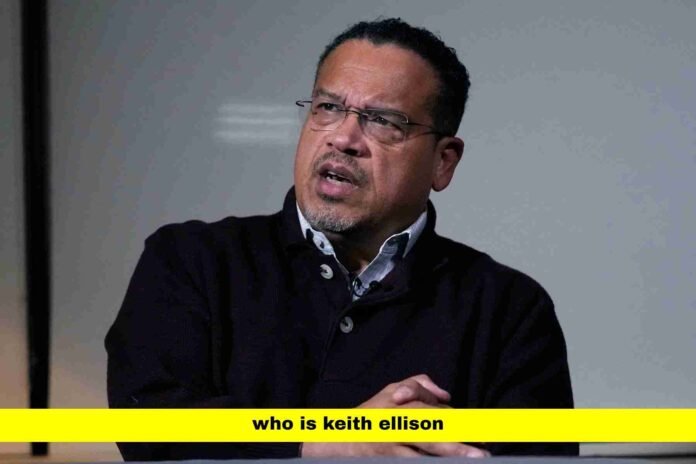

Recent developments in Minnesota have put one state leader at the center of intense national scrutiny and heated political clashes. who is keith ellison has become a central question in national headlines as the Minnesota Attorney General has taken a leading role in responding to a highly controversial federal immigration enforcement effort that affected thousands of residents and sparked protests, lawsuits, and political confrontation.
In the midst of a dramatic immigration operation that drew significant public backlash, intense debate in Washington, and the fatal shootings of two U.S. citizens in Minneapolis, Ellison emerged as one of the chief critics of the federal approach and a key figure pushing for legal and public accountability. His actions and leadership have now made him one of the most prominent law enforcement officials in America — a role that intersects legal authority, politics, and civil rights.
This article offers a comprehensive look at who he is, his background, his response to the recent immigration enforcement operation known as Operation Metro Surge, and why his role matters not just in Minnesota but on the national stage.
Early Life and Career Beginnings
Keith Ellison grew up with a deep sense of purpose toward public service. He built a legal career rooted in defending civil rights and advocating for justice long before entering high-profile political office. His early work as a lawyer focused on criminal defense and civil liberties, giving him decades of experience in courtroom advocacy and community representation.
This background shaped his approach to public office and laid a foundation for his later roles in state and national leadership. He developed a reputation for representing ordinary people and for believing in the importance of equal protection under the law.
Rise to National Politics
Ellison’s political career took off when he was elected to the U.S. House of Representatives. In Congress, he quickly became known as a voice for consumer protections, workers’ rights, and civil liberties. He championed efforts to strengthen antitrust enforcement and fought for policy changes aimed at protecting families and everyday Americans from corporate and systemic abuses.
During his time in Congress, he helped establish influential caucuses and worked across the aisle on key legislative measures. His work on financial protection laws and civil rights initiatives earned him national recognition as a thoughtful and determined legislator.
Election as Minnesota Attorney General
In 2019, Ellison made a major transition from federal politics to state leadership when he was elected as Minnesota’s Attorney General. As the state’s chief legal officer, he took on a broad portfolio that goes beyond ordinary criminal prosecutions.
In his role, he oversees consumer protection cases, represents state agencies in court, and brings litigation on behalf of the people of Minnesota. Under his leadership, the Attorney General’s office expanded efforts to hold major corporations accountable, protect vulnerable consumers, and defend state laws from federal overreach.
He has also taken leadership in addressing gun safety concerns, advocating for policies to reduce harmful firearm incidents and protect community well-being. Additionally, his office has focused on economic and social issues that affect everyday Minnesota families.
Role in the George Floyd Murder Prosecution
One of the defining moments of Ellison’s tenure as Attorney General was his role as the lead prosecutor in the case stemming from the murder of George Floyd in Minneapolis.
That case, which drew global attention, was a watershed moment for justice and accountability in policing. Ellison’s leadership was central to prosecuting former police officers, achieving convictions that reinforced the principle that no one is above the law. This case elevated his stature as a leader committed to legal integrity and equal treatment under the justice system.
Approach to Civil Rights and Consumer Protection
Ellison has built much of his career on protecting rights and challenging abuses of power. As Attorney General, he pursued litigation against major industries that have harmed Minnesota residents.
His office has brought cases against big oil companies, tobacco interests, and pharmaceutical corporations that contributed to public harm. These actions reflect his broader commitment to ensuring that corporate and governmental systems are responsive to the wellbeing of everyday people.
Consumer protection work under his leadership has focused on fighting deceptive practices and holding powerful actors accountable for violations of law.
The Immigration Enforcement Crisis in Minnesota
The question of who Keith Ellison is gained a new layer of national attention with the emergence of a federal immigration enforcement campaign in Minnesota starting in late 2025 known as Operation Metro Surge.
This operation, one of the largest immigration enforcement initiatives ever undertaken in the United States, involved the deployment of thousands of federal agents to Minneapolis-Saint Paul and other areas across the state. Its stated goal was to target undocumented immigrants and alleged fraud schemes, but the enforcement tactics quickly sparked intense opposition from local communities, civil rights advocates, and state officials, including Ellison.
The surge drew widespread protests, economic disruption, and controversy, particularly after the deaths of two U.S. citizens — Renée Good and Alex Pretti — during encounters with federal agents. These fatalities heightened tensions and fueled national debate over immigration enforcement, federal authority, and civil liberties.
Ellison’s Response to Federal Enforcement Tactics
From the moment federal agents expanded their presence in Minnesota, Ellison took an aggressive legal and public stance against the operation. He described the federal enforcement action as deeply harmful to the people of Minnesota and criticized the tactics used by immigration agents.
Ellison argued that federal officers were operating in ways that violated constitutional protections and went beyond reasonable enforcement. He maintained that armed federal agents, operating with broad authority and without clear accountability structures in place, created fear and disruption that undermined public safety and civil liberties.
To counter this, Ellison and local officials filed a federal lawsuit seeking to halt the operation. They alleged that the deployment of federal agents violated constitutional rights, interfered with local governance, and amounted to an unlawful federal overreach that threatened the sovereignty of state and municipal authorities.
The lawsuit emphasized the need to protect Minnesotans’ rights and to hold federal entities accountable for actions that led to chaos and fear in communities across the state.
Legal Actions and Community Engagement
In addition to filing suit, Ellison’s office began collecting firsthand accounts from residents impacted by the federal operation. The Attorney General encouraged individuals who witnessed or experienced confrontations with federal agents — including arrests, detentions, or uses of force — to submit documentation to his office.
By gathering these reports, Ellison sought to build a comprehensive record of the enforcement impacts on communities, with the goal of supporting legal challenges and advocating for accountability. This approach reflected his office’s belief that public participation in documenting enforcement practices could reinforce civil oversight.
His efforts urged residents to compile firsthand accounts, photos, and videos — a strategy that many community members embraced as a way to hold federal actors accountable and amplify the voices of those most affected.
Public Statements and Advocacy
Throughout the crisis, Ellison made clear public statements emphasizing the importance of constitutional rights and the rule of law.
He insisted that Minnesotans — including protestors, observers, and ordinary residents — should not be subject to intimidation or excessive force, especially when engaging in constitutionally protected activities like peaceful protest or documentation. His remarks frequently invoked principles of fairness, due process, and the protection of civil liberties for all people, regardless of status or background.
In press conferences and public discussions, Ellison called for transparency, independent investigations into the deaths of civilians during enforcement actions, and judicial accountability for mistakes or abuses.
Coordination With State and Local Leaders
Ellison worked closely with Minnesota’s governor and mayors of Minneapolis and Saint Paul as part of a broader coalition opposing the federal enforcement strategy. These collaborations included joint legal action, public statements, and efforts to mobilize public opinion.
Together, state and local leaders emphasized the need for cooperation that respected both federal law and local constitutional protections. Their unified stance underscored a shared belief that enforcement should be managed in a way that fosters trust, protects public safety, and avoids unnecessary trauma to communities.
The Operation’s Drawdown and Ongoing Debate
In early February 2026, the federal enforcement surge was formally announced as concluding, with federal officials stating that agents would be withdrawn and operations scaled back. This decision came amid sustained protest, legal challenges, and growing political pressure from community leaders and lawmakers at the state and national levels.
Although the operation has ended, ongoing debates continue over how immigration enforcement should proceed, how to balance federal authority with local autonomy, and how to prevent similar conflicts in the future.
Throughout this process, Ellison’s leadership — both legal and rhetorical — continues to shape public understanding of rights, accountability, and government responsibility.
Why His Role Matters Nationally
Ellison’s actions in Minnesota have reverberated beyond the state’s borders. In courts, legislative hearings, and public forums, his advocacy for constitutional oversight and legal restraint has made him a key figure in national debates about federal enforcement authority and civil liberties.
As Attorney General of one of the most diverse and politically active states in the country, Ellison’s stance influences how other states regard federal power and how similar legal challenges might unfold elsewhere.
His leadership highlights the complex balance between enforcing national laws and protecting community rights — a tension that affects all Americans.
What impact do you think his leadership will have on the future of immigration policy and federal-state relations? Share your perspective and join the conversation.