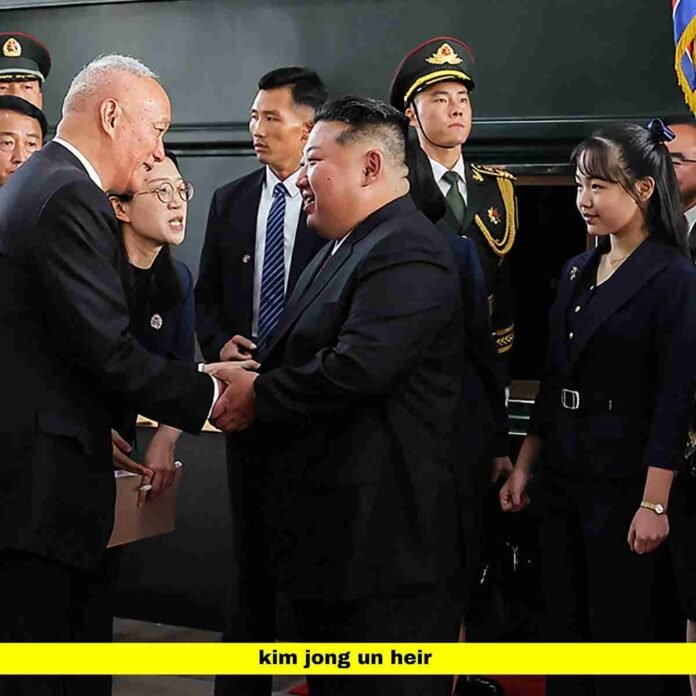

North Korea is carefully shaping its future leadership by gradually elevating a next-generation figure through symbolism, visibility, and party protocol.
This early succession planning signals continuity and long-term stability rather than sudden change.
The kim jong un heir question has become one of the most consequential developments in East Asian politics today, as intelligence assessments indicate that North Korean leader Kim Jong Un’s teenage daughter, believed to be Kim Ju Ae, has formally entered the stage of being positioned as his successor. This shift marks a significant moment in the isolated nation’s long-standing dynastic leadership system and adds new global attention to what leadership transition could look like in the reclusive state.
Recent assessments from South Korea’s main intelligence agency reveal that Ju Ae’s public role, appearances at major state functions, and reported involvement in some policy discussions suggest she has moved beyond early successor training into a phase where her status as designated heir is taking shape. Observers and lawmakers are now watching how her role evolves ahead of a major political conference in Pyongyang later this month, a gathering that could further define her position within the ruling structure.
A Shift in Succession Dynamics
North Korea’s succession process has historically followed a tightly controlled dynastic pattern, with power passing from Kim Il Sung to his son Kim Jong Il and then to Kim Jong Un. Unlike transitions in many other political systems, change in the North has rarely been signaled publicly and often occurs abruptly. Now, intelligence assessments signal that Kim Ju Ae may be poised to follow this lineage into a fourth generation of leadership.
The change in language used by foreign intelligence — from describing her as undergoing “successor training” to saying she is in the “designated successor” stage — underscores how her role has become increasingly central to the regime’s future planning. Her presence at high-profile ceremonies and state celebrations has not only increased in frequency but also in prominence, suggesting her visibility is being cultivated for a broader audience within North Korea’s political and social sphere.
Public Appearances and Rising Visibility
Kim Ju Ae’s appearances with her father have drawn considerable global attention because they are rare and striking for a child of her age in a tightly controlled state. In recent months, she has been seen at military foundation celebrations and symbolic visits to highly significant national landmarks that underscore the Kim family legacy.
One of the most notable appearances was her presence at the Kumsusan Palace of the Sun, the mausoleum housing the bodies of Kim Il Sung and Kim Jong Il, where North Korea’s leadership lineage is revered. Her positioning during such events — often at the center of official delegations and standing beside senior leaders — reflects a carefully managed image that links her symbolically to the long heritage of the ruling family.
In addition to these appearances, there are indications she may be providing input on some policy matters during state visits and inspections, signaling a shift from ceremonial roles into substantive involvement. This evolving profile has led analysts and officials to interpret her trajectory as one that aligns with internal efforts to shape succession well before any formal transition takes place.
Monitoring the Workers’ Party Congress
North Korea is preparing to hold its 9th Workers’ Party Congress, a major political gathering that occurs periodically and serves as a venue for outlining national policy and consolidating power structures. Intelligence monitors are paying close attention to whether Ju Ae attends and how she is featured at this event because such displays could serve as an official introduction or nod to her future leadership role.
Historically, the Workers’ Party Congress has been a stage for major announcements and changes in internal hierarchies, and it will likely play a role in shaping the narrative around succession even if the leadership change is not formally announced there. Observers will be looking for signs such as her placement in official seating, use of protocol titles, and visibility in state broadcasts.
Understanding the Role of Protocol and Symbolism
In North Korean political culture, symbolism is a critical tool of statecraft, and the regime’s control over imagery is central to how power is communicated to both domestic and international audiences. Ju Ae’s appearances have been highly curated, with state media continuing to refer to her in terms that convey respect and importance, reflecting her elevated status.
State portrayal of family members has long been used by the leadership to signal continuity and legitimacy. By positioning Ju Ae in high-visibility roles and events, the regime reinforces both her membership within the ruling dynasty and the broader narrative of unbroken leadership transition tied to family lineage.
This strategic emphasis on symbolic sizing up carries particular importance because it outwardly communicates internal confidence in her role while reinforcing long-standing narratives of stability and continuity.
Reconciling Secrecy and Public Signals
Despite the growing number of public appearances, many specific details about Kim Ju Ae remain firmly under wraps. North Korean state media have yet to publicly reveal her name or age, consistent with the country’s strict secrecy regarding personal details of the leadership family. Intelligence agencies and outside analysts piece together information based on occasional sightings, state broadcasts, and historical accounts tied to earlier reports related to her.
Her purported age of around 13 years old places her in adolescence, and while her expanding public profile suggests a deliberate preparation for leadership, many aspects of her life and education remain undisclosed to the world. Her role within formal government or party structures is not fully defined yet, although increased protocol ranking indicates she is treated with special deference relative to other figures in the leadership hierarchy.
Gender and Leadership in North Korea
The potential of a female successor in North Korea represents a notable break from the traditionally patriarchal leadership lineage. All previous leaders have been male, making Ju Ae’s rise particularly significant within a culture that has historically valorized male authority in governance.
While leadership roles have sometimes been held by influential female figures — most notably Kim Jong Un’s sister — directly designating a young daughter as heir marks a departure from past patterns. It suggests that the regime may be flexible in its approach to preserving dynastic continuity, prioritizing bloodline legitimacy over traditional gender norms in this unique political context.
This shift could alter how leadership succession is viewed within the nation and could influence how political power is structured in future decades, even as public information remains limited.
International Significance of Succession Signals
The question of succession in North Korea carries weight not only within the country but also across the region and the world. The nation’s strategic military capabilities, diplomatic postures, and relationships with neighboring states make leadership transitions a focus of international attention.
A formally designated heir — particularly one so young and represented visibly — could shape how other nations engage with Pyongyang in negotiating diplomatic, security, and economic issues. Major political gatherings, shifts in official protocol, and any formal announcement made at the party congress will be closely watched by governments and analysts seeking to understand how the regime’s future leadership might affect regional stability and diplomatic engagement.
This evolving narrative underscores how tightly leadership succession in Pyongyang is woven into broader geopolitical considerations.
Historical Roots of the Kim Dynasty
From its founding in 1948 under Kim Il Sung to the present, North Korea’s political system has centered around a dynastic leadership model that merges personality cult with governance. The transition of power from grandfather to father to son has been unparalleled in modern political history, and now placing a daughter in line for leadership continues that singular lineage.
The regime has emphasized ideological continuity and family legacy as central to its political identity, framing leadership transitions as both organic and divinely sanctioned events. Ju Ae’s potential elevation extends this unique model into a new era, one that unfolds under intense scrutiny given how opaque the process has been historically.
This backdrop of dynastic consolidation underscores why changes in succession terminology and public appearance patterns have drawn significant attention from intelligence agencies and outside observers alike.
What Comes Next in the Succession Story
As events unfold, the immediate focus will be on Ju Ae’s role in the upcoming Workers’ Party Congress and any formal announcements associated with that gathering. Whether she receives a concrete title, appears prominently in official ceremonies, or is introduced in a context that clearly signals formal succession will shape how her position is understood.
Beyond the congress, how her public engagements evolve and whether she continues to receive policy input roles will also influence perceptions of her path toward formal leadership.
The progression from public attendance at symbolic events to active involvement in state matters could mark the next significant phase in her journey toward becoming the named heir of North Korea’s leadership.
What are your thoughts on how this potential succession could affect North Korea’s future and global diplomacy? Share your insights and join the conversation below.