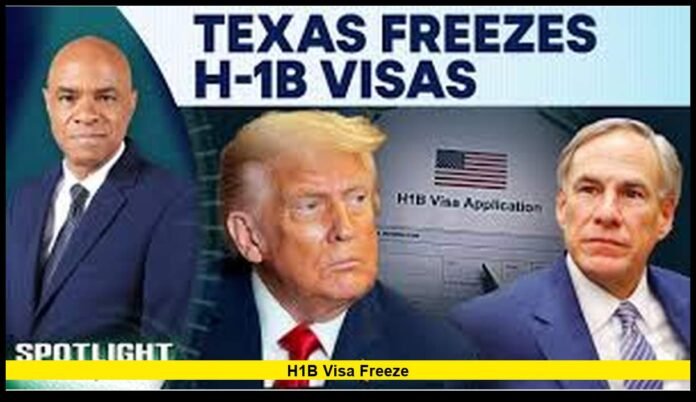

In a groundbreaking move that reverberates across the U.S. workforce and immigration policy arenas, a new h1b visa freeze directive in Texas is reshaping how foreign professionals can contribute to public institutions and state agencies. The directive, issued by Texas Governor Greg Abbott, has frozen new H-1B visa petitions by state agencies and public universities, sparking widespread discussion about its impact on employers, foreign workers, research institutions, and the broader immigration system. As of early February 2026, these developments stand among the most significant shifts in the skilled worker visa landscape in the United States.
The H-1B visa serves as a cornerstone of U.S. immigration for employers seeking highly skilled foreign workers in specialty occupations such as technology, engineering, research, teaching, and healthcare. Traditionally, employers file petitions with federal authorities — and upon approval, foreign nationals can live and work in the United States for several years. However, state-level actions in Texas are now adding an unprecedented layer of policy that directly influences how and whether public employers can hire such talent going forward.
Understanding the Texas H-1B Visa Freeze
On January 27, 2026, Governor Abbott issued a directive ordering all Texas state agencies and public universities to immediately halt initiation of new H-1B visa petitions. This h1b visa freeze applies specifically to taxpayer-funded entities — including state departments, public universities, and similar institutions — that seek to sponsor foreign workers under the federal H-1B program.
Under the directive, the freeze will remain in place until at least May 31, 2027, the scheduled end of the Texas Legislature’s 90th regular session. During this period, affected employers must seek written permission from the Texas Workforce Commission to file any new H-1B petition. Agencies are also required to conduct a detailed audit of their current H-1B workforce and report the findings to the commission by March 27, 2026.
This represents a marked departure from typical federal control of the H-1B process, given that visa eligibility and application adjudication remain under federal authority. Instead, the state freeze restricts certain employers from participating in the program in the way they did before.
Why the Freeze Was Announced
Governor Abbott’s office has framed the freeze as a move to prioritize Texas workers in jobs funded by state dollars. In the governor’s view, the federal H-1B program has, at times, been misused to fill positions that could be staffed by qualified U.S. workers. The directive references concerns about program abuse and aligns with broader federal scrutiny of skilled worker visa programs.
The requirement for detailed reporting — including the number of H-1B petitions filed, worker classifications, countries of origin, anticipated visa expirations, and evidence of recruitment efforts for U.S. workers — reflects the state’s desire for transparency and accountability in how foreign labor is utilized in publicly funded roles.
Immediate Effects on Public Institutions
The immediate fallout of Texas’ h1b visa freeze is most visible within public universities and state agencies. Administrators across state campuses now face a new bureaucratic hurdle before hiring international scholars, researchers, or specialty workers.
Academic and public research programs that depend on global talent to sustain specialized laboratory work, engineering projects, or advanced teaching roles may encounter delays or disruptions if they cannot secure permission from the Texas Workforce Commission.
Likewise, public agencies that have relied on foreign professionals for IT support, scientific endeavors, and policy research must now account for new procedural requirements when considering future hires under the H-1B umbrella. The freeze does not revoke existing visas, but it does prevent those institutions from initiating new sponsorships without explicit state approval.
Legal Scope and Federal Interaction
Legally, this state-level freeze does not change federal H-1B eligibility criteria or how the Department of Homeland Security and U.S. Citizenship and Immigration Services adjudicate visa petitions. Those processes remain under federal jurisdiction. However, Texas is exercising its authority over how state funds are used in supporting foreign hires for its own agencies and public universities.
Importantly, private sector employers, as well as local government entities not directly under the governor’s control, are not subject to this state freeze. Tech companies, private research firms, healthcare organizations, and other private employers can continue filing federal H-1B petitions as long as they meet all existing federal requirements.
Experts also emphasize that freezing new petitions at the state level does not equate to federal immigration reform. The freeze is a targeted policy affecting funding and hiring decisions for certain employer categories, rather than a broad overhaul of federal visa law.
Reactions from Employers and Immigration Advocates
The directive has drawn mixed reactions. Supporters argue that prioritizing American workers for publicly funded positions is essential to protect local jobs and ensure taxpayer dollars benefit the domestic labor market. They also point to broader concerns about skilled worker programs and fair recruitment practices.
Critics, including academic leaders and immigration advocates, warn that the freeze could undermine Texas’ competitiveness in attracting top global talent. Universities and public institutions often rely on skilled foreign professionals to fill critical roles that support innovation, medical research, and economic development. Delays in hiring these workers may slow progress in key sectors.
Some have also raised concerns that the freeze might reduce access to highly specialized medical professionals and researchers whose work directly benefits communities. Skilled immigrants play a significant role in sectors such as healthcare and technology, where demand often outpaces the supply of domestic workers.
Broader Context: National H-1B Policy Trends
The Texas h1b visa freeze exists within a broader national environment of heightened attention to immigration and skilled worker visa rules. Over the last year, the federal government has introduced new restrictions and imposed additional vetting procedures on H-1B and other visa categories. Some of these changes include increased fees for certain visa categories and expanded screening measures to verify applicants’ eligibility and impact on the U.S. labor market.
However, the federal changes differ from the Texas freeze because they apply to all employers nationwide rather than just state-funded institutions. The layered nature of these policy developments highlights the complexity of immigration reform debates and the challenges faced by employers and foreign workers navigating shifting rules.
What This Means for Skilled Foreign Workers
For foreign nationals considering employment at state agencies or public universities in Texas, the immediate implication is a pause in potential H-1B visa sponsorship unless specific exemptions are granted. Current visa holders affected by the freeze retain their existing legal status, but new entrants seeking to work in public institutions may encounter delays or denials.
Professionals planning to pursue H-1B opportunities in the private sector or outside of Texas’ state systems should still be able to do so under federal guidelines, though they may face other separate federal policy hurdles related to visa processing times or increased scrutiny.
If you have thoughts on how the Texas h1b visa freeze could affect your organization or community, share your perspective and stay updated as this policy continues to unfold.