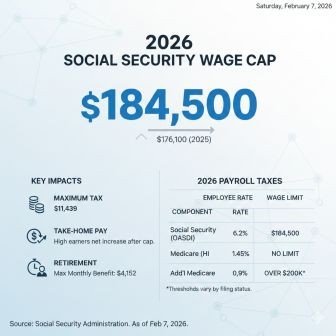

What is the social security cap for 2026? For workers and employers planning their taxes and retirement strategy, the Social Security wage base — the maximum amount of earnings subject to the Social Security payroll tax in 2026 — is $184,500. This higher cap means more income is taxed for Social Security purposes than in the previous year.
If you want to understand how this affects payroll taxes, take-home pay, retirement benefits, and financial planning this year, read on for everything you need to know about the 2026 Social Security cap.
Take a moment to see how this year’s changes could impact your paycheck and long-term financial outlook.
Understanding the Social Security Cap
Each year, the Social Security Administration adjusts the amount of earnings subject to the Social Security tax based on changes in national wage levels. This limit, often called the wage base or taxable maximum, determines how much of your income is subject to the Social Security portion of the payroll tax.
In 2026:
- The Social Security wage base is $184,500.
- Wages up to this amount are subject to the 6.2% Social Security tax portion of payroll taxes.
- Earnings above this amount are not taxed for Social Security, though they remain subject to Medicare tax.
This annual bump increases the total wages that contribute to the Social Security system and affects how much tax high-income workers pay during the year.
Read also- 62 Practical Ways Americans Are Making & Saving Money (2026)
How the 2026 Cap Compares to Previous Years
The Social Security wage base has risen steadily over time as wages across the country have grown. Comparing recent years:
- 2025 cap: $176,100
- 2026 cap: $184,500
That’s an increase of $8,400, reflecting ongoing wage growth nationwide. The rise means that taxpayers who earn above last year’s cap will now pay Social Security tax on more income before hitting the 2026 limit.
How Payroll Taxes Work in 2026
In 2026, the Federal Insurance Contributions Act (FICA) payroll tax structure remains:
- Employee Social Security tax: 6.2% on wages up to $184,500
- Employer Social Security tax: 6.2% on wages up to $184,500
- Total Social Security tax: 12.4% (combined employee + employer share)
For self-employed individuals, the total Social Security tax is 12.4% on self-employment income up to $184,500.
Medicare tax is separate and has no earnings cap. Workers and employers each pay 1.45% of wages to Medicare, and high earners may owe an additional 0.9% Medicare surtax on wages above certain thresholds.
Why the Wage Base Increase Matters
More Taxes for High Earners
Because the cap rose from $176,100 to $184,500, individuals earning above the previous cap will pay Social Security taxes on additional income in 2026. For example:
- A worker making $200,000 in 2026 will pay Social Security taxes on the first $184,500 of income.
- That means an extra $8,400 in earnings is now subject to Social Security tax compared with 2025.
The result is a slightly greater payroll tax burden for higher-income workers and employers alike.
Effects on Take-Home Pay
Once a worker’s earnings hit the $184,500 threshold, Social Security tax withholding stops for the rest of the year. That can slightly increase take-home pay in the final months of the year compared with having an uncapped tax.
How the Cap Affects Retirement Benefits
While the Social Security wage base determines how much income is taxed, it also affects the calculation of future Social Security benefits.
- Social Security benefits are based on a person’s highest 35 years of earnings.
- Only wages subject to Social Security tax count toward benefit calculations.
- Earnings above $184,500 in 2026 will not increase a worker’s benefit amount.
For high-income earners, more of their income now contributes to Social Security taxes, but earnings above the wage base still don’t directly boost future benefits.
Employer Considerations for 2026
Employers must withhold the Social Security portion of payroll tax on employee wages up to the new $184,500 cap. With the increase in the wage base, employers will match a slightly higher Social Security tax contribution for high-earning employees.
Businesses should update payroll systems to reflect the new wage base and budget accordingly for year-long payroll expenses.
Self-employed workers need to plan for the combined employer and employee Social Security tax on their earnings up to the cap.
Medicare Taxes Remain Uncapped
While the Social Security cap limits how much income is taxed for Social Security purposes, Medicare taxes have no wage base limit.
In 2026:
- All covered wages are subject to a 1.45% Medicare tax.
- High earners may owe an extra 0.9% Medicare surtax once their wages exceed specific income levels.
This means even after reaching the Social Security wage base, taxpayers still contribute to Medicare tax on all earnings.
How the 2026 Cap Impacts Different Income Levels
Lower and Middle Income Workers
Workers earning less than $184,500 will pay Social Security taxes on all their earnings up to the cap. For these workers, the increase in the wage base doesn’t change the portion of their wages subject to the tax.
High Income Workers
Individuals earning above $184,500 pay Social Security tax up to that threshold and no more for the year. With the cap higher, a larger share of income is now taxable for Social Security compared with 2025.
Self-Employed Individuals
Self-employed workers pay both the employee and employer Social Security tax shares on net earnings up to $184,500. With the higher cap, self-employed individuals will see slightly higher total Social Security tax liability if their income exceeds the new limit.
Planning for Taxes and Retirement in 2026
Knowing what is the social security cap for 2026 — $184,500 — helps individuals and employers plan for payroll taxes, take-home pay throughout the year, and long-term retirement strategies.
Workers should review their projected earnings and payroll taxes early in the year to estimate how soon they might reach the wage base limit and how that affects their net income.
Retirement planning advisors often consider Social Security wage base changes when projecting future benefits and advising on supplemental retirement savings strategies.
Frequently Asked Questions About the 2026 Cap
Will the cap change again next year?
Yes. The wage base limit is adjusted annually based on wage growth trends.
Does the cap affect Medicare taxes?
No. Medicare taxes continue to apply to all earnings, with no cap.
Does the wage base change how benefits are calculated?
Only earnings up to the wage base count toward benefits. Earnings above the cap do not increase benefit amounts.
Understanding the Social Security wage base in 2026 ensures you stay informed about payroll taxes, year-end withholding behavior, and how your work income impacts retirement credits.
How will this wage base increase affect your financial plans this year? Share your thoughts or questions below and join the discussion.