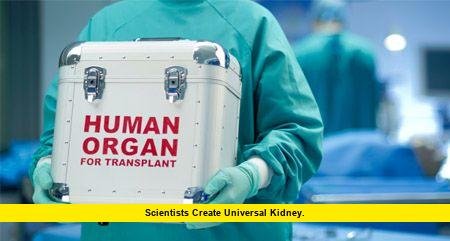

Scientists Create Universal Kidney Breakthrough That Could Transform Transplants and Save Lives is dominating medical research headlines today. In a significant advancement in transplant science, researchers have successfully developed a method for altering the blood type of donor kidneys so they can be accepted by recipients of any blood type — a development that could radically change the way organ transplants are matched and distributed in the U.S. and around the world. This progress toward a universal donor kidney brings new hope to thousands of patients waiting for lifesaving transplants and could reduce long waiting lists that currently contribute to high mortality among people with kidney failure.
Millions of Americans suffer from chronic kidney disease, and kidney transplant wait lists remain long due to strict blood type matching rules. A universal kidney that can be transplanted into anyone, regardless of blood type compatibility, could help ease this shortage, improve access to lifesaving organs, and save more lives.
If you or a loved one are tracking developments in kidney transplant science or facing kidney disease, keep reading to understand what this breakthrough entails and what it may mean for the future of transplant medicine.
Now let’s explore the details of this development, how it works, and what it means for patients and healthcare systems.
How Researchers Created a Universal Kidney
For decades, one of the major challenges in organ transplantation has been the immune response triggered when a donor organ’s blood type does not match a recipient’s. Normally, people with type-O blood can only receive kidneys from type-O donors, and organs with incompatible blood types are often rejected, even if other medical factors are favorable. This restriction dramatically limits the pool of available kidneys and prolongs wait times for many patients.
Scientists have now developed a technique that alters a donor kidney’s blood type markers so that it behaves like a type-O organ — widely considered “universal” for transplant purposes. This was achieved using specialized enzymes that strip away the antigens responsible for defining blood types on the organ’s surface.
These enzymes, developed over years of laboratory research, essentially remove the molecular signals that would normally trigger the recipient’s immune response. By converting a type-A kidney into one with type-O characteristics, the organ becomes compatible with a much broader range of recipients. The process does not rely on matching donor and recipient blood types, creating a pathway toward true universal organ donation.
Breakthrough First-in-Human Test
In a pivotal experiment, researchers successfully transplanted a kidney that had been converted from blood type A to universal type O into a brain-dead recipient with the consent of the family. This landmark procedure allowed doctors to monitor the organ’s function and the immune response in a human model without risk to a living patient.
In the days following transplantation, the universal kidney continued to function and did not immediately trigger a robust immune rejection. Immune responses were lower than expected in mismatched transplants, and the kidney continued to work for several days — producing urine and demonstrating signs of normal activity. This shows that the technique has strong potential to reduce incompatibility reactions that are a key barrier in traditional transplant matching.
Doctors and researchers involved in the project described this first application in a human model as a crucial step toward refining the technology and eventually running clinical trials that include living recipients.
Why This Matters for Patients in the U.S.
In the United States alone, the shortage of donor organs is severe. Tens of thousands of people with end-stage kidney disease remain on wait lists, and many die each year before a suitable match becomes available. The ability to use donor kidneys without having to match blood type could significantly expand the donor pool and save lives.
Currently, transplant centers must carefully match donors and recipients based on multiple factors, including blood type and tissue compatibility. While techniques such as kidney paired donation — where incompatible donor-recipient pairs exchange kidneys with other pairs — help increase matching opportunities, they cannot eliminate the need for compatible blood types. A universal kidney would remove the need for these complex exchanges, making more organs available to more people.
Because type-O patients — who make up a large proportion of those needing transplants — face especially long waits due to limited compatible donors, a universal kidney could particularly benefit them, shortening wait times and improving outcomes.
How the Enzyme Process Works
The key technology enabling this universal kidney concept is an enzyme treatment that removes antigen sugars — molecular structures that define blood type — from the surface of the kidney’s blood vessels. Antigens that trigger immune attacks are typically removed by matching donor and recipient blood types. But these enzymes act directly on the organ, effectively concealing the donor’s blood type markers and revealing a type that is safe for all recipients.
The enzyme process is akin to removing identifying badges from the organ so that the recipient’s immune system recognizes the kidney as less foreign. Once these antigens are removed, the organ behaves like a type-O kidney, which is considered compatible with all recipients regardless of their own blood type.
This enzyme approach was the result of extensive research into blood type antigens and how they interact with the immune system. The enzymes are highly selective and work effectively without damaging the organ itself.
Steps Toward Wider Clinical Use
Although this universal kidney method shows promise, it remains in the experimental phase. The initial transplant into a brain-dead recipient was an important test, but further research will be needed before the process can be used routinely for living patients. This includes additional trials to ensure long-term organ survival, refine techniques to minimize immune response over time, and develop protocols that transplant centers can adopt safely.
Regulatory approvals will also be necessary before this method can be used on a larger scale. However, the early results have encouraged scientists and clinicians to pursue this avenue of research further.
If future clinical trials demonstrate long-term safety and effectiveness, this universal kidney technique could be one of the most important advances in transplant medicine in recent decades.
Implications for Organ Donation and Transplants
A kidney that can be given to any patient regardless of blood type could transform transplant systems in the U.S. and globally. It could significantly reduce the time patients spend on wait lists, lower the number of deaths due to organ shortage, and reduce the need for complex matching systems.
Expanding the usable organ pool would also ease pressure on the existing transplant infrastructure. More available organs could reduce the need for riskier matching compromises and potentially improve post-transplant outcomes for many patients.
This breakthrough aligns with ongoing efforts to innovate transplant science, including research into lab-grown organs and advanced artificial kidneys. A truly universal donor kidney could bridge the gap between supply and demand long before these other technologies are ready for widespread clinical use.
Looking Ahead
The development of a universal kidney represents a remarkable intersection of biochemistry, transplant surgery, and clinical research. It highlights how targeted molecular techniques can overcome longstanding barriers in medicine. While more work remains before this breakthrough becomes standard care, the progress to date offers hope that the transplant system may soon become more flexible and inclusive for patients of all blood types.
Share your thoughts and stay updated with further breakthroughs in transplant science and medical innovation.