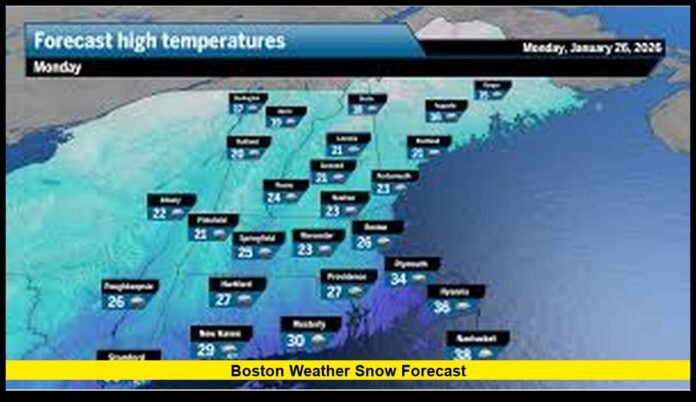

The broader weather pattern affecting Boston reflects a stable winter regime. Cold air is established across New England, creating a favorable environment for snow whenever moisture moves into the region.
Boston is well within its core winter season, and current conditions support continued snow chances in the near term. Temperatures remain cold enough for snow during precipitation events, and regional weather patterns favor periodic systems that can bring accumulating snowfall to the city and surrounding communities.
Current Winter Setup Across the Boston Area
The broader weather pattern affecting Boston reflects a stable winter regime. Cold air is established across New England, creating a favorable environment for snow whenever moisture moves into the region.
Key characteristics of the current setup include:
- Persistent below-freezing overnight temperatures
- Daytime highs often near seasonal norms
- Limited warm-air intrusions during active weather periods
These conditions ensure that snow remains the primary form of winter precipitation during most near-term events.
Boston Weather Snow Forecast and Short-Range Confidence
Short-range forecasting remains the most reliable window for predicting snowfall in Boston. Weather confidence is highest within the next several days, when temperature profiles and storm paths can be analyzed with greater precision.
The Boston weather snow forecast focuses heavily on:
- Approaching low-pressure systems
- Cold air depth near the surface
- Timing of precipitation relative to peak cold
This approach helps refine snowfall expectations as systems draw closer.
Role of Low-Pressure Systems in Snow Development
Low-pressure systems continue to be the primary drivers of snow in the Boston area. These systems move through the Northeast frequently during winter and can produce a range of snowfall outcomes.
Common characteristics include:
- Light to moderate snow with fast-moving systems
- Heavier snowfall when storms slow or strengthen offshore
- Short but intense snow bursts within narrow bands
Even weaker systems can produce impactful snowfall if cold air remains entrenched.
Coastal Influence on Near-Term Snowfall
Boston’s coastal location plays a critical role in determining snowfall intensity. When cold air dominates inland and moisture moves off the Atlantic, snow rates can increase rapidly.
Coastal influence often results in:
- Enhanced snowfall near the shoreline
- Stronger winds during snow events
- Reduced visibility during peak snowfall periods
This coastal interaction is closely monitored in near-term forecasts due to its ability to change outcomes quickly.
Urban Boston and Variable Snow Impacts
Snow impacts within Boston can vary widely depending on storm track and intensity. Urban areas often experience different outcomes compared to nearby suburbs.
Key factors affecting urban impacts include:
- Slight temperature differences near the coast
- Building density influencing snow accumulation patterns
- Traffic and heat retention affecting road conditions
Because of these variables, snowfall totals can differ significantly across short distances.
Storm Track Sensitivity in the Near Term
Storm track remains one of the most important elements in predicting snow for Boston. Small shifts north or south can lead to notable differences in accumulation.
General storm-track effects include:
- Offshore tracks favor colder air and higher snow totals
- Inland tracks increase the risk of mixed precipitation
- Direct coastal paths often produce stronger winds and heavier snow
Near-term forecasts refine these details as systems approach the region.
Temperature Profiles and Snow Type
Temperature structure from the surface upward determines whether precipitation falls as dry snow, wet snow, or mixed types. Current profiles support snow across most near-term scenarios.
Observed trends show:
- Cold surface temperatures supporting accumulation
- Limited warming aloft during active periods
- Snow remaining the dominant precipitation type
These conditions favor consistent snowfall rather than rapid changes to rain.
Snowfall Rates and Accumulation Patterns
Snowfall in Boston often occurs in bursts rather than steady accumulation. Near-term systems can deliver quick impacts even if total snowfall remains modest.
Typical accumulation patterns include:
- Rapid coating during heavier bands
- Slower accumulation during lighter snowfall
- Greater totals during overnight or early morning events
Timing remains critical for assessing impacts on travel and daily routines.
Travel and Commuter Impacts
Snow affects travel quickly in Boston due to high population density and traffic volume. Near-term snow events can disrupt commutes even with limited accumulation.
Common travel effects include:
- Slower highway travel
- Reduced visibility during snowfall
- Delays on public transportation
Road conditions can deteriorate rapidly during peak snowfall periods.
Snow Management and City Response
Boston maintains established winter response protocols that activate during snow events. City crews prepare ahead of anticipated snowfall when forecasts indicate accumulation.
Typical response actions include:
- Pre-treating roads and bridges
- Deploying plows during active snowfall
- Managing priority routes first
These measures help limit disruptions, especially during frequent winter events.
Why Near-Term Forecasts Matter Most
Winter weather in Boston can change quickly, making near-term forecasts far more valuable than long-range outlooks. The most accurate snowfall details emerge within a short window before events occur.
Near-term forecasting benefits include:
- Improved snowfall timing
- Better accumulation estimates
- Clearer impact expectations
Residents benefit most by focusing on updates within the next one to three days.
Historical Context for Winter Snow in Boston
Boston’s winter climate supports frequent snow events during mid-winter. The city has a long history of snow during this time of year.
Historical patterns show:
- Regular snow events throughout February
- Snowfall often occurring in clusters
- Cold air persisting for extended stretches
This reinforces the expectation of continued snow potential in the near term.
Daily Monitoring Remains Essential
Because winter conditions evolve rapidly, daily monitoring remains important. Near-term systems can strengthen or weaken quickly as they approach.
Residents are encouraged to pay attention to:
- Updated snowfall projections
- Temperature trends
- Timing of precipitation
Short-range updates provide the clearest picture of what to expect.
Boston Weather Snow Forecast Remains Active
The Boston weather snow forecast continues to reflect an active winter pattern. Cold air remains in place, and passing systems keep snow chances present on a recurring basis.
Confirmed near-term conditions indicate:
- No immediate shift away from winter weather
- Continued opportunities for snowfall
- Seasonal patterns holding steady
Snow remains part of daily planning across the city.
Preparedness for Ongoing Winter Conditions
Preparation remains key as winter continues. Even minor snow events can affect routines if they coincide with busy travel periods.
Practical steps include:
- Allowing extra travel time
- Monitoring local weather updates
- Preparing for changing road conditions
Staying informed helps reduce disruption during snow events.
Near-Term Outlook as Winter Continues
While each system differs, the overall winter setup remains unchanged. Cold air and frequent disturbances ensure that snow stays in the forecast discussion.
Boston’s winter season typically extends well beyond mid-winter, keeping snow chances alive for weeks to come.
As Boston weather snow forecast updates continue to evolve in the near term, readers are encouraged to stay alert to daily changes and share how winter conditions are affecting their area.