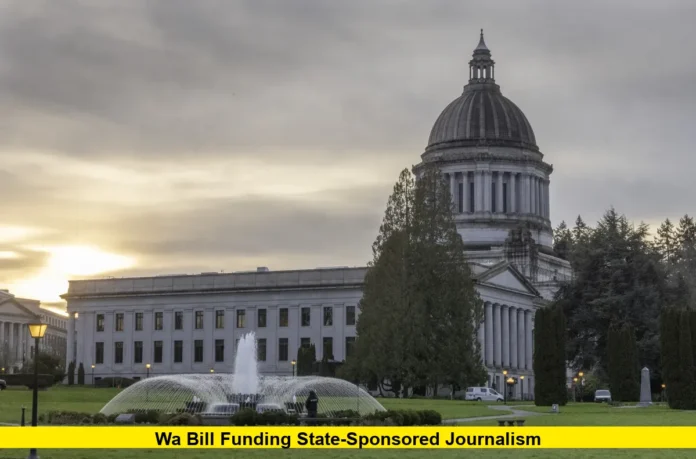

In Olympia, debate is intensifying over the WA bill funding state-sponsored journalism, as lawmakers and media organizations respond to mounting financial pressure on local newsrooms across Washington state. Supporters argue the proposal could stabilize struggling outlets and protect civic reporting, while critics question the long-term implications of public funding for journalism.
The issue comes at a pivotal moment for Washington’s media landscape. Over the past year, federal funding that long supported public broadcasting stations was eliminated, leading to the shutdown of the Corporation for Public Broadcasting in early 2026. That change removed a major revenue source for public radio and television affiliates across the country, including stations serving communities throughout Washington.
Local media leaders say the funding loss has forced budget cuts, hiring freezes, and scaled-back coverage in some regions.
Residents who rely on local reporting for school board decisions, emergency alerts, city council votes, and statewide policy updates are now watching closely as state lawmakers consider stepping in.
Tell your representatives why access to reliable local news matters in your community.
Why Washington Lawmakers Are Considering State Support
The proposed legislation, Senate Bill 5400, seeks to establish a statewide journalism support program designed to sustain local reporting. The measure would create a grant-based system aimed at helping qualifying news outlets hire and retain journalists who cover civic affairs and public-interest topics.
The bill outlines a funding structure that would collect revenue through a surcharge applied to certain large technology and digital advertising companies operating in Washington. That revenue would then flow into a dedicated fund to support eligible local news organizations.
Supporters say this approach recognizes that digital platforms benefit from the distribution of news content and should help support the local journalism ecosystem.
What the WA Bill Funding State-Sponsored Journalism Would Do
If enacted, the proposal would create the Washington Local News Sustainability Program within state government. The program would oversee grant distribution and set eligibility criteria for participating newsrooms.
Key elements of the bill include:
Grant Funding for Local Newsrooms
Eligible organizations would receive funding to employ journalists focused on local civic reporting. This could include coverage of city councils, school districts, state agencies, courts, and community issues.
Support for Underserved Communities
The bill prioritizes areas that have experienced significant newsroom closures or reductions. Rural communities and diverse urban neighborhoods with limited access to consistent local reporting would receive special consideration.
Revenue From Large Digital Platforms
The measure proposes a capped annual surcharge on large technology companies that generate significant advertising revenue within the state. Lawmakers argue that this structure spreads the cost across major corporations rather than placing additional tax burdens on residents.
Oversight and Accountability
The program would include reporting requirements to ensure funds are used to support journalism positions and not diverted to unrelated expenses.
Proponents say these safeguards are designed to protect editorial independence while strengthening the news ecosystem.
Public Hearings Signal Momentum
In late January 2026, lawmakers held public hearings to gather testimony from media leaders, advocacy groups, and residents. Representatives from public broadcasting stations and local news outlets described the financial strain they have faced since federal funding disappeared.
Some station managers detailed how reduced budgets forced them to cut programming or delay expansion into underserved communities. Others stressed that fewer reporters mean less scrutiny of local government decisions.
Lawmakers on both sides of the aisle acknowledged the challenges facing local journalism, though debate continues over whether direct state funding is the appropriate solution.
The Broader Decline of Local Journalism
Washington’s situation reflects a nationwide trend. Over the past two decades, hundreds of local newspapers have closed, and newsroom employment has declined sharply. Advertising revenue has shifted toward digital platforms, leaving many community outlets struggling to remain profitable.
In Washington, several smaller newspapers have either shut down or transitioned to limited digital formats. Public broadcasting stations, once buoyed by federal appropriations, now rely more heavily on memberships, philanthropy, and underwriting.
Advocates argue that when local news disappears, communities lose more than headlines. Research consistently links strong local journalism to higher civic participation, improved government accountability, and better-informed voters.
Without local reporters attending public meetings and investigating local policies, watchdog coverage diminishes.
Supporters Emphasize Civic Impact
Backers of the WA bill funding state-sponsored journalism say the proposal treats journalism as critical civic infrastructure, similar to public libraries or public education.
They argue that democracy depends on access to trustworthy information and that market forces alone no longer sustain comprehensive local coverage.
Some lawmakers frame the bill as an economic development initiative as well. By creating journalism jobs, they say, the state would invest in workforce growth while preserving community engagement.
Supporters also highlight that the funding mechanism targets large digital corporations rather than individuals or small businesses.
Concerns and Opposition
Not all lawmakers support the measure.
Some critics raise concerns about potential government influence over journalism, even with oversight provisions in place. They argue that public funding could create perceptions of bias or dependency.
Others question whether a tech surcharge could face legal challenges or discourage business investment in the state.
Fiscal conservatives also point to competing budget priorities, including education, housing, and transportation, as reasons to proceed cautiously.
Legislative negotiations are ongoing as committee members refine language and funding details.
What Happens Next in Olympia
Washington’s legislative session is moving quickly, and budget discussions will play a central role in determining whether the proposal advances.
If SB 5400 clears committee stages and passes both chambers, it would head to the governor’s desk for consideration.
Should it fail to move forward this session, lawmakers could revisit the issue in the next cycle.
Observers note that Washington is among several states exploring state-level journalism support, signaling a broader shift in how policymakers view the role of local media.
Why This Debate Matters to Washington Residents
For residents, the debate extends beyond newsroom balance sheets.
Local reporting influences how communities understand wildfire preparedness, housing policy, transportation projects, public health updates, and school funding decisions.
When fewer journalists cover these topics, residents may struggle to access consistent, in-depth information about issues that directly affect their lives.
The proposed bill aims to address that gap by strengthening the reporting capacity of news organizations across the state.
A Turning Point for Public Media
The elimination of federal public broadcasting support marked a major shift in the U.S. media landscape. Washington’s effort to create its own funding structure represents one of the most significant state-level responses to date.
Whether the legislation ultimately passes or not, the conversation underscores the growing recognition that local journalism faces structural challenges requiring innovative solutions.
Communities, lawmakers, and media leaders now find themselves at a crossroads.
Engage in the discussion and let your elected officials know how local journalism shapes your daily life.
Stay engaged as this debate unfolds — your voice plays a vital role in shaping the future of journalism in Washington.