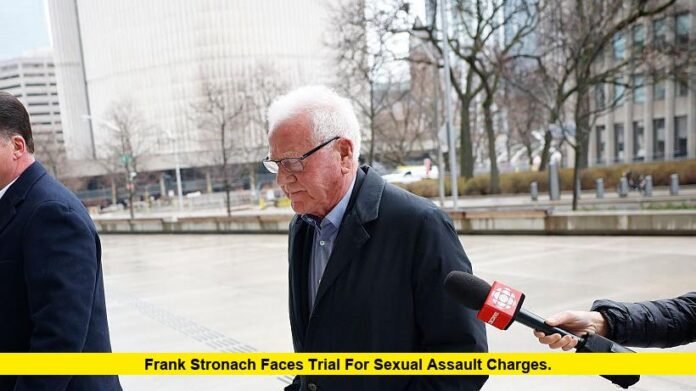

The long-anticipated legal showdown has begun: Frank Stronach Faces Trial for Sexual Assault Charges this week in Toronto, marking a major moment in a case that has captured international attention. The 93-year-old billionaire auto-parts magnate is appearing before a judge without a jury as the first of two separate trials begins, centering on allegations dating back several decades. News of the proceedings has sparked widespread interest across North America and around the world, as details emerge from the courtroom in Ontario.
From the outset, the trial’s commencement has raised questions about how historical allegations are being handled under Canadian law, the legal strategies of both sides, and what this means for a public figure with a far-reaching business and public profile. Below, we cover the key developments, background context, legal framework, and the human dimensions shaping this unfolding news story.
Frank Stronach Faces Trial for Sexual Assault Charges: Opening Statements and Court Setup
On Tuesday in Toronto, proceedings began with the case presented before an Ontario Superior Court judge. Stronach was arraigned on 12 charges connected to allegations from seven complainants. These alleged incidents span several decades, with some dating back to the 1970s and others extending into the 1990s. At 93, Stronach is among the oldest defendants to stand trial on such charges in recent Canadian legal history.
Stronach, who founded Magna International and led it to global prominence, originally chose to have the case heard by a jury. However, with the Crown’s consent, the defense later shifted to a judge-alone trial. The trial is being overseen by Ontario Superior Court Justice Anne Molloy, an experienced jurist tasked with handling the complex legal and evidentiary issues that come with historical allegations. Prosecutors and defense counsel alike are prepared for a lengthy and detailed process.
CTA: Stay informed as developments unfold in court with timely updates.
Historical Allegations: What the Charges Say
The charges against Stronach arise from events alleged to have occurred over several decades. Law enforcement charged him in 2024 with 18 offenses involving 13 different complainants; those charges were later split into two separate trials for procedural purposes.
The current Toronto trial focuses on 12 of those charges involving seven women, whose identities are protected under a publication ban that shields their personal details. The remaining charges are expected to be addressed in a second trial scheduled to take place later this year in Newmarket, Ontario.
Because the allegations span from the 1970s through the 1990s, many of the legal issues involve how historical conduct is interpreted under evolving Canadian criminal law. Some forms of conduct alleged in earlier decades were legislated differently at the time, which has added a layer of legal complexity to the proceedings. Defense attorneys and legal experts will likely argue over how past laws apply to current court standards, particularly around evidentiary rules and definitions of offenses.
Legal Framework: Judge-Alone Trial and Statute of Limitations
One of the most notable aspects of the case is that Stronach opted for a judge-alone trial rather than a jury trial. In Canada, defendants can choose this option, which some high-profile defendants favor when cases involve historical or technical evidence that may be better assessed by a seasoned judge.
Canadian law does not impose a statute of limitations on serious indictable offenses, meaning cases can be brought to trial many years after the events occurred. However, historical cases often raise challenges, such as the availability of evidence, reliability of memories, and changes in legal definitions of offenses over time. Prosecutors will need to establish their case under current evidentiary standards while accounting for how laws have changed since the 1970s and 1980s.
Sexual assault in Canada is classified as a hybrid offense, giving the Crown discretion to proceed by indictment or as a summary offense based on the specifics of the allegations. In this case, prosecutors chose to pursue indictable charges, which are treated as more serious and are tried in higher courts.
Stronach’s Background and Response to Allegations
Frank Stronach is widely known for founding Magna International and for his significant contributions to the automotive industry. Born in Austria in 1932, Stronach immigrated to Canada in the 1950s and built Magna into one of the largest auto-parts manufacturers in the world. He stepped down as chairman in 2011 and later focused on other business ventures, including horse racing and organic food production.
Since the allegations came to light, Stronach has consistently denied wrongdoing. In public statements and through his legal team, he has maintained his innocence and pledged to vigorously defend against the charges. The defense has highlighted the decades-old nature of many of the allegations and their potential legal and evidentiary complications.
Timeline of Key Events Leading Up to Trial
To understand how the case reached this point, it helps to look at major milestones:
- 1957: Stronach begins his automotive business in a Toronto garage, later founding Magna International.
- 2011: Steps down as chairman of Magna.
- June 2024: Peel regional police arrest and charge Stronach with initial counts, including sexual assault and related offenses. Additional counts are added later that month.
- Late 2025: Pre-trial hearings and motions take place, including legal challenges by Stronach.
- Early February 2026: The first trial begins in Toronto before a judge without a jury.
This timeline reflects the prolonged legal journey that has brought the case to its current phase, with significant media scrutiny and public interest surrounding each development.
Legal Challenges and Defense Strategy
Historical cases like Stronach’s pose distinct obstacles for both sides. Prosecutors must prove events that occurred decades ago to the judge’s satisfaction, often relying on personal testimonies and reconstructing events with limited physical evidence. Memory degradation over time can complicate witness accounts, and defense teams frequently focus on challenging recollections and highlighting gaps in documentation.
Defense counsel may also argue about the proper application of legal standards, especially when criminal definitions have changed since the alleged events occurred. These arguments could become focal points in court as the trial progresses.
Public Interest and Broader Impacts
The high-profile nature of the defendant and the serious nature of the allegations have drawn considerable international attention. Many observers are watching the case closely not only because of Stronach’s stature but also because it highlights how legal systems handle historical misconduct allegations against powerful figures.
For advocates and critics alike, the proceedings may become a touchstone for broader debates about accountability, legal fairness, and how institutions deal with decades-old allegations in the public sphere.
As the trial unfolds, courts will continue to hear evidence and testimony while weighing legal arguments from both sides. It is expected to be a complex and closely watched legal process with implications that extend beyond the courtroom.
Stay tuned for updates from the Toronto courthouse as this trial progresses and more information becomes available.
We want to hear from you — share your thoughts or questions in the comments and stay engaged with this developing story.