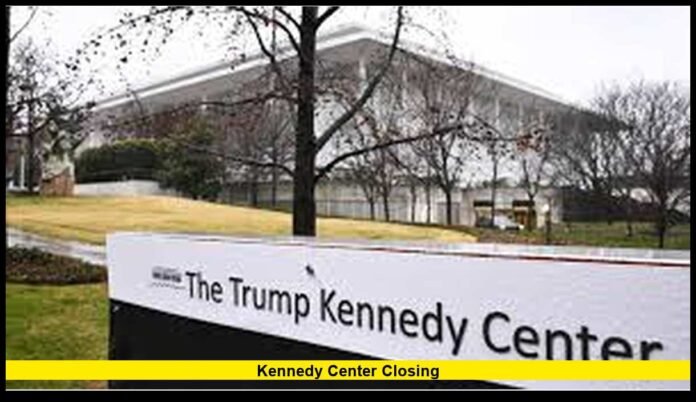

Kennedy Center closing plans are now confirmed, with the John F. Kennedy Center for the Performing Arts in Washington, D.C., scheduled to suspend all public activity beginning July 4, 2026. The shutdown is expected to last roughly two years, placing one of America’s most recognizable cultural institutions on pause while large-scale renovations move forward.
The decision has immediate national significance. The Kennedy Center is not just a performance venue. It serves as a federally chartered cultural symbol that hosts thousands of events each year and attracts audiences from across the United States.
A Rare Full Shutdown for a National Arts Institution
The upcoming closure will halt all performances across the entire Kennedy Center campus. Concert halls, theaters, rehearsal spaces, and public gathering areas will close at the same time.
Leadership has made it clear that the scope of work planned cannot be completed while the building remains open. A complete shutdown allows construction teams to operate without interruption, reduces safety risks, and shortens the overall renovation timeline.
Officials have stated that the target reopening window is sometime in 2028, although a firm date has not yet been announced.
Why the Kennedy Center Closing Was Approved
The Kennedy Center complex opened in 1971. While it has received updates over the decades, much of the core infrastructure now shows its age.
The renovation effort tied to the Kennedy Center closing is designed to address long-standing issues, including:
- Aging structural systems
- Outdated stage and sound technology
- Limited accessibility in some public areas
- Congested backstage and rehearsal spaces
- Visitor flow challenges during high-attendance events
Leadership has emphasized that incremental repairs were no longer sufficient. A comprehensive shutdown was seen as the most efficient way to modernize the facility for future generations.
Leadership Changes That Reshaped the Center
The Kennedy Center closing follows major governance changes that began in early 2025. The board of trustees underwent a full restructuring, with new members appointed and a new chair selected.
These changes brought a shift in vision and priorities. Decisions involving branding, programming, and long-term planning quickly became topics of public discussion.
While some welcomed the new direction, others within the arts community expressed concern. The tension contributed to growing uncertainty around future programming well before the closure was announced.
Effects on Performers and Programming
The Kennedy Center typically presents more than 2,000 events each year, ranging from classical music and opera to contemporary theater, jazz, and cultural festivals.
As a result of the Kennedy Center closing, all scheduled performances beyond early summer 2026 will either be canceled, relocated, or postponed.
Groups affected include:
- Resident orchestras and opera companies
- Touring Broadway productions
- International music and dance ensembles
- Independent artists and special event presenters
Some organizations have already secured temporary venues elsewhere in Washington, D.C., while others are exploring regional touring options during the shutdown.
Impact on Artists and Cultural Institutions
For many performers, the Kennedy Center serves as a career milestone. Appearing on its stages carries national recognition and prestige.
The two-year closure creates challenges for artists who rely on the venue’s visibility, resources, and technical capabilities. Smaller organizations may face financial strain as they adapt to alternative spaces that lack the same capacity or infrastructure.
Educational programs connected to live performances will also be affected. The center plays a major role in arts education, outreach initiatives, and youth engagement efforts nationwide.
Economic Consequences Beyond the Stage
The Kennedy Center closing extends beyond the arts world. The surrounding area benefits significantly from event-driven foot traffic.
Restaurants, hotels, transportation services, and nearby businesses depend on steady attendance throughout the year. A two-year pause is expected to reduce visitor activity along the Potomac River corridor.
Local leaders have acknowledged the economic impact but note that construction activity and future tourism growth could offset some losses once the venue reopens.
Renovation Scope and Funding
Officials overseeing the project have stated that financing for the renovation is secured. The Kennedy Center operates through a combination of federal support, private donations, sponsorships, and earned revenue.
Although detailed construction plans have not been fully released, the renovation is expected to focus on long-term durability rather than cosmetic upgrades alone.
Because the Kennedy Center is a federally chartered institution, certain aspects of the project may involve additional oversight. However, the July 2026 closure date remains the current plan.
Public Response to the Kennedy Center Closing
Public reaction has been mixed and often passionate.
Supporters argue that the renovation is overdue and necessary to preserve the center’s standing as a world-class venue. They believe the temporary loss of programming is worth the long-term benefits.
Critics worry that the extended shutdown could weaken audience loyalty and push artists toward other institutions permanently. Some also question whether the timing and leadership decisions surrounding the closure could affect the center’s identity.
Online discussion has remained active, reflecting the deep emotional connection many Americans have with the venue.
What Audiences Should Expect Before 2026
Until the closure begins, the Kennedy Center will continue to operate and host performances. However, scheduling changes are expected as organizers adjust long-term plans.
Ticket holders for events scheduled after mid-2026 should monitor official announcements closely. Many performances will not proceed as originally planned.
Patrons are also encouraged to follow updates related to relocation options and refunds as the shutdown date approaches.
The Long-Term Vision After Reopening
Despite the controversy, leadership has emphasized that the Kennedy Center closing is intended to secure the institution’s future, not diminish its role.
The renovation aims to position the center as a modern, accessible, and technically advanced venue capable of serving audiences for decades to come.
If completed on schedule, the reopening in 2028 would mark a new chapter for one of America’s most influential cultural landmarks.
Why This Closure Matters Nationally
Few U.S. cultural institutions hold the same national role as the Kennedy Center. It hosts performances tied to major holidays, global cultural exchanges, and historic moments in American arts.
A full shutdown of this scale is rare. It signals both the challenges of maintaining aging cultural infrastructure and the importance of investing in long-term preservation.
The Kennedy Center closing will remain a defining topic in U.S. arts and culture discussions until the doors reopen.
What are your thoughts on the Kennedy Center closing and how it may reshape the future of American performing arts? Share your perspective below and stay connected for ongoing updates.